
Fresh produce freight
Berries, avocados, onions, and mixed vegetables move north from Mexican growing regions in reefers, concentrated through the Pharr-Reynosa and Nogales-Mariposa gateways.
Fresh produce moves almost exclusively in 53-foot reefers running continuous cooling, with frozen fruit and vegetables sharing the same temperature-controlled equipment.
Produce postings concentrate around the McAllen and Nogales border gateways and in growing-region markets like Morelia, Colima, and Guadalajara.
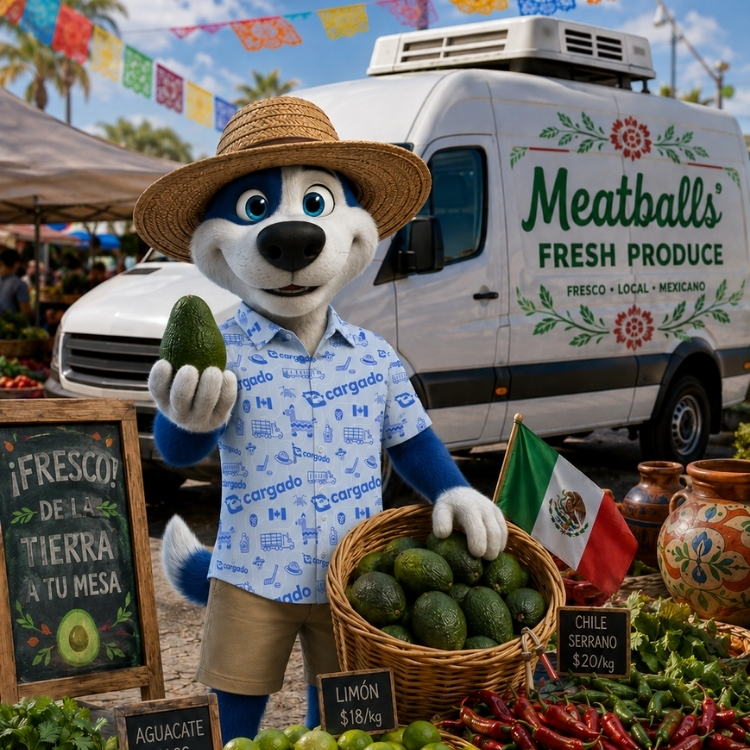
Fresh produce is the freight type most people picture when they think of northbound Mexican trucking, and the posting data backs up the image. Berries and blueberries out of Michoacan, avocados from Morelia and Colima, onions, mango puree, apples, and mixed vegetables all appear in the Cargado marketplace, alongside frozen fruit and guacamole that ride the same cold chain.
The produce gateways
Produce follows its own geography. Loads from central, western, and southern growing regions (Michoacan, Jalisco, Colima, Chiapas) funnel toward the Texas border, where Pharr-Reynosa is the premier produce crossing, with McAllen as the staging market on the U.S. side. West-coast produce from Sinaloa and Sonora runs up the Pacific corridor to Nogales-Mariposa, the historic winter-vegetable gateway into Arizona. Both crossings are built for perishables, with dense cold-storage and inspection infrastructure on each side.

Season shapes everything
Produce is the most seasonal freight on the border. During produce season, the winter and spring months when Mexican harvests peak, reefer demand surges, capacity tightens across entire regions, and rates on unrelated lanes feel the pull as equipment repositions toward the growing areas. Brokers who plan around the season book capacity earlier and communicate volume forecasts to carriers; those who do not often find the reefer they counted on has gone to the highest bidder.
Running the cold chain cross-border
- Reefer, continuously. Produce runs in reefers on continuous cooling, with pulp temperature checked at loading and crossing.
- Speed at the border. Perishables cannot sit. Produce loads are dispatched with customs brokers coordinated on both sides so the crossing happens in hours, not days.
- Inspection readiness. Agricultural inspections are a normal part of produce crossings: clean, well-documented loads clear faster.
- Transload or through-trailer. Plenty of produce still transloads at the border into U.S. reefers, though door-to-door service is growing on high-volume lanes.
Insurance is the other habit worth building early: before dispatching high-value perishables, verify cargo insurance, covered routes, limits, and exclusions, and confirm who insures the load and who carries the risk on each leg. Beyond the border markets, Guadalajara is a significant origin for produce and processed fruit, and frozen guacamole, fruit, and vegetables extend the same cold chain year-round. For corridor-level detail, browse the lanes pages, and see the Mexico 101 guides for crossing mechanics.
Industry guide
Where this freight ships from, what the border adds to its cost, and how carrier bids moved out of its markets: Shipping fresh produce from Mexico to the U.S. by reefer. Tariff and trade rule changes are tracked on Mexico-U.S. tariffs and trade rules.
Common questions
Does Cargado have reefer capacity, or is the network mostly dry van?
Dry van is the largest equipment type on the marketplace, but reefer is the clear second: produce, frozen foods, and refrigerated goods are among the most posted commodities. Reefer depth varies by corridor and season, so on produce lanes it pays to post early, name the commodity and temperature, and let the network of cross-border reefer carriers respond.
Who handles customs on a produce load, and how fast can it cross?
Produce clears through customs brokers on both sides of the border like any other freight, plus agricultural inspection on the U.S. side. Because perishables cannot sit, produce loads are dispatched with the customs broker identified at the specific crossing and paperwork filed in advance. Done right, the crossing itself takes hours. Pharr-Reynosa and Nogales-Mariposa are purpose-built for this flow.
Moving this kind of freight?
Cargado connects hundreds of brokers with 2,350+ vetted carriers moving Mexico and Canada freight every day.