Tap into Cargado’s cross-border and domestic Mexico network
Find reliable coverage for your spot and consistent freight with Cargado, built for freight moving intra- and cross-border Mexico.





















Mexico coverage at every major crossing
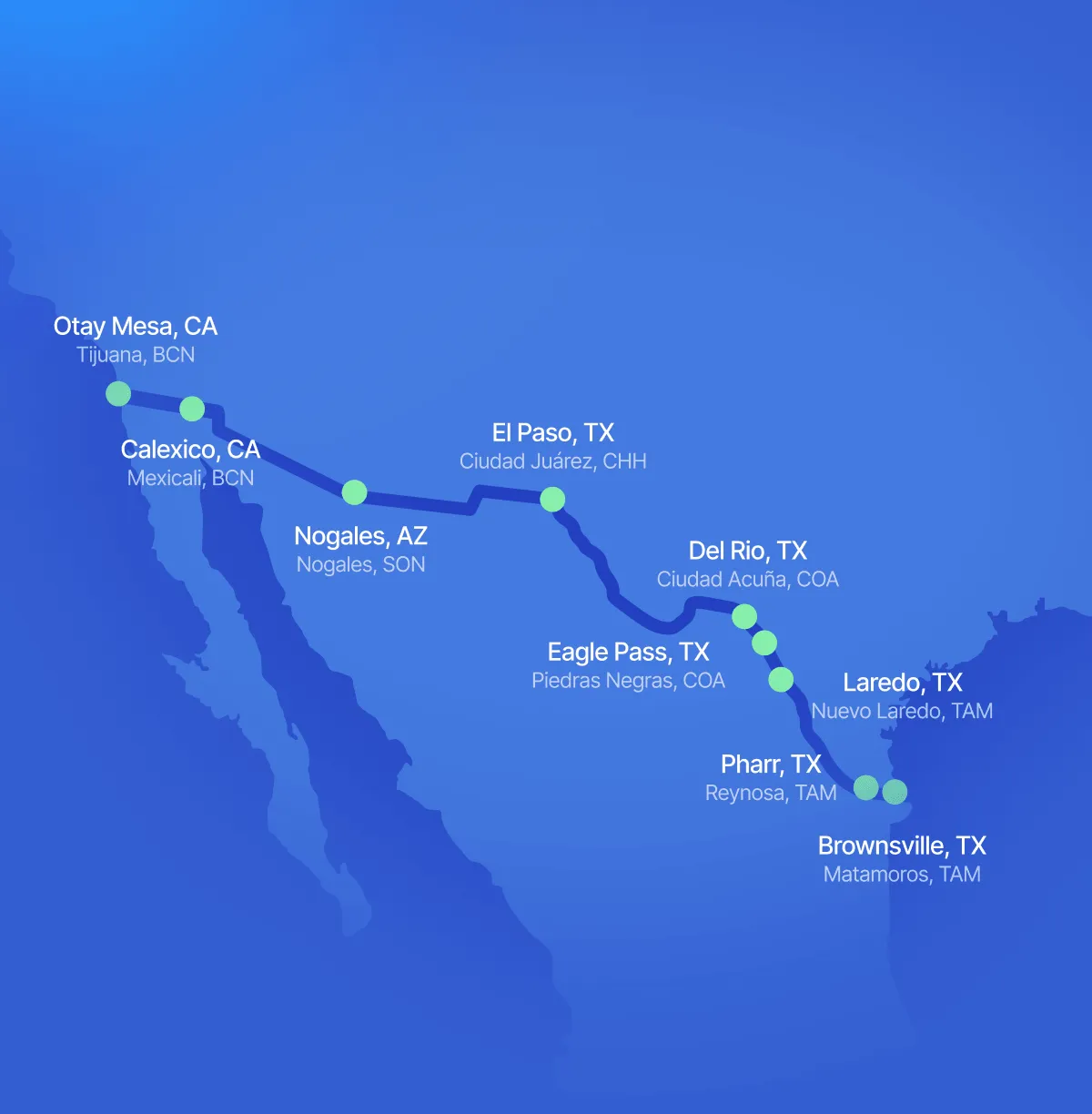
Cargado supports every major U.S.–Mexico port of entry with a network of carriers our team reviews before they can bid, matched to your customers' crossing, security, and load requirements.
- Texas: Laredo (World Trade Bridge and Colombia Solidarity Bridge), El Paso, Eagle Pass, Del Rio, Brownsville, and Pharr-Hidalgo
- California: Otay Mesa, Calexico, and Tecate
- Arizona: Nogales, San Luis, and Douglas
Equipment that matches Mexico freight
Equipment precision matters more in Mexico. Cargado captures the equipment details and special requirements that matter for better coverage and execution.
Available for cross-border and domestic Mexico 🇲🇽

Specialized for domestic Mexico 🇲🇽
Verified carriers for Mexico freight
Source reliable capacity for cross-border and domestic Mexico moves from carriers our team reviews before they can bid, including carriers who list CTPAT, OEA and bonded status on their profile. Cargado matches best-fit carriers to your lane, equipment, and requirements.

A workflow built for Mexico freight
Mexico freight is hard to price and hard to cover. Cargado makes it easier with market-rate benchmarks to quote confidently and a network of verified cross-border and domestic Mexico carriers to execute.

Price the lane
Start with Mexico-based market benchmarks so your quote is grounded in real capacity and real carrier bids.

Post the load
Build your posting with the load requirements up front, so the carriers you hear from are carriers that can actually run it.

Get bids
Get bids from verified Mexico carriers, not a random list you have to qualify. Accept, reject, or negotiate all in one place.

Communicate directly in English and Spanish
Coordinate quickly and reduce friction on pickup and delivery.
Where Mexico freight actually moves
Coverage follows the industrial map. These are the markets and crossings where Cargado carriers run every day.
Manufacturing hubs
Monterrey and Saltillo anchor the northern industrial corridor: automotive, appliances, and metals. The Bajío (Querétaro, Guanajuato, Aguascalientes) runs aerospace and auto plants, Guadalajara ships electronics, and Mexico City moves consumer goods. Cargado carriers are domiciled in and around all of them.
Explore city guidesBorder crossings
Laredo–Nuevo Laredo is the busiest commercial crossing in North America. El Paso–Juárez, Otay Mesa–Tijuana, Pharr–Reynosa, Eagle Pass–Piedras Negras, and Nogales carry the rest. Cargado tracks which crossings each carrier runs, so postings match carriers who actually cross there.
Explore border crossingsLanes and rates
From Monterrey–Laredo–Texas triangles to Bajío–Midwest automotive lanes, Cargado Market Rates covers Mexico and Canada corridors with bands built from real carrier bids, so you can price the lane before you chase the freight.
Browse lane guidesCommon questions
Which border crossings does Cargado cover for Mexico freight?
Cargado covers every major U.S.–Mexico port of entry. In Texas that means Laredo (World Trade Bridge and Colombia Solidarity Bridge), El Paso, Eagle Pass, Del Rio, Brownsville and Pharr-Hidalgo. In California it means Otay Mesa, Calexico and Tecate, and in Arizona it means Nogales, San Luis and Douglas. Cargado tracks which crossings each carrier runs, so your posting reaches carriers who actually cross there.
What equipment can I post for Mexico freight?
For cross-border and domestic Mexico, you can post dry van, reefer and open deck (flatbed, stepdeck, double drop or lowboy, RGN and Conestoga), with live or drop-and-hook stops. Power only is a mode rather than a trailer type: you supply the trailer, and the carrier brings the tractor and driver. For domestic Mexico moves, you can also post tortón, rabón, and straight trucks from 0.5 to 3.5 tons.
Are the Mexico carriers verified, and are any CTPAT or OEA certified?
Our team reviews every Mexican carrier before it can bid: its RFC, SICT permit and company documents. Carriers list CTPAT, OEA and bonded status on their own profile, so confirm those before you tender. Cargado matches the best-fit carriers to your lane, your equipment and your requirements.
How does moving a Mexico load on Cargado work?
Start by pricing the lane with Mexico-based market benchmarks. Then post the load with its requirements up front, so the carriers who respond can actually run it. Bids come from verified Mexico carriers, and you accept, reject or negotiate in one place. You can talk with carriers directly in English or Spanish.