
L'histoire
En 2026, les meilleures équipes de tarification pour le Mexique ne se contentent pas de « connaître le taux ». Elles appliquent un système reproductible :
- Comparer les voies au marché pour rester ancrées dans la réalité
- Soumissionner vite au comptant (sans imprudence)
- Tarifer les gros fichiers d'offres / appels d'offres à grande échelle sans passer des jours dans des feuilles de calcul
Ce billet explique comment les meilleurs fournisseurs de services logistiques utilisent Cargado Market Rates dans l'ensemble de leur entreprise, et pourquoi traiter les données de taux comme un flux de travail (et non comme une simple consultation) fait la différence entre gagner et improviser.
Pourquoi la tarification du fret mexicain est différente (et pourquoi « un seul chiffre » ne suffit pas)
Le fret mexicain semble simple jusqu'à ce que vous soyez responsable de la marge.
Deux chargements peuvent avoir la même origine et la même destination et se tarifer très différemment, en raison de plusieurs facteurs :
- les différences de passage frontalier et de modèle d'exploitation
- les délais et les plages de rendez-vous
- la disponibilité et les contraintes d'équipement
- les attentes de service (porte-à-porte ou avec transferts)
- l'exposition aux frais accessoires
- la réalité des transporteurs qui peuvent réellement effectuer le transport (sur les plans légal et opérationnel)
C'est pourquoi le bon modèle mental n'est pas « Quel est le taux? »
C'est plutôt : « Qu'est-ce qui est normal pour ce transport, quel est l'écart, et quel niveau de confiance devrions-nous avoir? »
D'où proviennent les données de Cargado Market Rates
Les Market Rates de Cargado sont alimentés par de véritables offres de transporteurs déposées dans la place de marché Cargado, couvrant un mélange de fret au comptant et de fret contractuel ou récurrent.
Parce que ces offres proviennent d'interactions réelles courtier↔transporteur, le résultat reflète ce qui se passe réellement dans le marché : pas une moyenne abstraite.
Pour rendre les taux utilisables dans les décisions quotidiennes, nous présentons des fourchettes de prix bas / médian / élevé (quartiles) plutôt qu'un chiffre unique, et nous incluons des indicateurs de confiance pour que les équipes sachent où le taux est stable et où il exige du jugement.
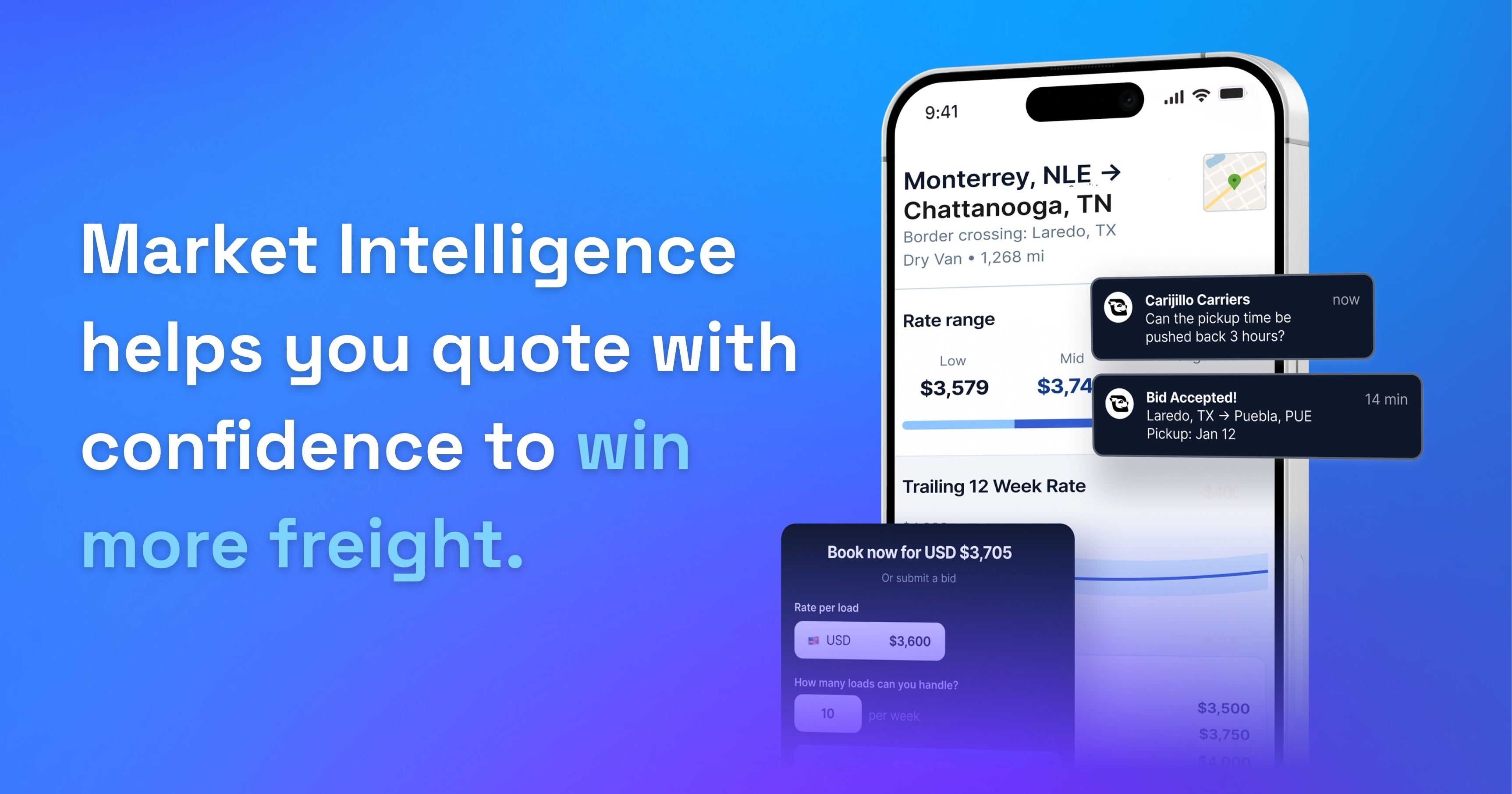
Les trois flux de travail que les données de taux du marché devraient soutenir
Les meilleures équipes de tarification n'utilisent pas les taux du marché pour une seule chose. Elles les utilisent dans trois flux de travail.
1) L'analyse comparative : discipline de tarification et validations rapides
L'analyse comparative répond à une seule question : Sommes-nous dans la bonne fourchette?
Elle prévient les deux erreurs coûteuses :
- Soumissionner trop haut et perdre le chargement (souvent sans rétroaction).
- Soumissionner trop bas, gagner, puis passer les 48 heures suivantes à essayer de couvrir le chargement.
Un bon taux de référence n'a pas besoin d'être parfait.
Il doit être crédible, et il doit être partagé pour que toute l'équipe parte de la même base.
Ce que cela débloque :
- une tarification uniforme entre les représentants et les succursales
- un encadrement fondé sur la réalité (pas sur des opinions)
- un alignement interne plus rapide sur les moments où gagner ou protéger la marge
2) La tarification au comptant : de la vitesse, avec des balises
Les soumissions au comptant sont chronométrées.
Si vous répondez lentement, vous perdez.
Si vous répondez vite avec un mauvais chiffre, vous gagnez : puis vous improvisez.
Les meilleures équipes suivent une démarche en deux étapes :
- Ancrer la première réponse rapidement à l'aide des taux du marché (une fourchette défendable).
- Resserrer la soumission avec la rétroaction en direct des transporteurs avant de s'engager.
Les données de taux du marché soutiennent la première étape, et elles aident les équipes à reconnaître tôt les exceptions, pour tarifer le risque de façon délibérée au lieu de traiter chaque transport comme un cas standard.
3) Fichiers d'offres et appels d'offres : tarifer à grande échelle sans créer une fuite de marge de 12 mois
Les appels d'offres et les fichiers d'offres sont l'endroit où les erreurs se multiplient, parce que vous répétez la même décision encore et encore.
La feuille de calcul est le piège :
- elle donne au travail une impression de certitude
- elle masque les contraintes de service
- elle transforme les hypothèses du « segment mexicain » en boîte noire
- elle encourage la précision là où il faut des balises
L'usage le plus rentable des taux du marché dans un gros appel d'offres n'est pas « le montant au sou près ».
C'est d'établir des balises :
- où se positionner et où s'abstenir
- des coussins et des planchers
- des ajustements saisonniers
- un suivi après l'attribution pour que le contrat ne devienne pas une perte silencieuse
Et en 2026, l'échelle compte.
Si vous avez 100 voies devant vous, il vous faut un moyen de tarifer des ensembles de voies efficacement (Excel / API) pour que votre équipe passe son temps à réfléchir et à valider : pas à copier-coller.
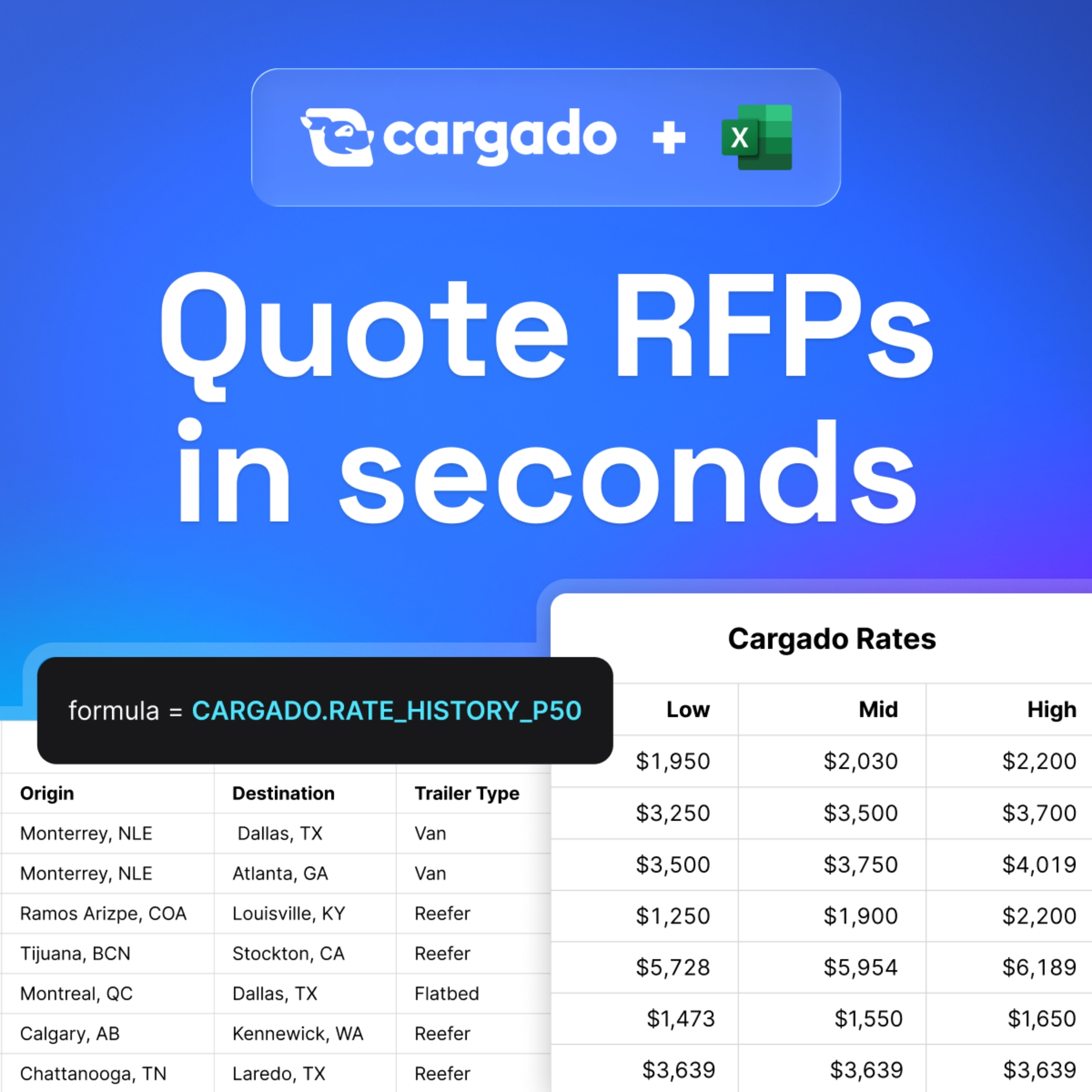
Un système pratique pour les équipes qui tarifent le fret mexicain
Si vous voulez tarifer le fret mexicain comme les meilleurs fournisseurs de services logistiques le font en 2026, commencez ici :
- Rendez les taux de référence obligatoires avant l'envoi de toute soumission.
- Fixez une entente de niveau de service interne pour le comptant : délai de première réponse + délai de réponse resserrée.
- Fixez un plafond d'achat (et faites-le respecter) : utilisez les taux du marché pour définir votre maximum, puis tenez votre équipe, et votre réseau de transporteurs, imputables.
- Traitez les fichiers d'offres comme un flux de travail, pas comme un exploit qui repose sur une seule personne.
- Mesurez les résultats : là où vous gagnez sans pouvoir couvrir, là où vous perdez rapidement, là où les voies s'écartent des hypothèses.
Une vérité essentielle en tarification : le « plafond d'achat » ne fonctionne que si les transporteurs veulent encore votre fret
Le fret mexicain est une affaire de relations.
Les taux du marché et les balises de plafond d'achat servent à prévenir les erreurs de marge auto-infligées : pas à transformer chaque conversation avec un transporteur en négociation à la baisse.
Quand la capacité se resserre, les transporteurs ont le choix. Les courtiers qui se bâtissent une réputation de chiffres irréalistes, de roulement constant ou de partenaires difficiles voient souvent le même résultat : des réponses plus lentes, moins d'offres et moins d'accès aux meilleurs camions.
Les équipes qui utilisent le mieux les données de taux jumellent généralement discipline et équité :
- Utilisez les taux du marché pour établir les attentes et informer les équipes internes (et les expéditeurs) quand le marché bouge.
- Payez des tarifs justes et adaptés à chaque voie pour que les transporteurs restent engagés.
- Protégez les relations à long terme avec les transporteurs au lieu de gagner un chargement et de perdre la voie.
L'essentiel
Les données de taux du marché ne devraient pas être un chiffre que vous consultez à l'occasion.
Elles devraient être l'épine dorsale de votre système de tarification : de l'analyse comparative aux soumissions au comptant, jusqu'aux appels d'offres.
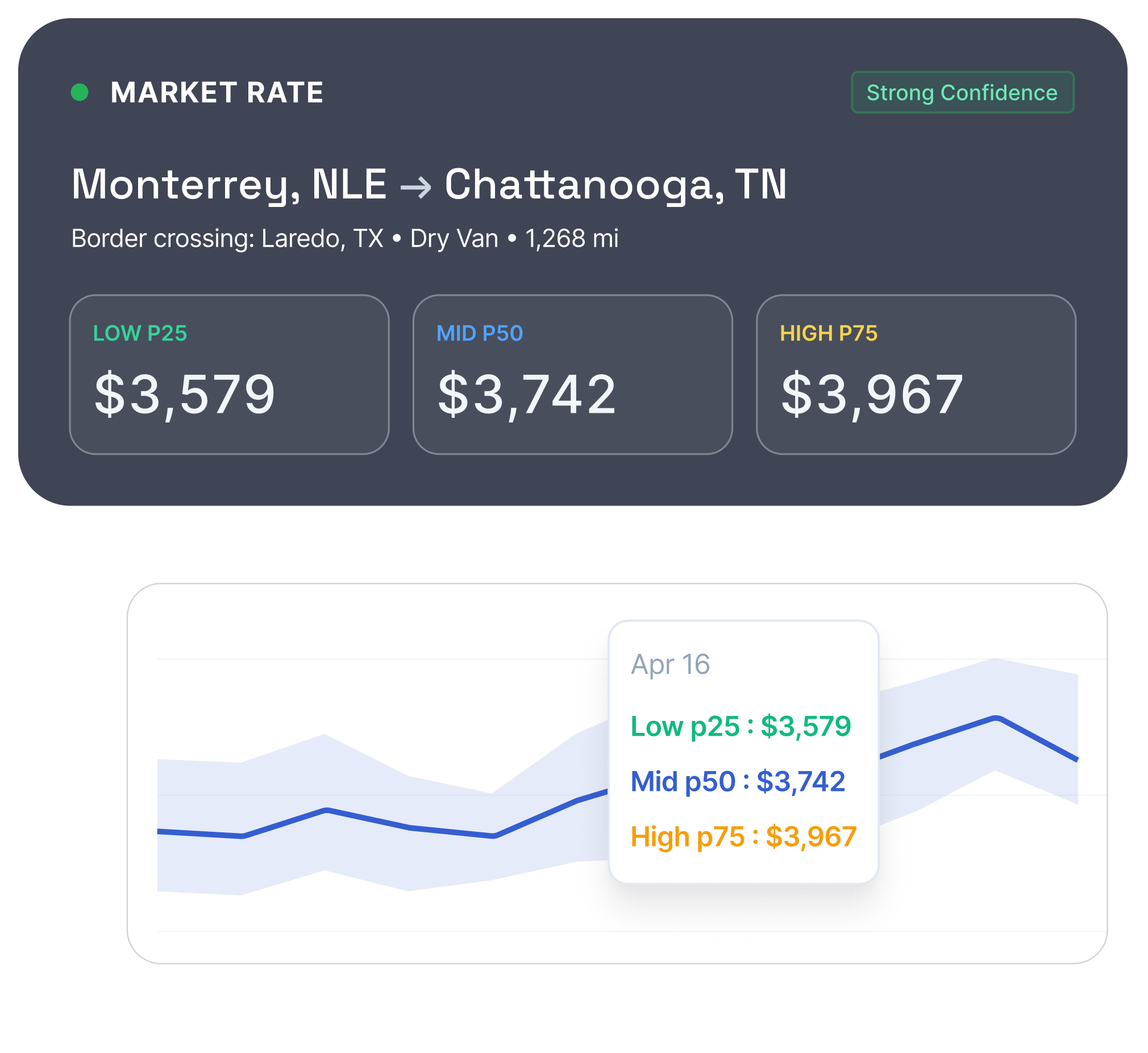
Vous voulez voir Cargado Market Rates en action?
Demandez une démonstration pour voir comment les courtiers utilisent les offres en direct de la place de marché pour :
- Comparer leurs dépenses de fret mexicain au marché
- Soumissionner plus vite au comptant avec des fourchettes crédibles
- Tarifer de grands ensembles de voies efficacement via Excel et l'API