
Boston, MA freight lanes
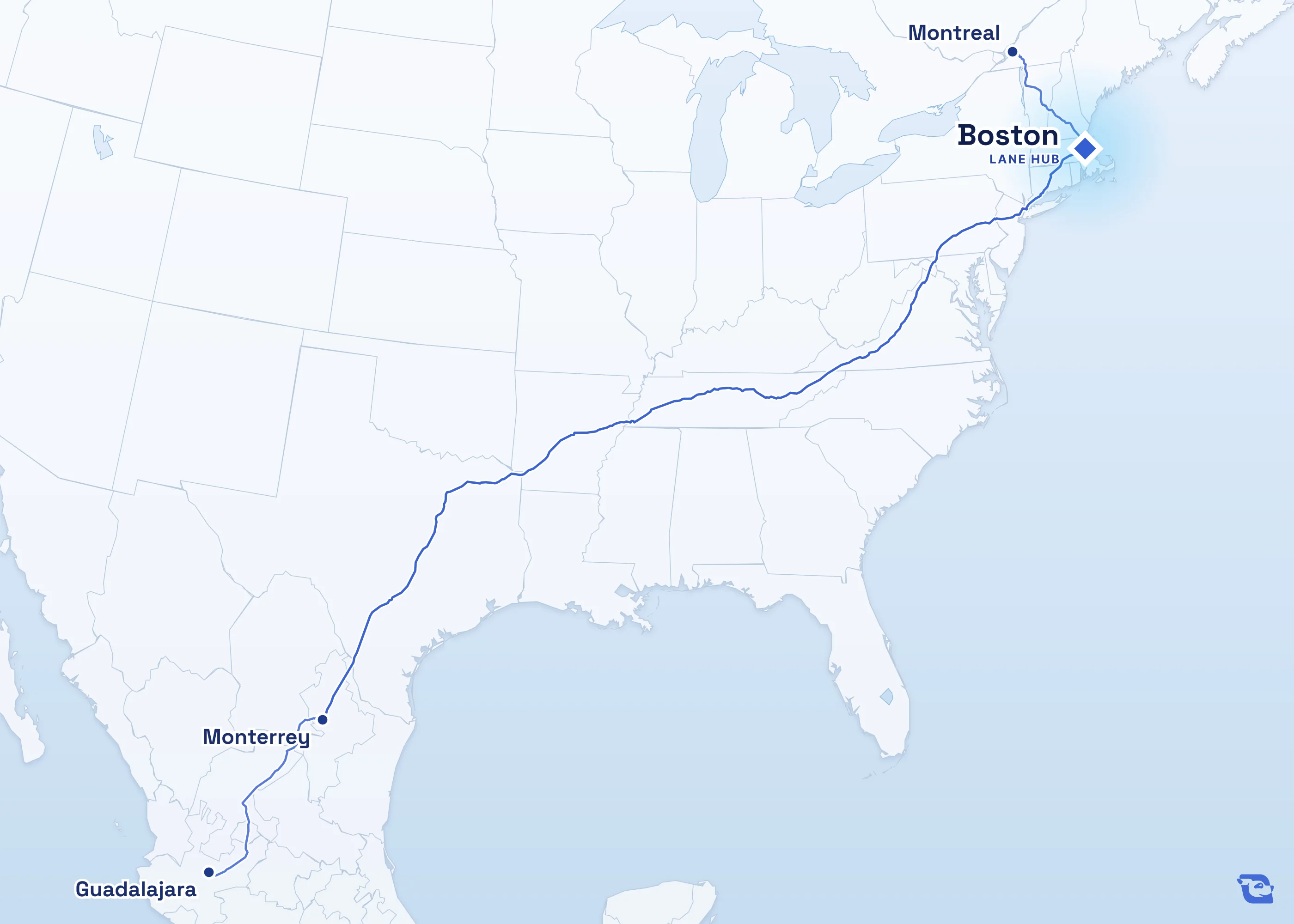
Boston is New England's port, life sciences and machinery market, at the far end of the long lanes from Mexico and connected by road with Montreal. Pick a lane in the directory to open its guide, and read how the Laredo handoff and Canada customs work on Boston freight. Cargado is a marketplace where brokers post Mexico and Canada truck freight and vetted carriers bid on it.
Laredo
251,500 TEUs
3
Dry van
Corridors out of Boston
Southbound into Mexico
To Canada
What moves through the Boston market
Boston's freight is machinery, medical and pharma products, electronics and consumer goods for New England, plus imports through Conley Terminal, which grew 6 percent to 251,500 TEUs in 2024 (Massport). Mexico lanes are long: automotive parts and appliances arriving from Monterrey, and machinery and components headed to Guadalajara, run I-90, I-81 and I-35 to and from Laredo. Boston ships machinery, food and consumer goods north to Montreal and receives Quebec food, paper and metals. Seafood adds reefer demand in both directions.
What ships from the Boston area
Plants, mills, packing houses and distribution centers within about 100 miles of Boston are among the area's main freight sources. The commodities below are ranked by employment in public business-establishment data, and each is tied to a named facility, cluster or growing region.
- Electronics and defense systems. Raytheon builds radar electronics at its Andover campus.
- Pharmaceuticals and biotech. Moderna makes mRNA medicines at its Norwood technology center.
- Medical devices. Boston Scientific, based in Marlborough, runs a customer fulfillment center in Quincy.
- Instruments and precision parts. Instrument and machined-parts makers are concentrated along Route 128 and I-495 in establishment data.
On the road, dry van carries electronics and defense systems, medical devices and instruments and precision parts; reefer carries pharmaceuticals and biotech. Post the commodity, weight and trailer type with each load so carriers can price it.
The corridor groups Boston anchors
This hub carries three guides. Mexico guides run Boston to Guadalajara, southbound, and Monterrey to Boston, northbound; each lane guide names its crossing, and the Mexico leg needs a carrier with Mexican operating authority. A Canada guide runs Boston to Montreal. If you move Boston freight on another corridor, post it on Cargado with the real origin and destination; the Elizabeth, Allentown and Harrisburg lanes on other hubs cover the rest of the Northeast. For each lane, confirm whether you need the U.S. leg only, the move into Mexico, or the customs handoff into Canada.
Covering Boston freight: what a broker needs to know
The border handoff
For freight connected with Mexico, use the lane guide's named crossing as the starting point and confirm it with the carrier and customs broker. If carriers change at the border, identify the yards, the transfer provider and whether the cargo stays in its trailer or is transloaded at a dock. Confirm the operating authority of the carrier on each leg, and check what each bid includes: the transfer, any transload, trailer use and detention.
Customs is the handoff on a Canada lane
The carrier files an ACI eManifest northbound or an ACE eManifest southbound before arrival, and the importer or its customs broker arranges release, with a PARS or PAPS reference when one is used. Provide the invoice information the importing country requires and any USMCA certification of origin needed to claim preferential treatment, and put the broker and release arrangement on the posting. Cross-border authority does not by itself allow domestic hauling in the other country, so confirm operating authority, driver eligibility and cabotage restrictions before adding a domestic leg.
City deliveries and seafood
Boston receivers often sit on tight streets with limited dock hours, so put the delivery window and any truck-size limit on the posting. Seafood and food loads need the shipper's temperature range and operating mode, with freeze protection only when the product requires it.
Related lane hubs
Boston's lane guides continue on the Guadalajara, Montreal, QC and Monterrey hubs, which list more lanes at the other end of these corridors.
For the border step, the Laredo World Trade Bridge crossing guide covers the crossing named on Boston's Mexico lanes.
Every lane guide on Cargado is listed on the lanes index.
Common questions about Boston freight
Which border crossing does Boston freight use for Mexico?
Both Mexico lane guides on this hub name Laredo, where the World Trade Bridge is the commercial default. Boston to Guadalajara is southbound and Monterrey to Boston is northbound; confirm the crossing, the authority of the carrier on each leg and any transfer with the carrier and customs broker.
What does Boston to Montreal freight need?
A carrier with Canadian operating authority, an ACI eManifest filed before arrival, and release arrangements with the importer or its customs broker, including the PARS reference when one is used. Provide the invoice information Canadian entry requires and any USMCA certification of origin needed to claim preferential treatment. Check cabotage eligibility before adding a domestic Canadian leg.
How do I find carriers for a Boston lane on Cargado?
Post the pickup and delivery, the date, the equipment and the leg you need covered. Vetted carriers that run the corridor bid, and you compare what each bid covers before you book. Where a corridor has enough bid history, Cargado Market Rates gives you a reference built from carrier bids before you quote.
What equipment runs Boston corridors?
Dry van leads, carrying machinery, medical products and consumer goods. Reefer carries seafood and food at the shipper's specified temperature, and open deck carries equipment. Post the trailer type with the weight, dimensions and loading requirements so carriers can price the load.
What freight ships out of Boston?
Facilities within about 100 miles of Boston mainly ship electronics and defense systems, pharmaceuticals and biotech, medical devices and instruments and precision parts. On the road, dry van carries electronics and defense systems, medical devices and instruments and precision parts; reefer carries pharmaceuticals and biotech.
Moving freight through this market?
Post it to 2,400+ vetted Mexico and Canada carriers, or check market rates built from real carrier bids before you quote.