
Quebec City, QC freight lanes
Quebec City combines a deep-water port on the St. Lawrence, a refinery across the river in Lévis and the distribution point for eastern Quebec. Pick a lane in the directory to open its guide, and read how Quebec paperwork, carrier authority and winter work on Quebec City freight. Cargado is a marketplace where brokers post Mexico and Canada truck freight and vetted carriers bid on it.
Port of Québec
235,000 bpd
2
Dry van
What moves through the Quebec City market
Quebec City handles bulk and breakbulk at the Port of Québec, the last deep-water port before the Great Lakes, which handled 26.8 million metric tons in 2025 (Port of Québec), and fuels at Valero's Jean Gaulin refinery in Lévis, which has a throughput capacity of 235,000 barrels a day (Valero). The region's plants make food and beverage, paper and packaging, optics and electronics and building materials, and its warehouses distribute consumer goods to eastern Quebec. Westbound, expect food, paper products and manufactured goods for Montreal, Ontario and the Prairies; eastbound, consumer goods, produce and components arriving from Montreal, Toronto and the U.S.
What ships from the Quebec City area
Plants, mills, packing houses and distribution centers within about 100 miles of Quebec City are among the area's main freight sources. The commodities below are ranked by employment in public business-establishment data, and each is tied to a named facility, cluster or growing region.
- Lumber. Sawmills south of the St. Lawrence, such as Bois Daaquam in Saint-Just-de-Bretenières, ship framing lumber.
- Furniture and wood components. Bois Kennebec in Saint-Georges makes solid-wood panels and furniture components.
- Dairy products. Agropur's Beauceville plant makes butter, cheese and milk powder.
- Buses and motorcoaches. Prevost builds coaches in Sainte-Claire, southeast of Lévis.
On the road, flatbed or open deck carries lumber; dry van carries furniture and wood components; reefer carries dairy products; driveaway and flatbed moves cover buses and motorcoaches. Post the commodity, weight and trailer type with each load so carriers can price it.
The corridor groups Quebec City anchors
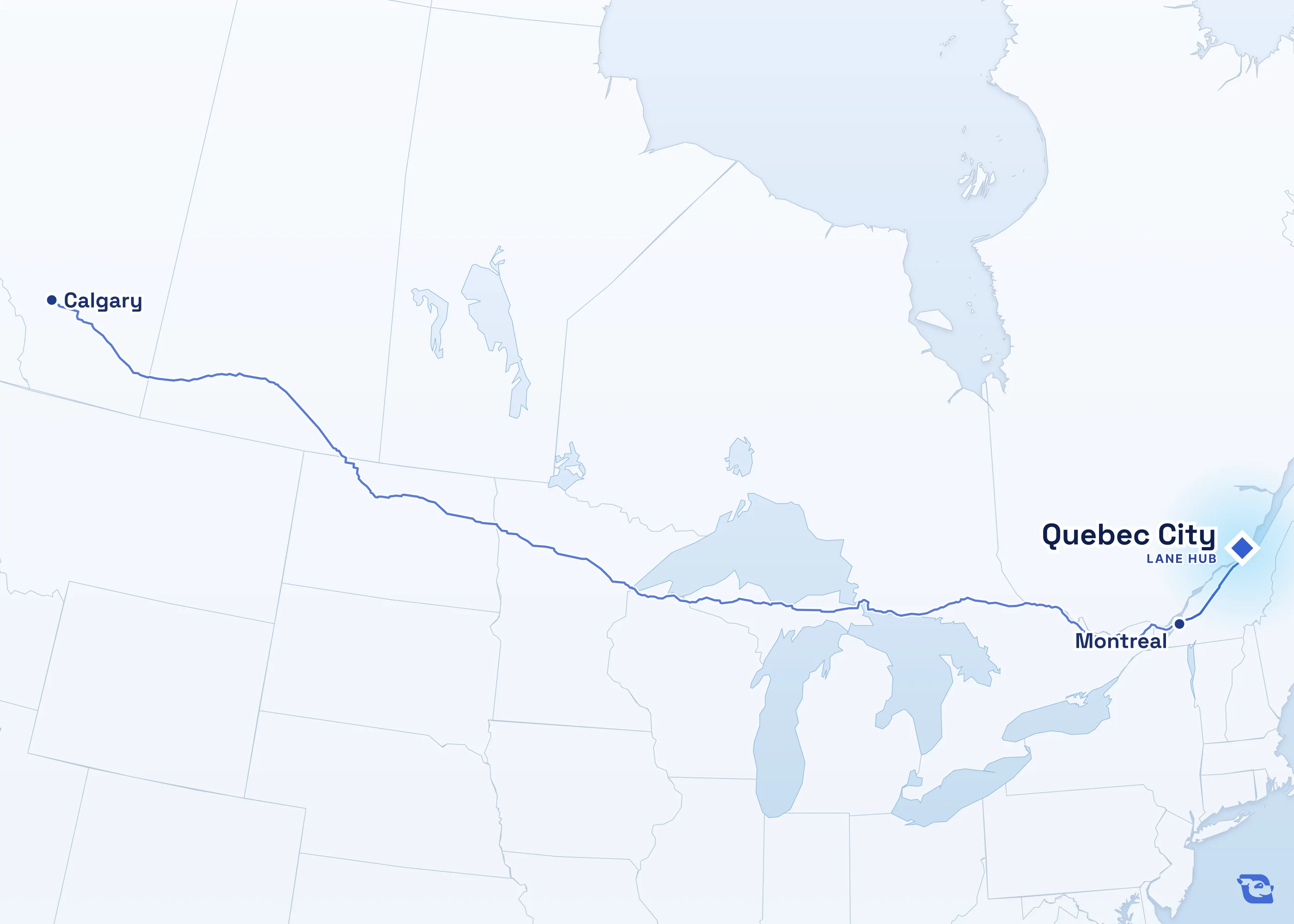
This hub carries two guides, both inbound and both domestic: Montreal to Quebec City and Calgary to Quebec City. There is no U.S. or Mexico guide yet; the Montreal hub carries the nearest U.S. guides, and a shipment that starts outside Canada needs its own origin and customs plan rather than an assumed handoff in Montreal. If you move freight out of Quebec City, post it on Cargado with the real destination. For the domestic lanes, confirm the delivery window and the French-language document requirements of the receiver.
Covering Quebec City freight: what a broker needs to know
Domestic Canadian lanes need a Canadian carrier
Both guides on this hub stay inside Canada, so confirm the carrier's domestic operating authority, driver eligibility and cabotage compliance before booking. Post the pickup, delivery and dates, and check what each bid includes, such as fuel and any terminal drop on the Calgary lane.
Quebec paperwork
Confirm the French-language requirements for the shipment's labels and documents with the shipper, including the Quebec rules that apply and the receiver's instructions, and identify which documents the driver must carry before dispatch.
Plan for winter on the booked route
Winter closures and chain-up requirements on the route the carrier books can add transit days, so check conditions on that route and build a weather margin into delivery windows. For refrigerated freight, state the shipper's temperature range and operating mode on the posting, and request freeze protection only when the product requires it.
Related lane hubs
Quebec City's lane guides continue on the Calgary, AB and Montreal, QC hubs, which list more lanes at the other end of these corridors.
Every lane guide on Cargado is listed on the lanes index.
Common questions about Quebec City freight
Do I need a Canadian carrier for a Quebec City lane?
A lane between Canada and the U.S. can run on a Canadian or a U.S. carrier with cross-border authority, and the carrier files the ACE or ACI manifest before arrival. A lane that stays inside Canada, such as Quebec City to another Canadian city, is domestic work: cross-border authority does not by itself allow it, so confirm the carrier's domestic operating authority, driver eligibility and cabotage compliance before booking. State the leg you need covered when you post on Cargado.
Do documents for Quebec City deliveries need to be in French?
Confirm the French-language requirements for the shipment's labels and documents with the shipper, including the Quebec rules that apply and the receiver's instructions, and identify which documents the driver must carry before dispatch. Note them on the posting so the shipper prepares the right paperwork.
How do I find carriers for a Quebec City lane on Cargado?
Post the pickup and delivery, the date, the equipment and the leg you need covered. Vetted carriers that run the corridor bid, and you compare what each bid covers before you book. Where a corridor has enough bid history, Cargado Market Rates gives you a reference built from carrier bids before you quote.
What equipment runs Quebec City corridors?
Dry van leads, carrying food, paper products and consumer goods. Reefer carries food and beverage at the shipper's specified temperature, and open deck carries building materials and machinery. Post the trailer type with the weight, dimensions and loading requirements so carriers can price the load.
What freight ships out of Quebec City?
Facilities within about 100 miles of Quebec City mainly ship lumber, furniture and wood components, dairy products and buses and motorcoaches. On the road, flatbed or open deck carries lumber; dry van carries furniture and wood components; reefer carries dairy products; driveaway and flatbed moves cover buses and motorcoaches.
Moving freight through this market?
Post it to 2,400+ vetted Mexico and Canada carriers, or check market rates built from real carrier bids before you quote.