
Cargado vs Truckstop for Mexico and Canada freight
A Monterrey reefer load needs a carrier that fits the equipment, the service and the schedule, and that can run the Mexico leg. Truckstop offers a load board. (Source: Truckstop's load board page, truckstop.com/product/load-board, verified September 2026.) Cargado is a marketplace for Mexico and Canada freight built around finding that carrier, and the two can run side by side.
- Truckstop offers a load board. (Source: Truckstop's load board page, truckstop.com/product/load-board, verified September 2026.) Cargado is a marketplace for Mexico and Canada freight: cross-border loads, freight inside either country, and the U.S. legs that feed the border.
- Truckstop segments its published carrier plans by equipment and prices its broker plans per user. (Sources: Truckstop's load board pricing page, truckstop.com/product/load-board/pricing; Truckstop's broker pricing page, truckstop.com/product/load-board/broker-pricing. Verified September 2026.) Cargado has one broker subscription with unlimited users, and carriers join at no cost.
- On Cargado, equipment, service and the Mexico crossings a carrier runs are recorded on the carrier profile, so a posting reaches carriers that fit it.
- You can use Cargado alongside Truckstop. Bring the Mexico and Canada lanes where carrier fit is the problem.
Different tools for different freight
| Truckstop | Cargado | |
|---|---|---|
| Built for | Load board | Marketplace for Mexico and Canada freight, matched on equipment, service and schedule |
| Plans | Carrier plans segmented by equipment; broker plans priced per user | One value-based broker subscription, unlimited users |
| Carrier cost | Paid carrier plans | No cost for vetted carriers |
What carriers and brokers have done on Cargado
Two published customer stories, in their own numbers.
This broker grew Mexico revenue 1,400% in just 4 months.
This carrier grew from 1 to 6 trucks and 50 customers using only Cargado.
When the equipment is right and the load still cannot move
A Georgia to Illinois dry van load is not the problem this page solves. The pattern to watch for: the equipment is right, the carrier is willing, and the load still cannot move because the carrier cannot run the Mexico or Canada leg, does not hold the permits the shipment needs, or cannot meet the service plan. That is the job Cargado does, and it tends to show up like this:
- A reefer posting out of Monterrey draws bids from van carriers, or from reefer carriers that stop at the border.
- A flatbed load of machinery needs a Mexican carrier with the right permits, and nobody on the team knows which of the bidders has them.
- The same three Mexican carriers get re-vetted every quarter because their permits and CTPAT status live in an inbox.
- A customer's Canada freight gets passed to another broker, and the customer relationship starts moving with it.
- Mexico and Canada capacity is tracked in WhatsApp threads on one dispatcher's phone.
- Dallas to Laredo runs every week, and nobody has matched it to the carrier on the Mexico leg of the same shipment.
Matching on equipment alone leaves the rest to you. Cargado matches the carrier on equipment, service and schedule for Mexico and Canada freight, on the same posting.
Mexico
For each Mexico shipment, confirm the service plan before you post: through-trailer or transload at the border, the equipment, any temperature requirement, and shipment-specific permits such as oversize or hazardous materials. Match the carrier to that plan rather than to the trailer type alone.
Cargado records equipment on the carrier profile next to the crossings the carrier runs and whether it moves freight door-to-door or hands off to a transload partner. Cargado checks the applicable authority records and tracks CTPAT, OEA and FAST credentials. Review matched carriers for the shipment's equipment, service and schedule before confirming coverage.
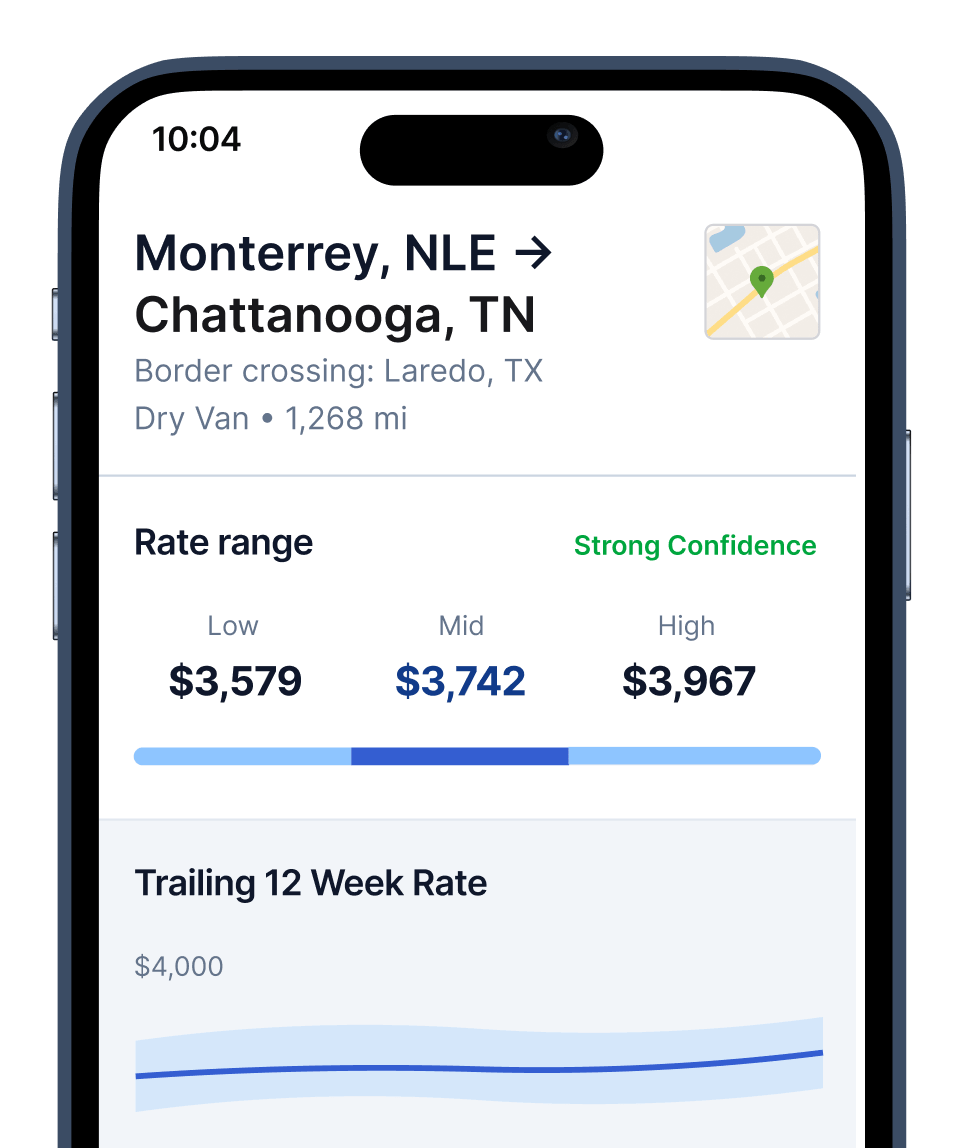
Rates follow the carrier. Benchmarks are published by corridor and equipment as low, mid and high bands built from vetted carrier bids, with a confidence score on each, so the carrier you match and the rate you quote come from the same marketplace.
Canada
For Canada freight, specify the trailer type, temperature requirements, pickup and delivery windows, and any special handling, and confirm the carrier can provide the service your customer needs. Add a bonded in-bond move, a customs entry that CBSA or CBP has to clear before arrival and a Quebec receiver who dispatches in French, and a generic van posting no longer describes the load.
Canadian carriers on Cargado pass the same verification as the rest of the network, with FAST, PIP and CTPAT status on the profile and equipment recorded the way the freight needs it. Chat translates between English, French and Spanish. U.S. to Canada and domestic Canada rate coverage is newer than the Mexico corridors and expanding, with a confidence score on each available lane.
How Cargado is built
How plans are cut. Truckstop segments its published carrier plans by equipment and prices its broker plans per user. Cargado has one model: brokers, 3PLs and forwarders pay a value-based subscription with unlimited users, and carriers of every equipment type join and bid at no cost. (Sources: Truckstop's load board pricing page, truckstop.com/product/load-board/pricing; Truckstop's broker pricing page, truckstop.com/product/load-board/broker-pricing. Verified September 2026.)
Who gets in. Both sides pass a quality and compliance check. We vet every carrier before it can bid and meet with every broker before onboarding. Postings reach matched vetted carriers and are never visible to other brokers.
How matching works. A posting carries equipment, service and schedule, and it reaches carriers whose profiles fit it. Benchmarks built from real carrier bid data sit next to the posting, so the rate and the carrier come from the same marketplace.
Run both, on purpose
You can use Cargado alongside Truckstop. Keep the load board for the freight it already covers for you, and route Mexico and Canada freight, including cross-border loads, freight within either country and the related U.S. legs, through the marketplace built to match carriers on it. Cargado connects to your TMS over API, does not broker freight, does not own trucks, and never takes a cut of a load.
Check carrier fit for your Mexico and Canada lanes
Bring three Mexico or Canada lanes, with the equipment and service each shipment needs. We will review available carriers and rate data for your equipment, service and schedule. Carriers join at no cost.
Common questions
Is Cargado a replacement for Truckstop?
No. Truckstop offers a load board. (Source: Truckstop's load board page, truckstop.com/product/load-board, verified September 2026.) Cargado is a marketplace for Mexico and Canada freight, including cross-border loads, freight moving inside either country, and the U.S. legs that feed the border, such as El Paso to Charlotte. You can use both.
Does Cargado charge per user the way Truckstop's broker plans do?
No. Truckstop's published broker plans are priced per user. Every Cargado broker plan includes unlimited users, and vetted carriers join and bid at no cost. (Source: Truckstop's broker pricing page, truckstop.com/product/load-board/broker-pricing, verified September 2026.)
How does Cargado match carriers to equipment?
Equipment is recorded on the carrier profile, alongside service details such as the Mexico crossings a carrier runs and whether it moves door-to-door or through a transload partner. A reefer posting out of Monterrey reaches reefer carriers whose profiles fit it. Review the matched carriers against the shipment's schedule before confirming coverage.
Where is Cargado's rate coverage strongest?
U.S.-Mexico lanes have the deepest coverage. U.S.-Canada and domestic Canada coverage is expanding. Check your specific origin, destination and equipment for available rate data and its confidence score.
Can carriers use Cargado while staying on Truckstop?
Yes. Vetted carriers join Cargado at no cost, so a carrier can keep a domestic subscription and run its Mexico and Canada loads through Cargado.