
DAT vs Truckstop vs Cargado for Mexico freight (2026)
An honest 2026 comparison of DAT, Truckstop, and Cargado for Mexico freight: what to evaluate, where each tool is strongest, and when to run both.
- DAT and Truckstop draw carrier authority and safety data from the FMCSA. (Sources: DAT's load board page, dat.com/load-boards; Truckstop's Carrier Hub announcement, truckstop.com/press-releases/carrier-hub-broker-assistant-launch. Verified September 2026.)
- Cargado verifies carriers through Mexico's SICT and prices lanes from real cross-border bids.
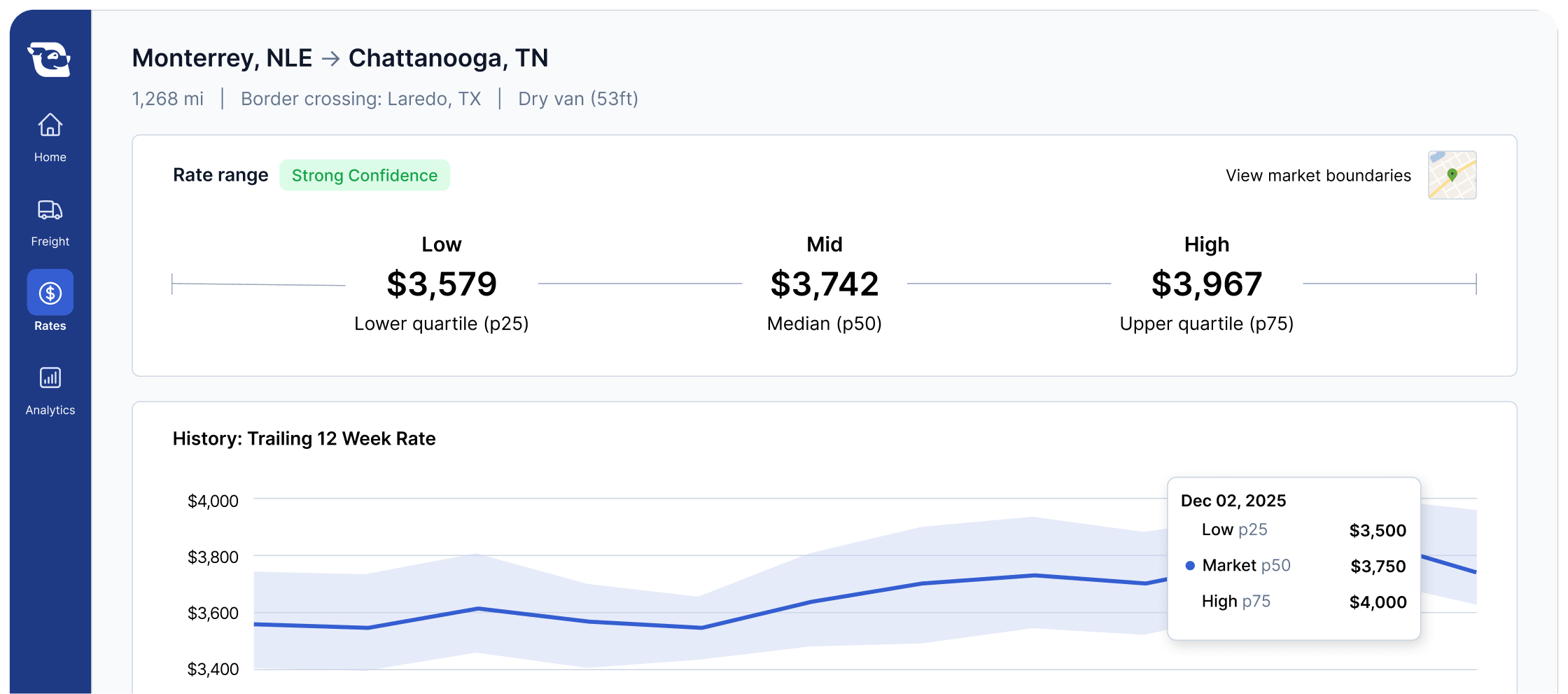
- Mexico and Canada lanes carry rate bands with confidence scores, based on real carrier bid data.
- Keep your domestic board. Add Cargado for the freight that crosses.
DAT, Truckstop and Cargado side by side
| DAT | Truckstop | Cargado | |
|---|---|---|---|
Built for | Load board | Load board | Marketplace for Mexico and Canada freight, with rate benchmarks from carrier bids |
Plans | Separate carrier and broker plans, plus combined plans, on its own pricing page | Carrier plans segmented by equipment; broker plans priced per user | One value-based broker subscription, unlimited users |
Carrier cost | Paid carrier plans | Paid carrier plans | No cost to join and bid |
What carriers and brokers have done on Cargado
Two published customer stories, in their own numbers.
This broker grew Mexico revenue 1,400% in just 4 months.
This carrier grew from 1 to 6 trucks and 50 customers using only Cargado.
What actually separates the options
Any list of load boards for Mexico freight comes down to five questions. Is the network vetted, or subject to real verification before a carrier can bid? Can the platform express what cross-border freight requires: the border crossing, the transfer arrangement, through-trailer versus transload service? Does it operate in Spanish, where most of the supply side works? Does the rate data come from real cross-border bids, or from U.S. estimates stretched over the border? And how many carriers can it genuinely reach inside Mexico? Hold every tool on this page to those five tests, and the ranking mostly writes itself.
DAT: a North American load board
DAT describes itself as North America's largest on-demand freight marketplace, and its carrier profiles pull authority, insurance and inspection data from the FMCSA. DAT publishes paid carrier plans and separate broker plans, plus combined plans, on its pricing page. The full capability breakdown is at Cargado vs DAT. (Sources: DAT's about page, dat.com/about; DAT's load board page, dat.com/load-boards; DAT's pricing page, dat.com/pricing. Verified September 2026.)
Truckstop: a load board since 1995
Truckstop has operated a spot marketplace since the earliest days of the internet, and its carrier compliance tools draw on FMCSA data. It publishes paid carrier plans segmented by equipment and prices its broker plans per user. For freight that crosses into Mexico, see Cargado vs Truckstop. (Sources: Truckstop's about page, truckstop.com/about; Truckstop's Carrier Hub announcement, truckstop.com/press-releases/carrier-hub-broker-assistant-launch; Truckstop's load board pricing page, truckstop.com/product/load-board/pricing; Truckstop's broker pricing page, truckstop.com/product/load-board/broker-pricing. Verified September 2026.)
Cargado: built for Mexico and Canada freight
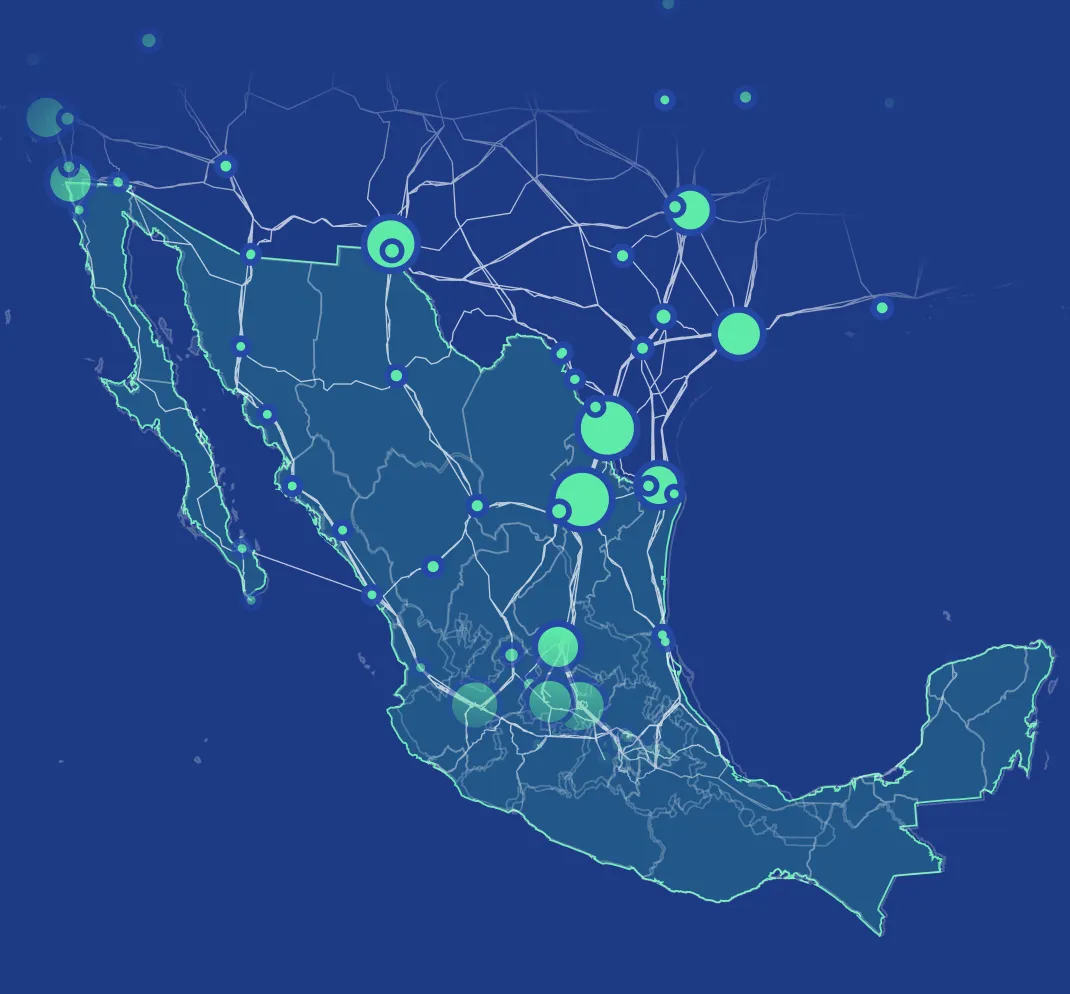
Cargado is a vetted marketplace built for cross-border and domestic Mexico and Canada freight. The network holds hundreds of brokers and 2,350+ vetted Mexico and Canada carriers, and every carrier passes document-level verification against the credentials that actually exist in Mexico before it can see a load. It also carries the U.S. domestic legs that feed the border, loads to and from cities like Laredo and El Paso. Rate bands are based on real carrier bid data across Mexico and Canada lanes, refreshed weekly with confidence scores; the methodology is public at understanding rate data. The platform runs in English, Spanish, and French with chat translation, and postings carry the border crossing, transfer type, and equipment context the move requires.
The honest recommendation: run both
No single board wins every lane. One working setup: keep DAT or Truckstop for freight that picks up and delivers inside the United States, and route loads that touch Mexico or Canada through a network vetted for that freight. The cleanest way to decide is a side-by-side test. Post your cross-border freight to both for thirty days, then compare who covered it, at what quality of carrier, and with how much off-platform chasing. Your own lanes will settle the question faster than any list, including this one.
Add Mexico and Canada coverage
Brokers see live lane rates and vetted carriers on their own lanes in a demo. Carrier access is at no cost.
Common questions
Is Cargado just a load board for Mexico?
Cargado is a marketplace with vetted carriers, rather than an open board. Every carrier is verified against Mexican credentials before it can bid, rate bands are built from real cross-border bids, and communication is bilingual with message translation. Brokers use it the way they use a load board, posting freight and receiving bids, but the vetting and rate layers are the reason it exists.
We already run DAT and Truckstop. Why add another platform?
Because Cargado covers different freight. It does not compete for deep-interior U.S. domestic spot freight, and cross-border loads need verified Mexican carriers and cross-border rate context. Keep your domestic boards and add Cargado for the freight that crosses.
Can I post U.S. domestic freight on Cargado?
Yes, where it connects to the border: U.S. loads to and from border cities, like Dallas to Laredo or El Paso to Charlotte, run on Cargado alongside cross-border freight and freight moving within Mexico and within Canada. Deep-interior U.S. loads that never touch the border corridor belong on the domestic boards.
Where does Cargado's rate data come from?
From real bids submitted by vetted carriers on Cargado, aggregated into lane-level bands across Mexico and Canada, refreshed weekly and published with confidence scores. It is cross-border data from the ground up, not a U.S. benchmark stretched over the border.
See Mexico and Canada coverage for yourself
Cargado connects hundreds of brokers with 2,350+ vetted carriers for Mexico and Canada freight.