
McAllen, TX freight lanes
McAllen is the Rio Grande Valley's distribution market beside the Pharr-Reynosa International Bridge, which connects Pharr with Reynosa; BTS ranked the Hidalgo port fourth among U.S.-Mexico truck ports by value in 2025. Pick a lane in the directory to open its guide, northbound or southbound, and read how the Reynosa handoff and produce inspections work. Cargado is a marketplace where brokers post Mexico and Canada truck freight and vetted carriers bid on it.
Pharr-Reynosa Bridge
70%
23
Dry van
Corridors out of McAllen
Southbound into Mexico
- McAllen to Guadalajara, Jalisco
- McAllen to Irapuato, Guanajuato
- McAllen to Matamoros, Tamaulipas
- McAllen to Reynosa, Tamaulipas
- McAllen to Saltillo, Coahuila
Across the U.S.
Corridors into McAllen
Northbound from Mexico
- Chihuahua to McAllen
- Guadalajara, Jalisco to McAllen
- Monterrey, Nuevo León to McAllen
- Pachuca, Hidalgo to McAllen
- Reynosa, Tamaulipas to McAllen
- Torreón, Coahuila to McAllen
From the U.S.
What moves through the McAllen market
McAllen sits across from Reynosa, one of the largest maquiladora cities in Tamaulipas, and the Hidalgo port of entry carried $40.8 billion of truck freight in 2025, 6.3 percent of U.S.-Mexico truck trade by value. It is an import-heavy gateway: 70.4 percent of that value came north, which BTS ties to just-in-time fresh produce and automotive supply chains (BTS Transborder Freight Data Annual Report: 2025). Northbound, expect produce out of Tamaulipas and central Mexico, automotive parts, appliances and electronics from Reynosa plants; southbound, components, plastics, packaging and consumer goods. The City of Pharr ranks its bridge as the top U.S. crossing for fresh produce, and cold storage and produce brokers cluster around Pharr and McAllen, so reefer capacity is a McAllen specialty.
What ships from the McAllen area
McAllen freight is mostly cross-border: produce and manufactured goods from Reynosa and beyond cross at Pharr and the other Rio Grande Valley bridges. The commodities below are tied to named facilities on both sides of the river and to the valley's own citrus groves.
- Fresh produce. The Pharr-Reynosa bridge has cold inspection and storage facilities for Mexican produce headed north.
- Citrus. Texas grapefruit and oranges grow almost entirely in the Lower Rio Grande Valley, mostly in Hidalgo County.
- Auto parts and electronics. Aptiv runs plants in Reynosa, across the river.
- Medical devices. Fresenius Medical Care makes dialysis disposables in Reynosa.
On the road, reefer carries fresh produce and citrus; dry van carries auto parts and electronics and medical devices. Post the commodity, weight and trailer type with each load so carriers can price it.
The corridor groups McAllen anchors
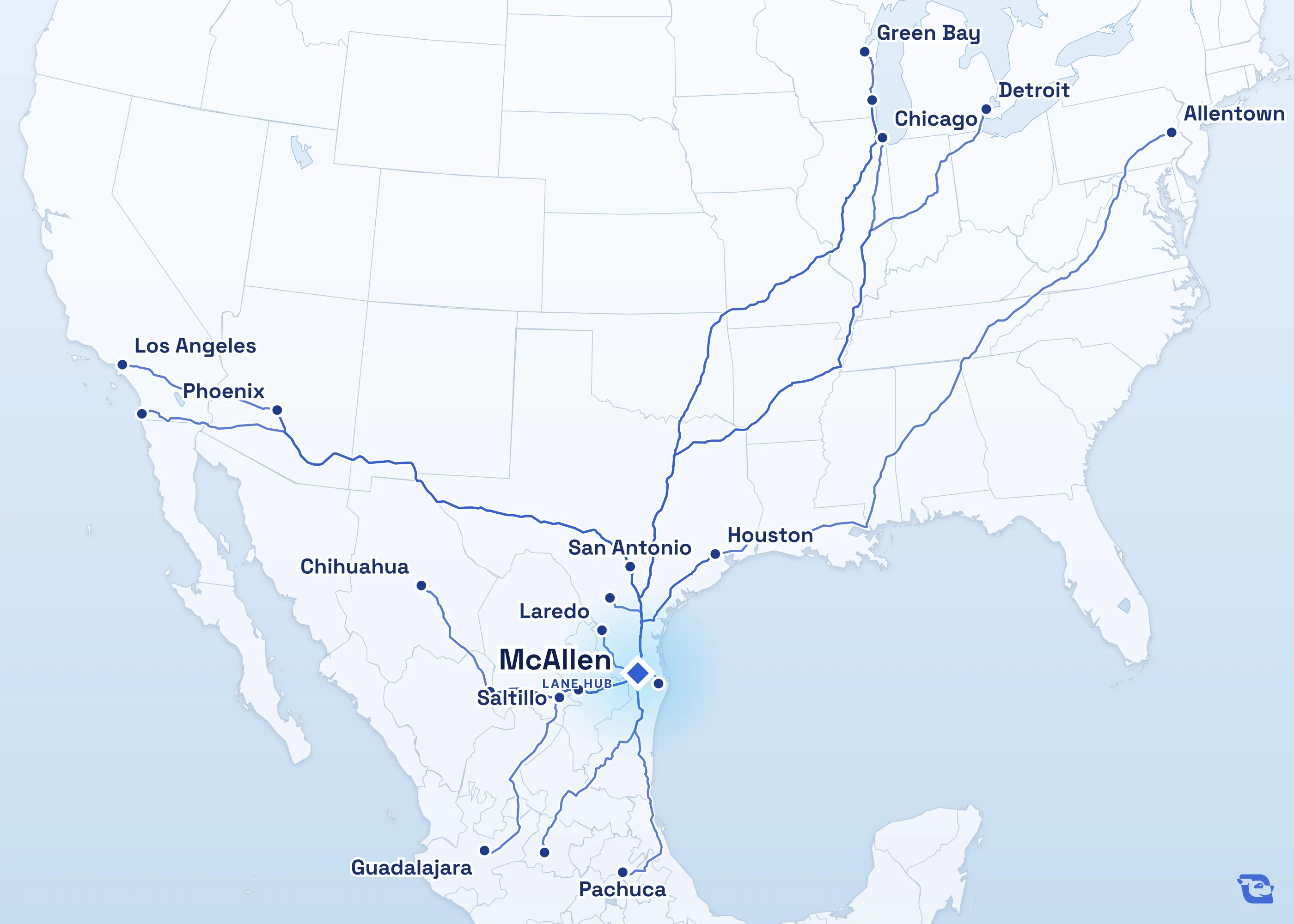
Mexico guides connect McAllen with Reynosa across the river and, further south, with Saltillo, Guadalajara and Irapuato; northbound guides add Monterrey, Chihuahua, Torreón and Pachuca, and there is a guide to Matamoros. U.S. guides run to Chicago, Detroit, Milwaukee, Allentown, Los Angeles, San Diego and San Antonio outbound, and from Houston, Laredo, Cotulla, Phoenix and Green Bay inbound. The lane guide names each Mexico lane's crossing, and a different gateway needs a complete route and customs plan, so confirm the crossing with the carrier and customs broker before you post.
Covering McAllen freight: what a broker needs to know
Pharr-Reynosa is the default crossing
The Pharr-Reynosa International Bridge is the commercial crossing and the one produce inspection is built around. The Anzalduas and Donna-Rio Bravo bridges have handled southbound empty trucks rather than loaded commercial freight, so before using either, verify that it accepts the shipment's cargo and direction and provides the inspection services required. Name the crossing on the posting so bids match it.
Produce needs a cold chain plan
Reefer loads out of the Valley often move through a cold-storage dock in Pharr or McAllen before a U.S. carrier takes them north. State the temperature range, whether the load is palletized, and whether you need continuous or cycle cooling. Inspection and clearance times vary with the commodity, so build free time into the rate and agree on who pays detention when clearance runs late.
Transload, transfer and customs
Reynosa plants commonly work on a transfer model: a Mexican carrier brings the trailer to the bridge, a transfer tractor crosses it, and a U.S. carrier picks up in Pharr or McAllen. A transload instead moves the cargo to a U.S. trailer at a Valley dock. Post the leg you need covered. Southbound, a licensed Mexican customs broker files the entry; northbound, a U.S. customs broker usually does. Confirm the commercial invoice, packing list and, for the Mexico leg, who issues the CFDI with Carta Porte details when required.
Common questions about McAllen freight
Which crossing does McAllen freight use?
Most commercial freight crosses at the Pharr-Reynosa International Bridge, the Hidalgo port of entry. Before using the Anzalduas or Donna-Rio Bravo bridges, verify that the crossing accepts the shipment's cargo and direction. Each Mexico lane guide on this hub names the crossing it uses; confirm it with your carrier and customs broker before you post.
Can I move produce north from McAllen on Cargado?
Yes. Post the pickup dock, the delivery, the date, the temperature range and whether you need continuous or cycle cooling. Reefer carriers that run the corridor bid, and you compare what each bid covers, including free time and detention, before you book.
Do I need a Mexican carrier for a McAllen lane?
Only for the Mexico leg. Lanes such as McAllen to Chicago or Houston to McAllen are domestic U.S. moves for a carrier with U.S. authority that is eligible for domestic hauling. A lane into Reynosa, Saltillo or Guadalajara needs a carrier with Mexican operating authority for the Mexico leg, and usually a tractor change, transfer carrier or transload at the bridge; name the handoff yard. State the leg you need covered when you post.
What equipment runs McAllen corridors?
Dry van leads for manufacturing and consumer goods, and reefer demand is strong because the Valley is a produce gateway. Open deck shows up for machinery and building materials. Post the trailer type with the weight, dimensions and loading requirements so carriers can price the load.
What freight ships out of McAllen?
Facilities within about 100 miles of McAllen mainly ship fresh produce, citrus, auto parts and electronics and medical devices. On the road, reefer carries fresh produce and citrus; dry van carries auto parts and electronics and medical devices.
Moving freight through this market?
Post it to 2,400+ vetted Mexico and Canada carriers, or check market rates built from real carrier bids before you quote.