
Seattle, WA freight lanes
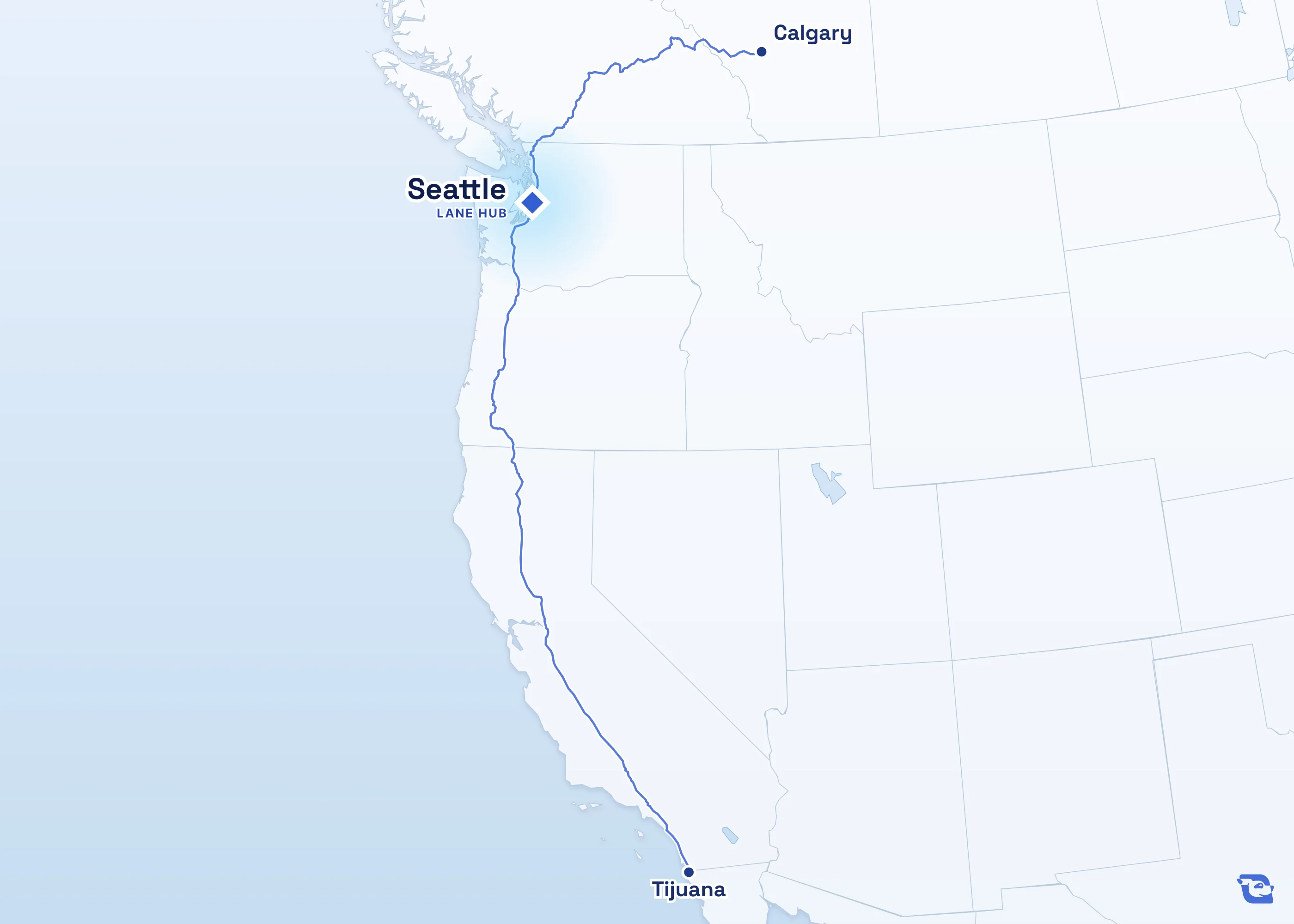
Seattle is the Pacific Northwest's port and aerospace market at the top of the I-5 corridor from California and Mexico. Pick a lane in the directory to open its guide, and read how the Otay Mesa handoff and Canada customs work on Seattle freight. Cargado is a marketplace where brokers post Mexico and Canada truck freight and vetted carriers bid on it.
Otay Mesa
3.34 million TEUs
2
Dry van
Corridors into Seattle
Northbound from Mexico
From Canada
What moves through the Seattle market
Seattle and Tacoma import for the whole Northwest. The Northwest Seaport Alliance handled 3,340,733 TEUs in 2024, up 12.3 percent, with full imports up 19.6 percent (NWSA). Around the ports sit Boeing's plants and their suppliers, food processors, and the warehouses that distribute consumer goods to Washington, Oregon, Idaho and Alaska. I-5 runs the length of the West Coast, so Mexican produce and Tijuana manufacturing arrive by road from Otay Mesa, and Seattle ships aerospace parts, machinery, apples and seafood south. The Canada guide on this hub runs from Calgary into Seattle.
What ships from the Seattle area
Plants, mills, packing houses and distribution centers within about 100 miles of Seattle are among the area's main freight sources. The commodities below are ranked by employment in public business-establishment data, and each is tied to a named facility, cluster or growing region.
- Aerospace components. Boeing builds the 737 in Renton and widebody jets in Everett, and suppliers across the Puget Sound ship parts to both.
- Export food and agriculture. The Northwest Seaport Alliance terminals in Seattle and Tacoma load apples, hay and frozen potatoes, much of it trucked in from east of the Cascades.
- Seafood. Trident Seafoods, which fishes and processes in Alaska, is headquartered in Seattle.
- Lumber. Hampton Lumber's Darrington mill ships framing lumber to North American and Asian markets.
On the road, reefer carries export food and agriculture and seafood; dry van carries aerospace components; flatbed or open deck carries lumber. Post the commodity, weight and trailer type with each load so carriers can price it.
The corridor groups Seattle anchors
This hub carries two guides, both inbound. A Mexico guide runs Tijuana to Seattle; the lane guide names Otay Mesa, and the leg north of the border runs on a carrier with U.S. authority. A Canada guide runs Calgary to Seattle. There is no outbound guide yet; if you move Seattle freight south or north, post it on Cargado with the real origin and destination, and see the Vancouver and San Diego hubs for the neighboring guides. For each lane, confirm whether you need the U.S. leg only, the move into Mexico, or the customs handoff with Canada.
Covering Seattle freight: what a broker needs to know
The Otay Mesa handoff
The Tijuana lane guide names Otay Mesa; confirm it with the carrier and customs broker, then agree on the onward truck route. If carriers change at the border, identify the Tijuana yard, the transfer provider and whether the cargo stays in its trailer or is transloaded at an Otay Mesa dock. Confirm the operating authority of the carrier on each leg, and check what each bid includes: the transfer, any transload, trailer use and detention.
Post the leg you are buying, with its real endpoints
For a full move into or out of Mexico, post the Mexican origin or destination so carriers see the whole shipment. For a separately booked U.S. leg, post the actual pickup yard and the receiving facility, and describe the connected shipment, its customs status and any handoff. Compare bids that cover the same scope of work.
Customs is the handoff on a Canada lane
The carrier files an ACI eManifest northbound or an ACE eManifest southbound before arrival, and the importer or its customs broker arranges release, with a PARS or PAPS reference when one is used. Provide the invoice information the importing country requires and any USMCA certification of origin needed to claim preferential treatment, and put the broker and release arrangement on the posting. Cross-border authority does not by itself allow domestic hauling in the other country, so confirm operating authority, driver eligibility and cabotage restrictions before adding a domestic leg.
Related lane hubs
Seattle's lane guides continue on the Calgary, AB and Tijuana hubs, which list more lanes at the other end of these corridors.
Nearby markets with their own lane directories: Vancouver, BC.
For the border step, the Otay Mesa crossing guide covers the crossing named on Seattle's Mexico lanes.
Every lane guide on Cargado is listed on the lanes index.
Common questions about Seattle freight
Which border crossing does Seattle freight use for Mexico?
The Tijuana lane guide on this hub names Otay Mesa, the main commercial port of entry into San Diego. Confirm the crossing and the onward route with the carrier, along with operating authority for each leg and any transfer or transload arrangement.
What does Calgary to Seattle freight need?
A carrier with U.S. operating authority, an ACE eManifest filed before arrival, and entry arrangements with the importer or its customs broker, including the PAPS release reference when one is used. Provide the invoice information U.S. entry requires and any USMCA certification of origin needed to claim preferential treatment. Check cabotage eligibility before adding a domestic U.S. leg.
How do I find carriers for a Seattle lane on Cargado?
Post the pickup and delivery, the date, the equipment and the leg you need covered. Vetted carriers that run the corridor bid, and you compare what each bid covers before you book. Where a corridor has enough bid history, Cargado Market Rates gives you a reference built from carrier bids before you quote.
What equipment runs Seattle corridors?
Dry van leads, carrying imports, aerospace parts and consumer goods. Reefer carries produce, apples and seafood, and open deck carries machinery and lumber. Post the trailer type with the weight, dimensions and loading requirements so carriers can price the load.
What freight ships out of Seattle?
Facilities within about 100 miles of Seattle mainly ship aerospace components, export food and agriculture, seafood and lumber. On the road, reefer carries export food and agriculture and seafood; dry van carries aerospace components; flatbed or open deck carries lumber.
Moving freight through this market?
Post it to 2,400+ vetted Mexico and Canada carriers, or check market rates built from real carrier bids before you quote.