
Toledo, OH freight lanes
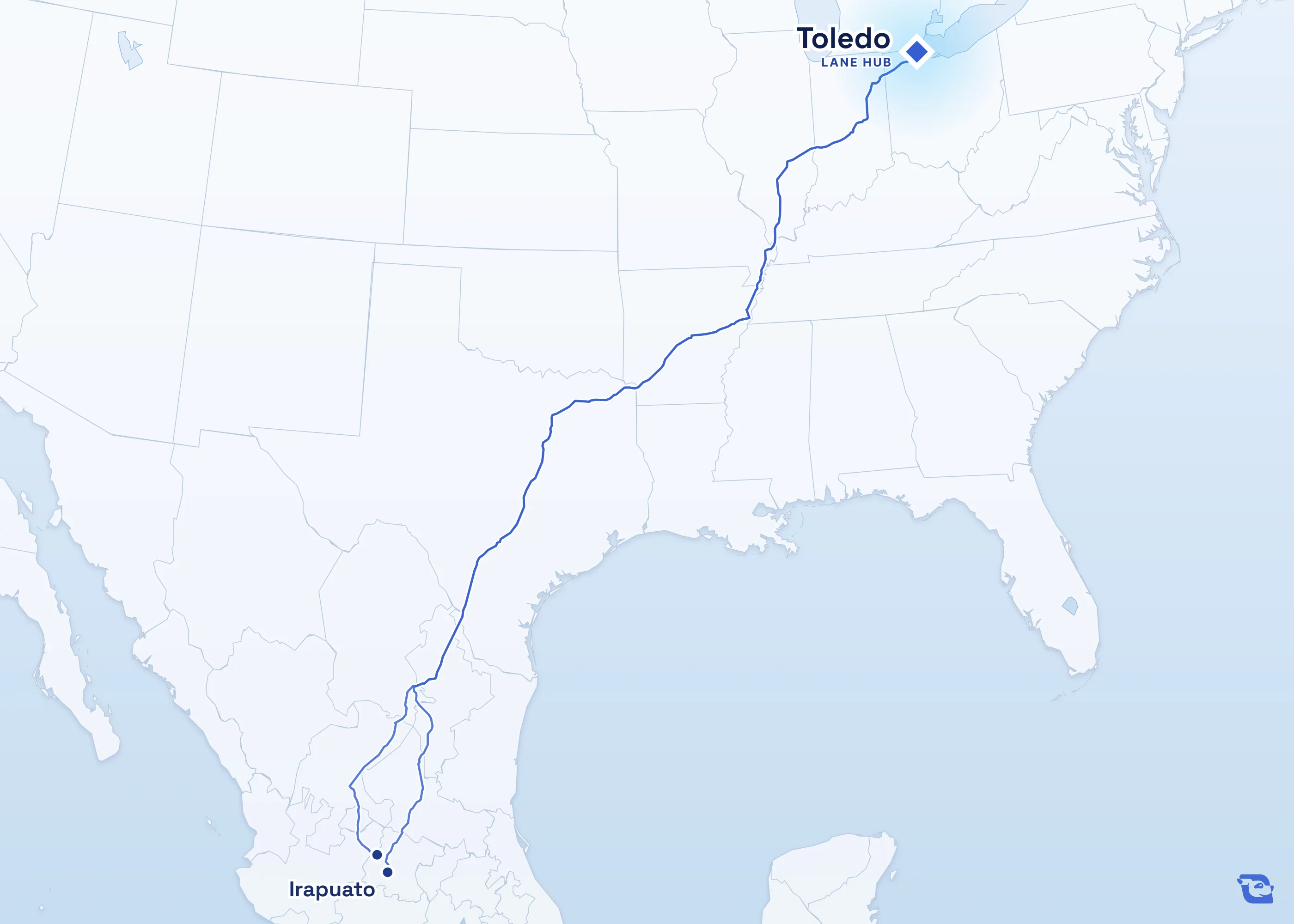
Toledo is a Jeep and glass city at the west end of Lake Erie, where I-75, I-80 and I-90 meet, with two Bajío corridors on this hub. Pick a lane in the directory to open its guide, and read how the Laredo handoff and plant deliveries work on Toledo freight. Cargado is a marketplace where brokers post Mexico and Canada truck freight and vetted carriers bid on it.
Laredo
Nearly $400 million
2
Dry van
What moves through the Toledo market
Toledo builds Jeeps and makes glass. In October 2025 Stellantis announced nearly $400 million for the Toledo Assembly Complex to build an all-new midsize truck alongside the Wrangler and Gladiator, with more than 900 jobs projected and a launch expected in 2028 (13abc), and the glass, solar and automotive suppliers around it ship in both directions. The metro also handles pharma and medical distribution, metals and building materials, and grain and bulk at the port. Mexico freight, mainly automotive parts to and from the Bajío plants, reaches the Laredo gateway by I-75 and I-35. For Canada shipments, confirm the carrier's authority, the ACE or ACI filing and the release arrangement before dispatch.
What ships from the Toledo area
Plants, mills, packing houses and distribution centers within about 100 miles of Toledo are among the area's main freight sources. The commodities below are ranked by employment in public business-establishment data, and each is tied to a named facility, cluster or growing region.
- Finished vehicles. Stellantis' Toledo Assembly Complex builds the Jeep Wrangler and Gladiator.
- Auto parts. Dana, headquartered in Maumee, makes axles and driveline parts, and the supplier park on the Jeep site builds bodies and chassis.
- Glass and solar panels. First Solar makes solar modules in Perrysburg, and the area's glass makers ship bottles, flat glass and insulation.
- Steel and bulk cargo. The Port of Toledo's marine terminals handle steel, metals and grain that move inland by truck.
On the road, flatbed or open deck carries glass and solar panels and steel and bulk cargo; car haulers carry finished vehicles; dry van carries auto parts. Post the commodity, weight and trailer type with each load so carriers can price it.
The corridor groups Toledo anchors
This hub carries two guides, both Mexico: Toledo to Irapuato and León to Toledo, Bajío corridors in opposite directions whose lane guides name Laredo; confirm the crossing and any transfer or transload separately for each shipment, and the Mexico leg needs a carrier with Mexican operating authority. There is no U.S. or Canada guide yet; the Detroit and Columbus guides on other hubs cover the neighboring corridors. If you move Toledo freight on another corridor, post it on Cargado with the real origin and destination. For each lane, confirm whether you need the U.S. leg, the Mexico leg or the door-to-door move, and who covers the transfer.
Covering Toledo freight: what a broker needs to know
The border handoff
For freight connected with Mexico, use the lane guide's named crossing as the starting point and confirm it with the carrier and customs broker. If carriers change at the border, identify the yards, the transfer provider and whether the cargo stays in its trailer or is transloaded at a dock. Confirm the operating authority of the carrier on each leg, and check what each bid includes: the transfer, any transload, trailer use and detention.
Automotive freight has its own rules
Plant deliveries run on appointment windows, returnable racks and just-in-time schedules. Put the dock hours, the appointment, the rack or pallet count and any returnable equipment on the posting so the carrier prices the real move. For glass, specify whether the cargo is large sheets or packaged product, and confirm racks or specialized trailers with the shipper and carrier.
Post the leg you are buying, with its real endpoints
For a full move into or out of Mexico, post the Mexican origin or destination so carriers see the whole shipment. For a separately booked U.S. leg, post the actual pickup yard and the receiving facility, and describe the connected shipment, its customs status and any handoff. Compare bids that cover the same scope of work.
Related lane hubs
Toledo's lane guides continue on the Leon and Irapuato hubs, which list more lanes at the other end of these corridors.
Nearby markets with their own lane directories: London, ON and Toronto, ON.
For the border step, the Laredo World Trade Bridge crossing guide covers the crossing named on Toledo's Mexico lanes.
Every lane guide on Cargado is listed on the lanes index.
Common questions about Toledo freight
Which border crossing does Toledo freight use for Mexico?
Both Mexico lane guides on this hub name Laredo, where the World Trade Bridge is the commercial default. Use the Toledo to Irapuato guide for southbound freight and the León to Toledo guide for northbound freight, and confirm the crossing and any transfer or transload with the carrier and customs brokers.
Do I need a Mexican carrier for a Toledo to Irapuato move?
Only for the Mexico leg, which needs a carrier with Mexican operating authority. Verify authority for every assigned leg, including any U.S. service, and confirm whether the shipment uses a through-trailer, a carrier handoff or a transload. State the leg you need covered when you post on Cargado.
How do I find carriers for a Toledo lane on Cargado?
Post the pickup and delivery, the date, the equipment and the leg you need covered. Vetted carriers that run the corridor bid, and you compare what each bid covers before you book. Where a corridor has enough bid history, Cargado Market Rates gives you a reference built from carrier bids before you quote.
What equipment runs Toledo corridors?
Dry van leads, carrying automotive parts, pharma and consumer goods. Open deck and specialized trailers carry glass, metals and machinery, and reefer demand is smaller. Post the trailer type with the weight, dimensions and loading requirements so carriers can price the load.
What freight ships out of Toledo?
Facilities within about 100 miles of Toledo mainly ship finished vehicles, auto parts, glass and solar panels and steel and bulk cargo. On the road, flatbed or open deck carries glass and solar panels and steel and bulk cargo; car haulers carry finished vehicles; dry van carries auto parts.
Moving freight through this market?
Post it to 2,400+ vetted Mexico and Canada carriers, or check market rates built from real carrier bids before you quote.