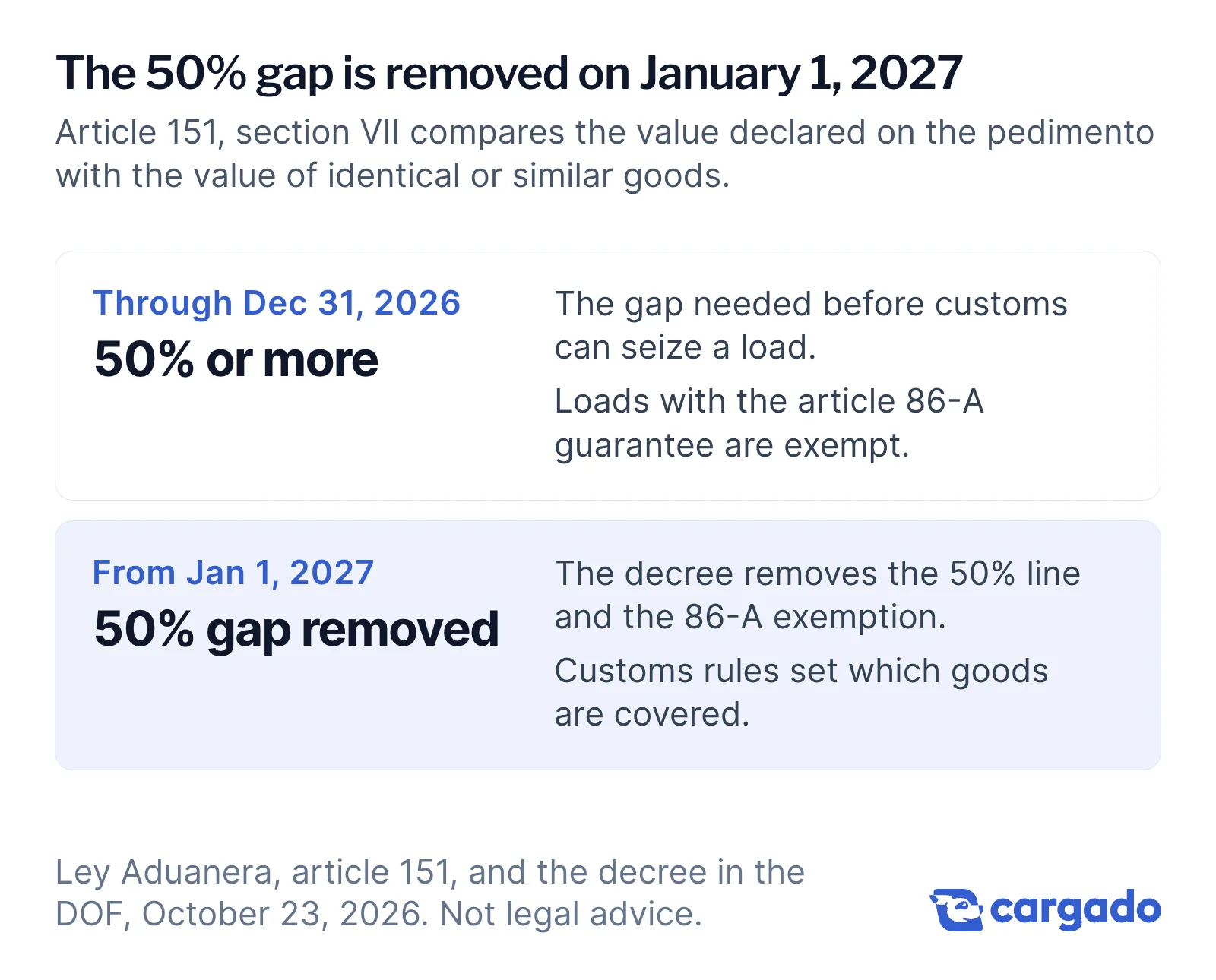
As of November 15, 2026. Starting January 1, 2027, Mexico's Ley Aduanera (Customs Law) no longer requires a 50% gap between the value declared on a pedimento and the value of identical or similar goods before customs can seize a load. Article 151 covers the truck too, and article 202 of the customs regulations says when it is not seized.
The change comes from a decree published in the Diario Oficial de la Federación (DOF), Mexico's official gazette, on October 23, 2026. The rules that say which goods the new seizure ground covers were not in the DOF index as of the morning of November 15, 2026. The latest edition listed was the November 13 evening edition.
What changes on January 1?
- Seizure. Article 151, section VII (fracción VII) makes a declared value below the transaction value of identical or similar goods a ground for precautionary seizure (embargo precautorio). The current text requires a gap of 50% or more and exempts loads covered by the article 86-A guarantee. The decree removes both.
- Audit. Under a new paragraph in article 144, section XII, customs opens an audit on its own initiative when the declared value is below that benchmark.
- Temporary imports. For regimes that determine duties without payment, such as IMMEX, article 177, section XII presumes an infraction when an audit finds a value 20% or more below the benchmark, down from 50%, if a definitive import would have underpaid duties.
For goods without a finance ministry estimated price, an importer can ask within 10 business days of the notice to replace a seizure with a deposit, and article 153 requires a decision at once, with no penalty, when the documents prove the value. Our earlier post, Declaring customs value for Mexico imports under the 2027 rule, covers that procedure and the hydrocarbons fines.
What happens to the truck?
Article 151 orders the seizure of the goods and of "los medios en que se transporten", the means that transport them. A later paragraph says in cases I to IV, VI and VII the vehicle "quedará como garantía del interés fiscal", stays as a guarantee for the tax authority, unless the conditions in the Reglamento (the law's regulations) are met. The decree left both unchanged.
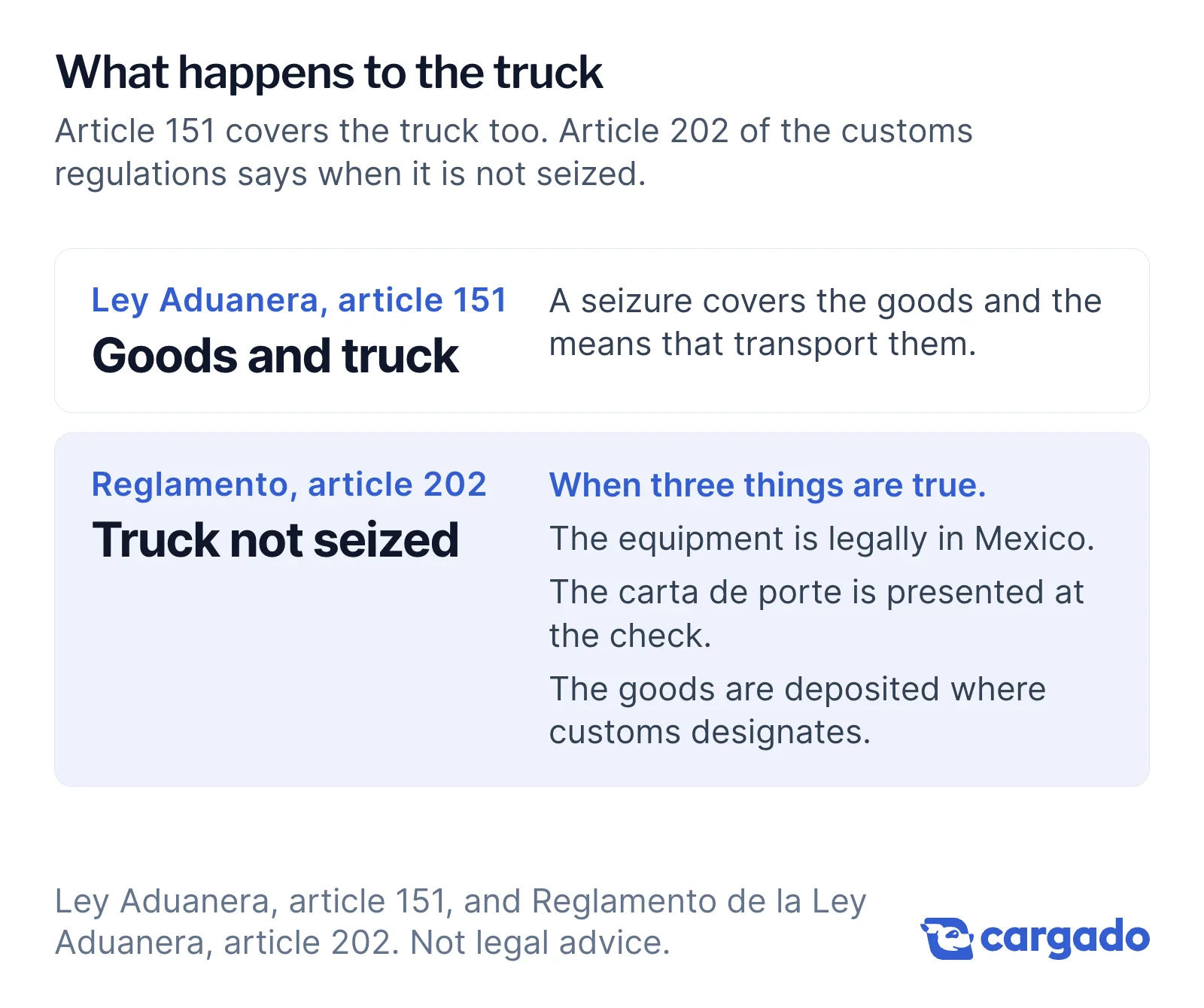
Article 202 of the Reglamento says customs will not seize tractors, trucks, trailers, semitrailers and containers that carry seized foreign goods when three things are true.
- The equipment is legally in Mexico.
- The carta de porte (waybill) is presented at the time of the check.
- The goods are deposited at the customs or bonded facility customs designates.
Article 151 also requires an order from the competent customs authority before a section VII seizure proceeds during customs inspection or an in-transit check. These transport rules are not new. The decree changes the value gap that can lead to them.
What is still open?
The decree's second transitory article says section VII applies to the goods, and under the procedure, that customs sets in rules. For other goods, customs may set the percentage gap that counts for a seizure. The rules are due in the DOF by December 31, 2026.
Until they publish, it is too early to say any gap leads to a seizure, and too early to rely on the old 50% line.
What can brokers and carriers ask before January?
The importer has to keep proof of the declared value (article 59, section III), so the answers come from your shipper, its importer and the agente aduanal, the Mexican customs broker.
- How is the declared value documented? Ask what the importer keeps for each load: invoice or CFDI, purchase order or contract, proof of payment, and freight and insurance documents. Under article 65, transport, insurance and handling costs up to the border are part of the customs value when the importer pays them and they are not already in the price, so ask whether the importer needs your freight invoice.
- Is the price lower for a reason? Baker McKenzie, a law firm, notes that related-party sales, volume discounts and differences in commercial level can put a legitimate price below what customs sees for comparable goods. Ask whether your shipper can document them.
- What happens to the truck if customs holds the load? Ask the agente aduanal where the goods would be unloaded and how the truck is released.
- What will the driver carry? Carriers can confirm the driver has the Carta Porte and documents that show the tractor and trailer are legally in Mexico.
This is general information, not legal advice.
Brokers pricing Mexico lanes into 2027 can check low, mid and high rates built from real carrier bids with Cargado Market Rates. For rates, capacity and lane conditions on Mexico freight each month, sign up for the Cargado Market Update.
Frequently asked questions
When does Mexico's Customs Law reform take effect?
January 1, 2027. The decree amending the Ley Aduanera was published in the Diario Oficial de la Federación on October 23, 2026, and its first transitory article sets the start date.
Can Mexican customs keep the truck when it seizes a load over declared value?
Article 151 of the Ley Aduanera says that in a seizure under section VII the vehicle stays as a guarantee unless the requirements and conditions in the regulations are met. Article 202 of the regulations says tractors, trucks, trailers, semitrailers and containers that carry seized foreign goods are not seized when they are legally in Mexico, the carta de porte is presented at the time of the check and the goods are deposited at the facility customs designates.
Does any value gap lead to a seizure starting January 1?
That is not settled as of November 15, 2026. The text of article 151, section VII no longer sets a minimum gap. The decree's second transitory article says the section applies to the goods and procedure that customs sets in rules, and that customs may set a percentage gap for other goods. Those rules are due in the Diario Oficial de la Federación by December 31, 2026 and were not in its index as of the morning of November 15, 2026, when the latest edition listed was the November 13 evening edition.
What changes for IMMEX and other temporary imports?
From January 1, 2027, article 177, section XII presumes an infraction when an audit finds a declared value 20% or more below the transaction value of identical or similar goods, if a definitive import at that value would have underpaid duties. The line is 50% through December 31, 2026. A broker with an IMMEX consignee can ask the same value questions.
What can a broker ask before January?
Ask each shipper how its importer documents declared value (invoice or CFDI, purchase order or contract, proof of payment, freight and insurance documents) and whether related-party or discounted pricing applies. Ask the Mexican customs broker how a hold would be handled.
Sources
- Diario Oficial de la Federación, Decreto por el que se reforman y adicionan diversas disposiciones de la Ley Aduanera (October 23, 2026)
- Cámara de Diputados, Ley Aduanera, consolidated text before the decree (última reforma DOF 19-11-2025), artículos 56, 59, 65, 72, 73, 86-A, 151, 153, 154 y 177
- Cámara de Diputados, Reglamento de la Ley Aduanera (última reforma DOF 23-02-2026), artículo 202
- Diario Oficial de la Federación, daily index (morning and evening editions checked October 23 through the morning of November 15, 2026; latest edition listed November 13, evening)
- Baker McKenzie, Mexico: Customs Reform Expands Precautionary Seizure for Undervalued Imports (October 2026)
- Consorcio Jurídico Aduanero, Reforma a la Ley Aduanera 2027 en materia de Subvaluación