
Altamira, Tamaulipas freight lanes
Altamira is the Gulf of Mexico's industrial port north of Tampico, a petrochemical and container gateway whose truck freight reaches the U.S. through Laredo. Open the lane guide in the directory, and read how a port pickup, the Laredo handoff and Mexican paperwork work on Altamira freight. Cargado is a marketplace where brokers post Mexico and Canada truck freight and vetted carriers bid on it.
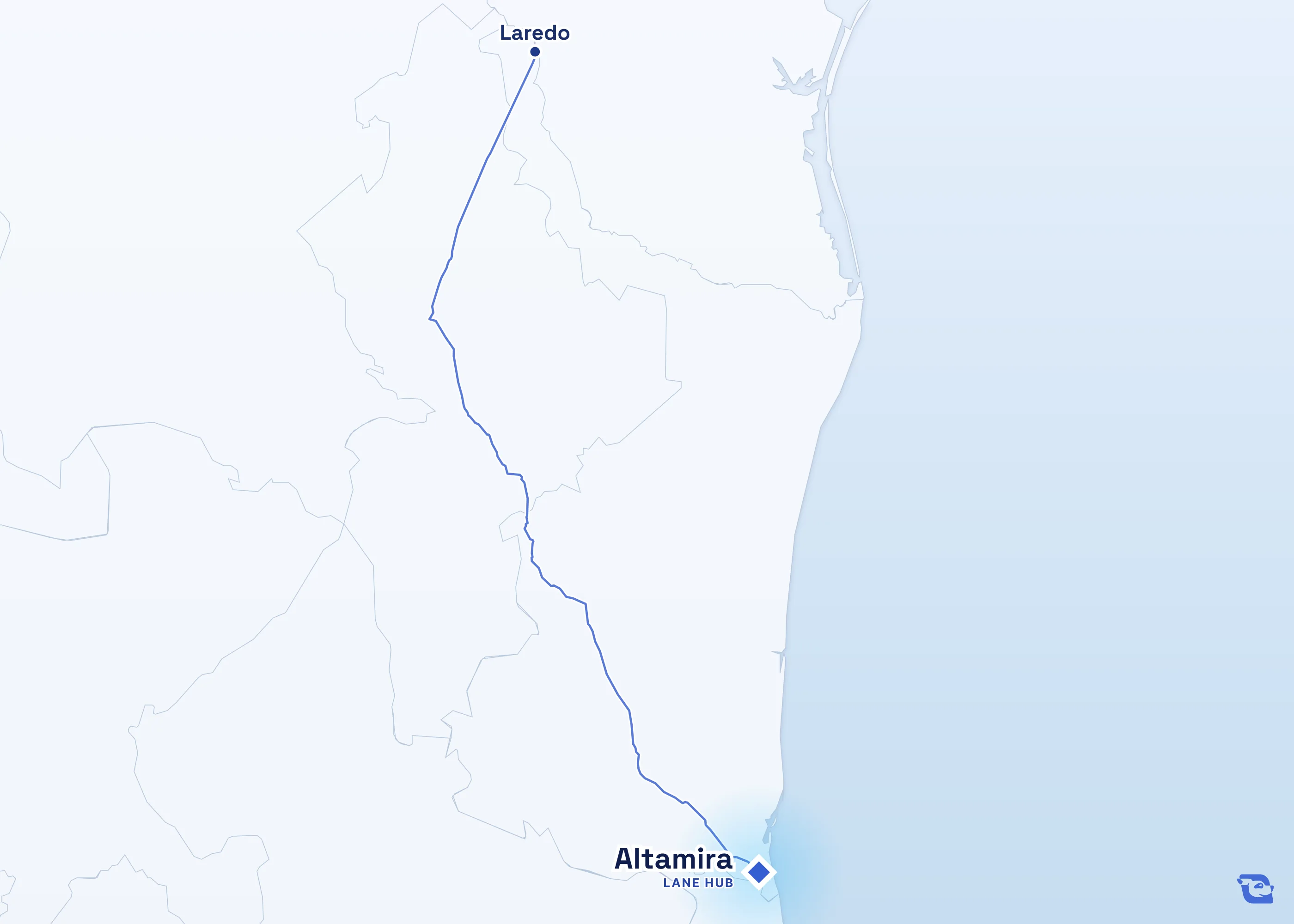
Laredo
14 terminals
1
Dry van and open deck
What moves through the Altamira market
Altamira is a port city first. Its industrial port complex, open since 1985, runs 14 marine terminals and handles about 22 million metric tons of cargo a year, much of it petrochemicals, steel, automotive and containers (Port of Altamira 2023 Yearbook). The petrochemical and chemical plants around the port ship resins, additives and industrial chemicals by truck, and the automotive supply chain uses Altamira for imported components and exported vehicles. By road, Altamira freight for the U.S. runs north through Ciudad Victoria and Monterrey, joining Federal Highway 85, to Laredo, or to the Rio Grande Valley through Matamoros and Reynosa.
What ships from the Altamira area
Plants, mills, packing houses and distribution centers within about 100 miles of Altamira are among the area's main freight sources. The commodities below are ranked by employment in public business-establishment data, and each is tied to a named facility, cluster or growing region.
- Chemicals and plastic resins. Indelpro makes polypropylene and BASF makes polyols in Altamira's petrochemical corridor.
- Steel sheet. POSCO makes galvanized sheet for automakers in Altamira.
- Beverages. Coca-Cola FEMSA bottles soft drinks at its Altamira plant.
- Packaged food. Food processors rank among the area's top employers in establishment data.
On the road, dry van carries beverages and packaged food; hopper and bulk trailers carry chemicals and plastic resins; flatbed or open deck carries steel sheet. Post the commodity, weight and trailer type with each load so carriers can price it.
The corridor groups Altamira anchors
This hub carries one guide so far, Altamira to Laredo, the border leg for port and plant freight headed into Texas and beyond. There is no inbound guide yet. If you move freight into Altamira, or from Altamira to another market, post it on Cargado with the real origin and destination; the Laredo, Monterrey and Reynosa hubs carry the neighboring guides. For the Laredo lane, confirm whether you need the Mexican linehaul to a Nuevo Laredo yard, a full move to a U.S. destination beyond Laredo, or a transload, and, for international lanes, who covers the border transfer; domestic Mexico lanes have no crossing.
Covering Altamira freight: what a broker needs to know
Port pickups need the container and terminal details
For a container or breakbulk pickup, put the terminal, the container number, the release and free-time windows, and any chassis or tank requirement on the posting. Chemicals may need hazmat-certified carriers and placards; state the UN number and class.
The Laredo handoff
A Mexican carrier runs the load north through Monterrey to a Nuevo Laredo yard, a transfer carrier crosses the World Trade Bridge, and a U.S. carrier picks up in Laredo; a transload moves the cargo to another trailer at a dock instead. Post the leg you need covered and check what each bid includes: the transfer, any transload, trailer use and detention.
Mexican authority, CFDI and customs
Any leg inside Mexico needs a carrier with Mexican operating authority, and for every Mexican leg confirm who issues the CFDI, Mexico's electronic tax document, with Carta Porte details when required. Northbound, a U.S. customs broker usually files the U.S. entry at Laredo. Agree on free time, detention and storage at the port and the border yard before dispatch.
Related lane hubs
Altamira's lane guides continue on the Laredo, TX hub, which lists more lanes at the other end of these corridors.
Nearby markets with their own lane directories: San Luis Potosi, Santiago de Querétaro and Cuautitlán Izcalli.
For the border step, the Laredo World Trade Bridge crossing guide covers the crossing named on Altamira's Mexico lanes.
Every lane guide on Cargado is listed on the lanes index.
Common questions about Altamira freight
Which border crossing does Altamira freight use?
Altamira freight for the U.S. usually runs north through Ciudad Victoria and Monterrey to cross at Laredo, where the World Trade Bridge is the commercial default. The lane guide on this hub names the crossing it uses.
Do I need a Mexican carrier for an Altamira lane?
Yes, for the leg inside Mexico: it needs a carrier with Mexican operating authority, and chemical loads may need hazmat certification. If the shipment continues beyond Laredo, confirm the onward carrier's authority and whether that leg is included in the bid. State the leg you need covered when you post on Cargado.
How do I find carriers for an Altamira lane on Cargado?
Post the pickup and delivery, the date, the equipment and the leg you need covered. For a port pickup, include the terminal and release details; for the border, the crossing and the handoff plan. Vetted carriers that run the corridor bid, and you compare what each bid covers before you book.
What equipment runs Altamira corridors?
Dry van carries chemicals in drums and totes, auto parts and consumer goods. Open deck, tank and container chassis carry petrochemicals, steel and project cargo out of the port. Post the trailer type with the weight, dimensions and securement requirements so carriers can price the load.
What freight ships out of Altamira?
Facilities within about 100 miles of Altamira mainly ship chemicals and plastic resins, steel sheet, beverages and packaged food. On the road, dry van carries beverages and packaged food; hopper and bulk trailers carry chemicals and plastic resins; flatbed or open deck carries steel sheet.
Moving freight through this market?
Post it to 2,400+ vetted Mexico and Canada carriers, or check market rates built from real carrier bids before you quote.