
San Luis Potosí freight lanes
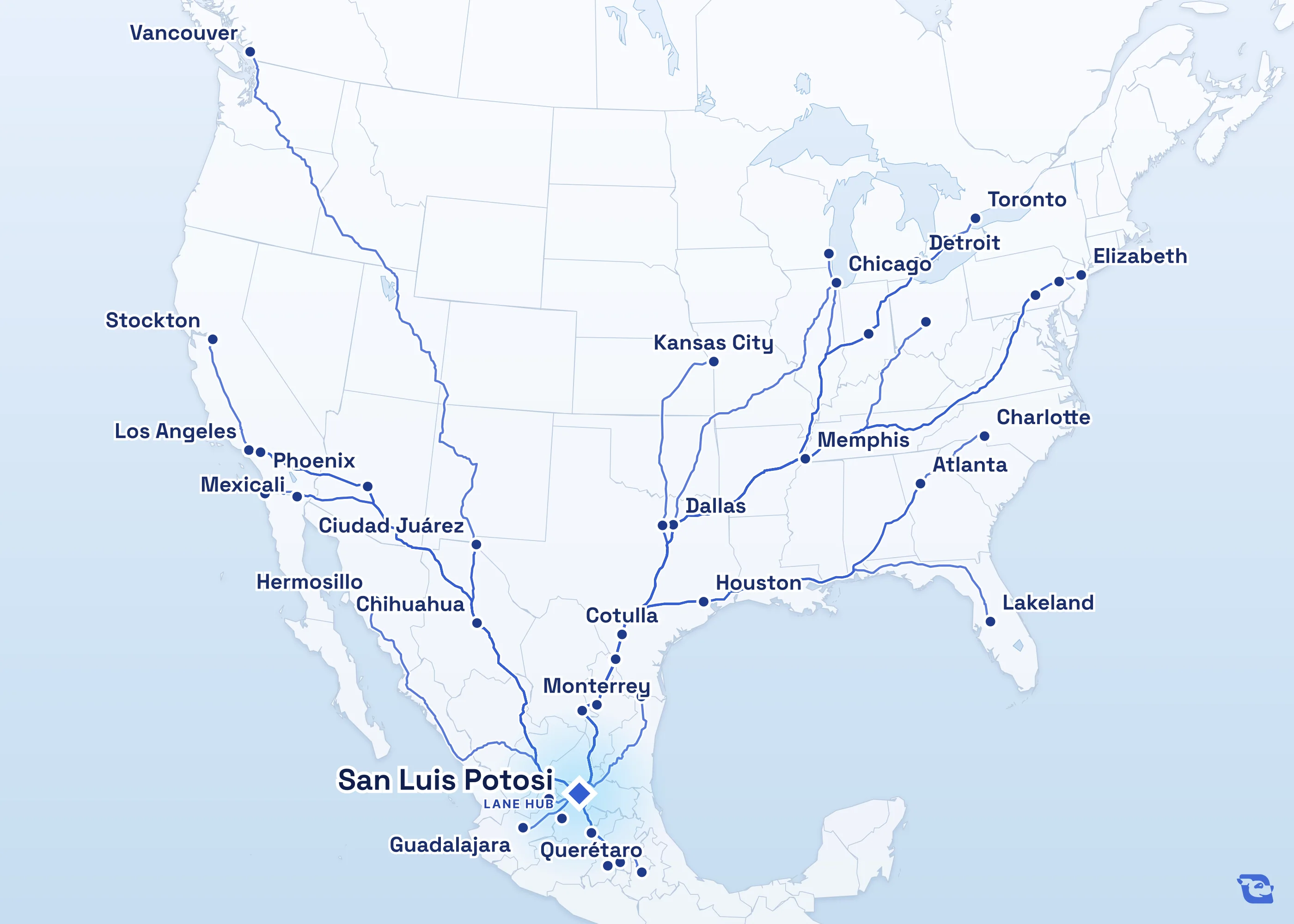
San Luis Potosí sits on Highway 57 between Mexico City and Laredo, with BMW and GM plants and a logistics zone built around that position. Pick an origin or destination in the directory to open its lane guide, and read how the Laredo handoff and Mexican paperwork work on San Luis Potosí freight. Cargado is a marketplace where brokers post Mexico and Canada truck freight and vetted carriers bid on it.
Laredo
400,000+
62
Dry van
Corridors out of San Luis Potosí
Northbound into the U.S.
- San Luis Potosí to Atlanta, GA
- San Luis Potosí to Charlotte, NC
- San Luis Potosí to Chicago, IL
- San Luis Potosí to Columbus, OH
- San Luis Potosí to Dallas, TX
- San Luis Potosí to Detroit, MI
- San Luis Potosí to Elizabeth, NJ
- San Luis Potosí to Fort Worth, TX
- San Luis Potosí to Harrisburg, PA
- San Luis Potosí to Houston, TX
- San Luis Potosí to Indianapolis, IN
- San Luis Potosí to Kansas City, MO
- San Luis Potosí to Lakeland, FL
- San Luis Potosí to Laredo, TX
- San Luis Potosí to Memphis, TN
- San Luis Potosí to Milwaukee, WI
- San Luis Potosí to Stockton, CA
Within Mexico
- San Luis Potosí to Aguascalientes
- San Luis Potosí to Chihuahua
- San Luis Potosí to Ciudad Juárez, Chihuahua
- San Luis Potosí to Guadalajara, Jalisco
- San Luis Potosí to Hermosillo, Sonora
- San Luis Potosí to León, Guanajuato
- San Luis Potosí to Mexicali, Baja California
- San Luis Potosí to Mexico City
- San Luis Potosí to Monterrey, Nuevo León
- San Luis Potosí to Nuevo Laredo, Tamaulipas
- San Luis Potosí to Reynosa, Tamaulipas
- San Luis Potosí to Santiago de Querétaro, Querétaro
- San Luis Potosí to Tijuana, Baja California
- San Luis Potosí to Toluca, Estado de México
To Canada
Corridors into San Luis Potosí
Southbound from the U.S.
- Allentown, PA to San Luis Potosí
- Atlanta, GA to San Luis Potosí
- Charlotte, NC to San Luis Potosí
- Chicago, IL to San Luis Potosí
- Cotulla, TX to San Luis Potosí
- Dallas, TX to San Luis Potosí
- Detroit, MI to San Luis Potosí
- Elizabeth, NJ to San Luis Potosí
- Houston, TX to San Luis Potosí
- Indianapolis, IN to San Luis Potosí
- Kansas City, MO to San Luis Potosí
- Laredo, TX to San Luis Potosí
- Los Angeles, CA to San Luis Potosí
- Memphis, TN to San Luis Potosí
- Milwaukee, WI to San Luis Potosí
- Ontario, CA to San Luis Potosí
- Phoenix, AZ to San Luis Potosí
Within Mexico
- Aguascalientes to San Luis Potosí
- Ciudad Juárez, Chihuahua to San Luis Potosí
- León, Guanajuato to San Luis Potosí
- Monterrey, Nuevo León to San Luis Potosí
- Puebla to San Luis Potosí
- Reynosa, Tamaulipas to San Luis Potosí
- Saltillo, Coahuila to San Luis Potosí
- Tijuana, Baja California to San Luis Potosí
- Toluca, Estado de México to San Luis Potosí
From Canada
What moves through the San Luis Potosí market
San Luis Potosí is an automotive and logistics city. BMW's plant had built more than 400,000 vehicles by September 2024 at a capacity above 450 a day (BMW Blog), GM builds vehicles nearby, and the Logistik and WTC industrial zones along Highway 57 house the suppliers, appliance makers and distribution centers that serve them. Northbound, expect automotive parts, finished vehicles on specialized carriers, appliances, consumer goods and plastics; southbound, components, steel, resins and retail goods. Laredo is about seven hours north by Highway 57 and 85, and Mexico City about five hours south, which is why so many corridors pass through.
What ships from the San Luis Potosí area
Plants, mills, packing houses and distribution centers within about 100 miles of San Luis Potosí are among the area's main freight sources. The commodities below are ranked by employment in public business-establishment data, and each is tied to a named facility, cluster or growing region.
- Finished vehicles. BMW builds the 3 Series and 2 Series Coupe in San Luis Potosí, and GM builds crossovers in Villa de Reyes.
- Auto parts. GM's complex includes a transmission plant, and the area's industrial parks host many auto suppliers.
- Stoves and appliances. Mabe makes stoves at its San Luis Potosí plant.
- Consumer goods. Retail distribution centers, such as Coppel's at WTC Industrial Park III, ship across central Mexico.
On the road, dry van carries auto parts, stoves and appliances and consumer goods; car haulers carry finished vehicles. Post the commodity, weight and trailer type with each load so carriers can price it.
The corridor groups San Luis Potosí anchors
U.S. guides run from San Luis Potosí to Laredo, Dallas, Fort Worth, Houston, the Midwest, Southeast and Northeast and Stockton, and back from the same regions plus Cotulla, Los Angeles, Ontario and Phoenix. Mexico guides connect the city with Monterrey, Saltillo, Nuevo Laredo, Reynosa, Querétaro, the Bajío, Aguascalientes, Guadalajara, Mexico City, Toluca and the northern border cities, and inbound with Puebla. Canada guides run each way with Toronto and Vancouver, and to London, Ontario. Confirm whether you need the Mexico leg, the U.S. leg or the door-to-door move, and, for international lanes, who covers the Laredo transfer; domestic Mexico lanes have no crossing.
Covering San Luis Potosí freight: what a broker needs to know
Automotive freight has its own rules
Plant deliveries run on appointment windows, returnable racks and just-in-time schedules. Put the dock hours, the appointment, the rack or pallet count and any returnable equipment on the posting. Finished vehicles move on auto-hauler carriers, a separate market from dry van carriers.
The Laredo handoff
Most San Luis Potosí freight for the U.S. or Canada runs up Highway 57 and 85 to a Nuevo Laredo yard on a Mexican carrier, transfers across the World Trade Bridge, and continues on a U.S. carrier; a transload moves the cargo to another trailer at a dock instead. Post the leg you need covered and check what each bid includes: the transfer, any transload, trailer use and detention.
Mexican authority, CFDI and customs
Any leg inside Mexico needs a carrier with Mexican operating authority, and for every Mexican leg confirm who issues the CFDI, Mexico's electronic tax document, with Carta Porte details when required. Northbound, a U.S. customs broker usually files the U.S. entry at Laredo; southbound, the importer's licensed Mexican customs broker, or an authorized representative, files the Mexican entry. Agree on free time and detention up front.
Common questions about San Luis Potosí freight
Which border crossing does San Luis Potosí freight use?
Most lanes into the U.S. and Canada run north on Highway 57 through Saltillo to cross at Laredo, about seven hours away, where the World Trade Bridge is the commercial default. Each cross-border lane guide on this hub names the crossing it uses; the domestic lanes have no crossing.
Do I need a Mexican carrier for a San Luis Potosí lane?
Yes, for any leg inside Mexico: it needs a carrier with Mexican operating authority. A lane to a U.S. or Canadian city usually runs San Luis Potosí to a Nuevo Laredo yard on a Mexican carrier, then a transfer across the bridge and a carrier with U.S. authority to destination. For a Canadian destination, also confirm U.S. transit paperwork, Canadian entry and each carrier's authority. State the leg you need covered when you post on Cargado so the carriers authorized for it can bid.
How do I find carriers for a San Luis Potosí lane on Cargado?
Post the pickup and delivery, the date, the equipment and the leg you need covered. For a Mexico move, include the crossing and the handoff plan; for a Canada lane, the customs broker and the release arrangement. Vetted carriers that run the corridor bid, and you compare what each bid covers before you book. Where a corridor has enough bid history, Cargado Market Rates gives you a reference built from carrier bids before you quote.
What equipment runs San Luis Potosí corridors?
Dry van leads, carrying automotive parts, appliances, consumer goods and plastics. Open deck carries stampings and machinery, and reefer carries food and beverage. Post the trailer type with the weight, dimensions and loading requirements so carriers can price the load.
What freight ships out of San Luis Potosí?
Facilities within about 100 miles of San Luis Potosí mainly ship finished vehicles, auto parts, stoves and appliances and consumer goods. On the road, dry van carries auto parts, stoves and appliances and consumer goods; car haulers carry finished vehicles.
Moving freight through this market?
Post it to 2,400+ vetted Mexico and Canada carriers, or check market rates built from real carrier bids before you quote.