
San Francisco, CA freight lanes
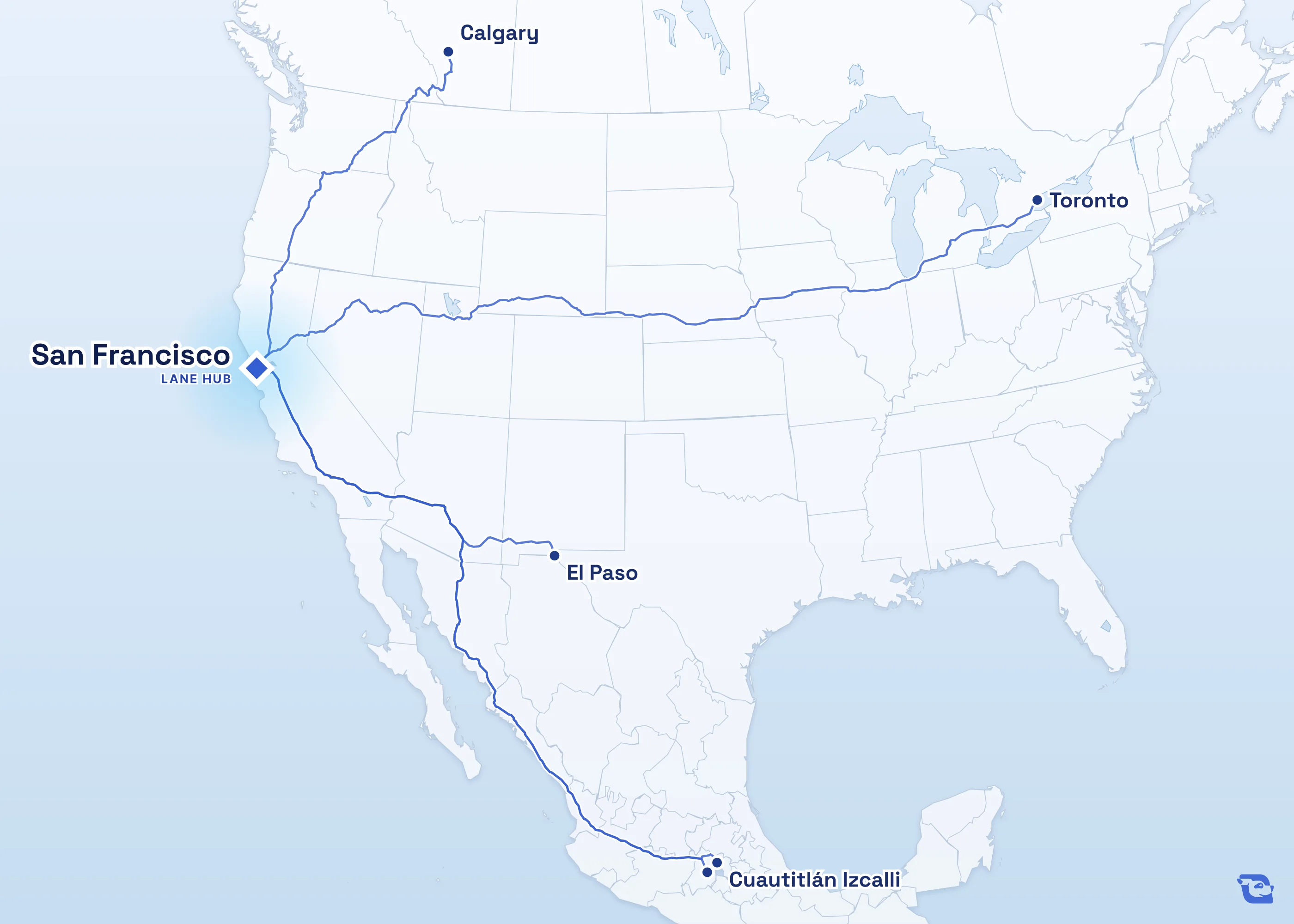
The San Francisco Bay Area is a technology, food and port market with lane guides to central Mexico, Calgary and Toronto and an inbound guide from El Paso. Pick a lane in the directory to open its guide, and read how the border handoff and Canada customs work on Bay Area freight. Cargado is a marketplace where brokers post Mexico and Canada truck freight and vetted carriers bid on it.
Otay Mesa or Laredo
2.26 million TEUs
5
Dry van
Corridors out of San Francisco
Southbound into Mexico
To Canada
What moves through the San Francisco market
The Bay Area ships electronics and machinery from Silicon Valley, wine and produce from the valleys around it, and imports through the Port of Oakland, which processed 2.26 million twenty-foot equivalent units of container cargo in 2024, up 9.5 percent on the year (Port of Oakland). Central Mexico plants receive Bay Area electronics and components, and the region receives Mexican produce, appliances and automotive parts. Bay Area freight for Mexico can cross at Otay Mesa or Calexico East for Baja and the Pacific corridor, or run I-10 to El Paso and I-35 to Laredo for central Mexico. The Canada guides on this hub run to Calgary and Toronto.
What ships from the San Francisco area
Plants, mills, packing houses and distribution centers within about 100 miles of San Francisco are among the area's main freight sources. The commodities below are ranked by employment in public business-establishment data, and each is tied to a named facility, cluster or growing region.
- Electronics and EVs. Silicon Valley's electronics and instrument makers and Tesla's Fremont factory ship from the south and east bay.
- Pharmaceuticals and biotech. Genentech manufactures and distributes medicines from its South San Francisco campus.
- Wine. E. & J. Gallo is based in Modesto and also operates wineries in Napa and Sonoma.
- Export agriculture. The Port of Oakland loads nuts, meat and other farm exports that reach it by truck from the Central Valley.
On the road, dry van carries electronics and EVs and wine; reefer carries pharmaceuticals and biotech and export agriculture. Post the commodity, weight and trailer type with each load so carriers can price it.
The corridor groups San Francisco anchors
This hub carries five guides. Mexico guides run San Francisco to Cuautitlán Izcalli and San Francisco to Toluca, central Mexico moves that cross at Laredo. Canada guides run San Francisco to Calgary and San Francisco to Toronto. A U.S. guide runs El Paso to San Francisco, a lane that may connect with a Mexico shipment or may be domestic. If you move Bay Area freight on another corridor, post it on Cargado with the real origin and destination. For each lane, confirm whether you need the U.S. leg only, the move into Mexico, or the customs handoff into Canada.
Covering San Francisco freight: what a broker needs to know
Choose the Mexico gateway by destination
Baja and Pacific-corridor freight crosses at Otay Mesa or Calexico East; central Mexico freight for Querétaro, Toluca or Mexico City usually runs I-10 and I-35 to cross at Laredo, or I-10 to El Paso. The lane guide names its crossing; confirm it with the carrier and post the crossing so bids match the handoff, which runs on a transfer carrier at the bridge with a Mexican carrier for the Mexico leg.
Post the leg you are buying, with its real endpoints
For a full move into or out of Mexico, post the Mexican origin or destination so carriers see the whole shipment. For a separately booked U.S. leg, post the actual pickup yard and the receiving facility, and describe the connected shipment, its customs status and any handoff. Compare bids that cover the same scope of work.
Customs is the handoff on a Canada lane
The carrier files an ACI eManifest northbound or an ACE eManifest southbound before arrival, and the importer or its customs broker arranges release, with a PARS or PAPS reference when one is used. Provide the invoice information the importing country requires and any USMCA certification of origin needed to claim preferential treatment, and put the broker and release arrangement on the posting. Cross-border authority does not by itself allow domestic hauling in the other country, so confirm operating authority, driver eligibility and cabotage restrictions before adding a domestic leg.
Related lane hubs
San Francisco's lane guides continue on the El Paso, TX, Calgary, AB and Cuautitlán Izcalli hubs, which list more lanes at the other end of these corridors.
For the border step, the Laredo World Trade Bridge crossing guide covers the crossing named on San Francisco's Mexico lanes.
Every lane guide on Cargado is listed on the lanes index.
Common questions about San Francisco freight
Which border crossing does San Francisco freight use for Mexico?
It depends on the destination. Baja California and the Pacific corridor cross at Otay Mesa or Calexico East; central Mexico lanes such as San Francisco to Toluca usually cross at Laredo. Each Mexico lane guide on this hub names the crossing it uses.
What does San Francisco to Calgary or Toronto freight need?
A carrier with Canadian operating authority, an ACI eManifest filed before arrival, and release arrangements with the importer or its customs broker, including the PARS reference when one is used. Provide the invoice information Canadian entry requires and any USMCA certification of origin needed to claim preferential treatment. Check cabotage eligibility before adding a domestic Canadian leg.
How do I find carriers for a San Francisco lane on Cargado?
Post the pickup and delivery, the date, the equipment and the leg you need covered. Vetted carriers that run the corridor bid, and you compare what each bid covers before you book. Where a corridor has enough bid history, Cargado Market Rates gives you a reference built from carrier bids before you quote.
What equipment runs San Francisco corridors?
Dry van leads, carrying electronics, machinery and consumer goods. Reefer carries produce and wine, and open deck carries equipment. Post the trailer type with the weight, dimensions and loading requirements so carriers can price the load.
What freight ships out of San Francisco?
Facilities within about 100 miles of San Francisco mainly ship electronics and EVs, pharmaceuticals and biotech, wine and export agriculture. On the road, dry van carries electronics and EVs and wine; reefer carries pharmaceuticals and biotech and export agriculture.
Moving freight through this market?
Post it to 2,400+ vetted Mexico and Canada carriers, or check market rates built from real carrier bids before you quote.