
Cargado vs DAT para embarques de México y Canadá
DAT ofrece un tablero de embarques. Cargado es un marketplace para embarques de México y Canadá, y la razón para usarlo junto con DAT es la cotización: tarifas de referencia construidas con ofertas de transportistas en rutas de México y Canadá, y después transportistas verificados para cubrir la ruta que cotizaste. (Fuente: la página del tablero de DAT, dat.com/load-boards, verificada en septiembre de 2026.)
- DAT ofrece un tablero de embarques. (Fuente: la página del tablero de DAT, dat.com/load-boards, verificada en septiembre de 2026.) Cargado es un marketplace para embarques de México y Canadá, incluidos los tramos en EE. UU. que los alimentan.
- DAT publica planes separados para transportistas y para empresas de logística en su propia página de precios. (Fuente: la página de precios de DAT, dat.com/pricing, verificada en septiembre de 2026.) Cargado vende una sola suscripción para empresas de logística con usuarios ilimitados, y los transportistas se unen sin costo.
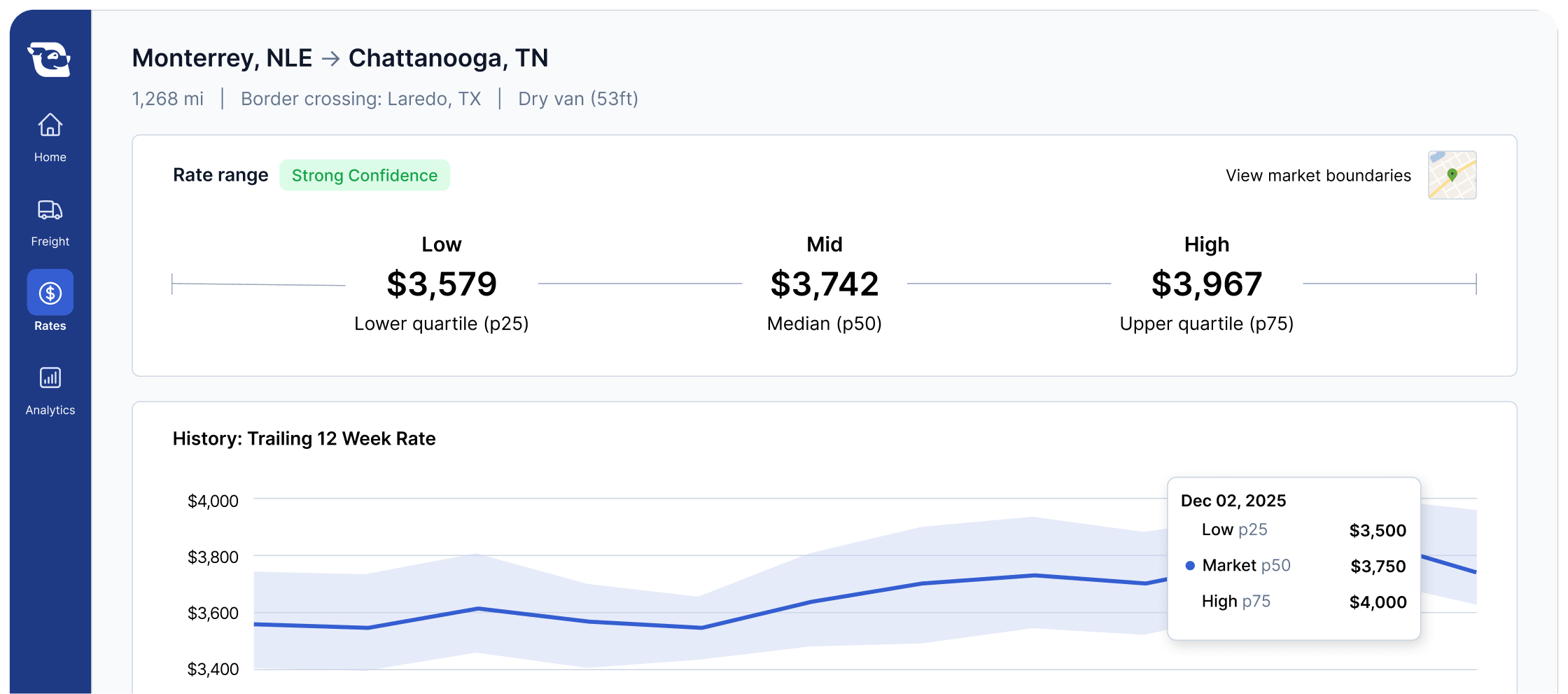
- Cotiza rutas de México y Canadá con tarifas de referencia construidas con ofertas de transportistas, cada una con un nivel de confianza que muestra cuántos datos de ofertas respaldan la cifra.
- Usa Cargado junto con DAT. Evalúalo con las rutas de México y Canadá que tus clientes necesitan cotizar y cubrir.
Herramientas distintas para embarques distintos
| DAT | Cargado | |
|---|---|---|
| Built for | Load board | Marketplace for Mexico and Canada freight, with rate benchmarks from carrier bids |
| Plans | Separate carrier and broker plans, plus combined plans, on its own pricing page | One value-based broker subscription, unlimited users |
| Carrier cost | Paid carrier plans | No cost to join and bid |
Lo que transportistas y empresas de logística han logrado en Cargado
Dos casos de clientes publicados, con sus propias cifras.
Esta empresa de logística aumentó sus ingresos en México 1,400% en solo 4 meses.
Este transportista pasó de 1 a 6 camiones y 50 clientes usando solo Cargado.
Exactamente cuándo encaja Cargado
Conserva DAT para los embarques que ya cotizas y cubres bien. Agrega Cargado cuando el problema sea una cotización de México o Canadá, por ejemplo, en uno de estos casos:
- Un embarcador pide una tarifa de Laredo a Monterrey y el equipo no tiene datos de ofertas para respaldar la cifra.
- Una cotización de Toronto a Chicago sale con una referencia nacional y resulta equivocada en cuanto entran la moneda, el agente aduanal y la espera en el cruce fronterizo.
- Llega un RFP con cuarenta rutas de México y Canadá y un plazo de dos días.
- El volumen de México de un cliente actual se va a una segunda empresa de logística porque nadie en el equipo puede cotizarlo con confianza.
- Un cliente necesita capacidad de Dallas a Laredo cotizada y coordinada con el siguiente tramo de un embarque a México, y el equipo la cotiza como cualquier otro embarque nacional.
Si nada de esto pasa en tu operación, quizá DAT por sí solo sea suficiente. Si sí pasa, Cargado agrega contexto de tarifas y transportistas verificados para esas rutas.
México
Cotizar un movimiento de Laredo a Monterrey implica poner precio a más que el tramo carretero. El embarque puede ir en el mismo remolque o con transbordo en la frontera, necesita un agente aduanal y los requisitos de seguridad del embarcador cambian según la ruta. Revisa los datos de tarifas disponibles para la ruta específica que estás cotizando antes de comprometer una cifra.
Las tarifas de referencia de Cargado para México se construyen con ofertas que transportistas verificados hicieron sobre embarques reales, publicadas por ruta en rangos bajo, medio y alto sobre una ventana móvil de 12 semanas. Cada referencia lleva un nivel de confianza que muestra la solidez de los datos de ofertas detrás de ella, así que una ruta con pocos datos se ve antes de cotizarla.
Los transportistas detrás de esas ofertas están en el mismo marketplace. Los perfiles de transportista muestran el equipo y los detalles del servicio, y para embarques de México eso incluye los cruces fronterizos que opera cada transportista y si mueve puerta a puerta o con un socio de transbordo, así que la ruta que cotizaste se puede publicar a transportistas que encajan con ella.
Canadá
Las cotizaciones de Canadá tienen sus propias variables: la moneda en la que cotiza el transportista, el combustible por litro en el tramo canadiense, el agente aduanal y un receptor en Quebec que despacha en francés. Revisa cómo maneja esas variables cualquier referencia que uses en tus rutas.
Las tarifas de referencia de Cargado de EE. UU. a Canadá y nacionales de Canadá son más recientes que las de las rutas de México y siguen creciendo. Cada ruta disponible muestra su nivel de confianza, así que puedes ver dónde los datos de ofertas son profundos y dónde todavía son escasos. Los transportistas canadienses pasan la misma verificación que el resto de la red, y el chat traduce entre inglés, francés y español.
Cómo está construido Cargado
Cómo están construidos los planes. DAT publica planes separados para transportistas y para empresas de logística en su propia página de precios, junto con planes combinados. Cargado tiene un solo modelo: las empresas de logística, 3PL y agentes de carga eligen un plan según su uso, desde US$500 al mes, cada plan incluye usuarios ilimitados y los transportistas se unen y ofertan sin costo. (Fuente: la página de precios de DAT, dat.com/pricing, verificada en septiembre de 2026.)
Quién entra. Cada empresa pasa una revisión de calidad y cumplimiento. Verificamos a cada transportista antes de que pueda ofertar y nos reunimos con cada empresa de logística antes de darla de alta. El espacio de trabajo de una empresa de logística es privado: las publicaciones llegan a transportistas verificados que encajan con ellas y nunca a otra empresa de logística.
De qué están hechas las tarifas. Las tarifas de referencia de Cargado se construyen con ofertas que transportistas verificados hicieron sobre embarques reales de México y Canadá. Están disponibles en la plataforma, en un complemento de Excel para RFP y por API hacia un TMS.
Usa ambos
Puedes usar Cargado junto con DAT. Conserva DAT para los embarques que ya te cubre, y cotiza y cubre en Cargado los embarques de México y Canadá, más los tramos en EE. UU. que los alimentan. Cargado se conecta a tu TMS por API, no intermedia embarques, no tiene camiones propios y no cobra una parte del embarque.
Cotiza tres rutas de México o Canadá contra ofertas de transportistas
Trae tres rutas que cotizas hoy. Revisaremos los datos de tarifas disponibles y la cobertura de transportistas de cada una, incluidas las brechas. El acceso para transportistas no tiene costo.
Preguntas frecuentes
¿Cargado reemplaza a DAT?
No. DAT ofrece un tablero de embarques. (Fuente: la página del tablero de DAT, dat.com/load-boards, verificada en septiembre de 2026.) Cargado es un marketplace para embarques de México y Canadá, incluidos los tramos en EE. UU. desde y hacia ciudades fronterizas, como Dallas a Laredo. Puedes usar Cargado junto con DAT.
¿Cómo se cobran los planes de Cargado para empresas de logística?
Los planes de Cargado para empresas de logística empiezan en US$500 al mes e incluyen usuarios ilimitados. Los transportistas verificados se unen y ofertan sin costo. DAT publica sus propios planes para transportistas y empresas de logística en su página de precios. (Fuente: la página de precios de DAT, dat.com/pricing, verificada en septiembre de 2026.)
¿Cómo verifica Cargado a los transportistas?
Los transportistas completan un proceso de alta de varios pasos antes de poder ofertar. Cargado revisa referencias de empresas de logística y los registros de permisos de operación que apliquen y registra las credenciales CTPAT, OEA y FAST en el perfil.
¿De dónde vienen las tarifas de Cargado para México y Canadá?
De ofertas que transportistas verificados hicieron sobre embarques reales de México y Canadá, mostradas en rangos bajo, medio y alto sobre una ventana móvil de 12 semanas. Cada referencia lleva un nivel de confianza que muestra la solidez de los datos de ofertas detrás de ella.
¿Puedo usar Cargado junto con mi TMS?
Sí. Cargado se conecta por API, incluso con plataformas propietarias, y el TMS sigue siendo el sistema de registro. Un primer paso práctico es usar Tarifas de Mercado dentro del flujo de cotización.