
Looking for a Loadlink alternative?
Loadlink calls itself Canada's longest-standing load board and has matched freight since 1990, and on domestic Canada freight it has real depth. If your freight touches Mexico as well as Canada, here is an honest look at where Cargado is different and where Loadlink is still the right answer. (Sources: Loadlink's company page, loadlink.ca/our-company; Loadlink's Canadian load board page, loadlink.ca/canadian-load-board. Verified September 2026.)
- Loadlink calls itself Canada's largest load board. (Source: Loadlink's Canadian load board page, loadlink.ca/canadian-load-board, verified September 2026.) Cargado spans United States, Mexico and Canada freight in one network.
- Loadlink does not publish its subscription prices. (Sources: Loadlink's carrier plans page, loadlink.ca/carrier-plans; Loadlink's broker plans page, loadlink.ca/broker-plans. Verified September 2026.) Cargado carriers join at no cost, and broker plans include unlimited users.
- Chat with carriers in English, French or Spanish. Messages translate automatically.
- Brokers can keep Loadlink for domestic Canada freight and add Cargado for the freight that crosses.
Loadlink vs Cargado side by side
| Loadlink | Cargado | |
|---|---|---|
| Built for | Domestic Canada and Canada-U.S. freight; see loadlink.ca/canadian-load-board | Mexico and Canada freight, cross-border and domestic |
| Network | Paid subscription load board; see loadlink.ca/subscription-agreement | Vetted: every carrier checked, every broker met before onboarding |
| Rate data | Rate Index rating tool; see loadlink.ca/carrier-rateindex | Based on real carrier bid data |
| Languages | English and French website; see loadlink.ca/fr/carrier-loadboard | English, Spanish and French with chat translation |
| Carrier cost | Paid plans, prices not listed; see loadlink.ca/carrier-plans | Join and bid at no cost |
| Users per plan | Set on the registration form; see loadlink.ca/subscription-agreement | Unlimited users on every plan |
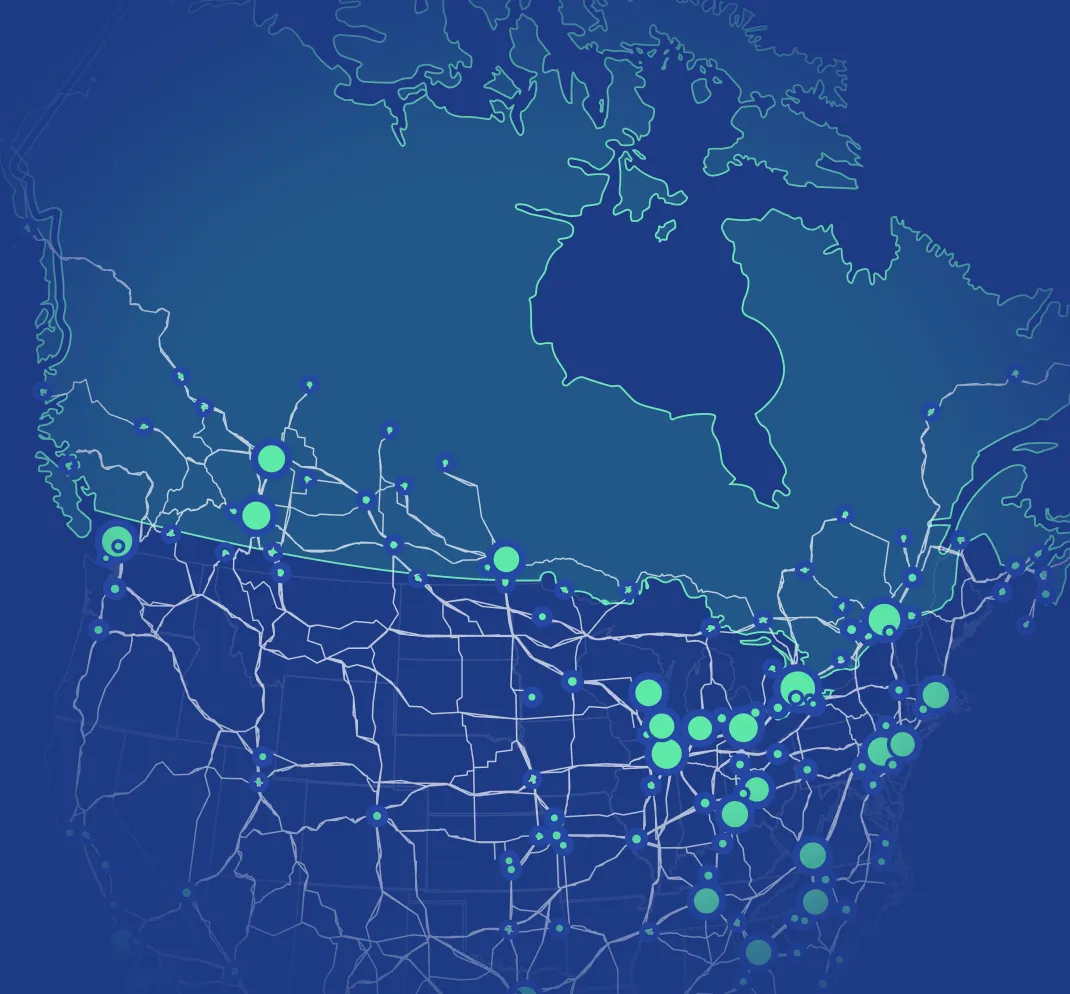
What carriers and brokers have done on Cargado
Two published customer stories, in their own numbers.
This broker grew Mexico revenue 1,400% in just 4 months.
This carrier grew from 1 to 6 trucks and 50 customers using only Cargado.
Switch for coverage, not cost
If a lane has gone quiet, the subscription line item is not the problem to solve.
Picture the usual Thursday: a load needs a dry van out of Brampton. Somebody pulls the carrier list, blasts twenty emails, and gets two replies. One carrier is already committed. The other quotes a number with no relationship to what the customer approved. Two hours are gone, the load is still open, and the rep is back to the phone.
Cargado runs the opposite motion. You post the load once, vetted carriers that run that corridor can bid on it, and you compare the bids and message the carrier you choose in the same place.
Beyond spot coverage, you can use Cargado to source dedicated capacity. A load is ad hoc coverage. A lane is a procurement event. Post a lane and you carry the full structure with it: date range, loads per day, days of the week, commodity, equipment, and requirements. A lane posting lets you source dedicated capacity for a schedule instead of re-bidding the same freight every week.
Cargado is a marketplace, not an open board: hundreds of brokers, 3PLs and forwarders that we meet before onboarding, and 2,350+ vetted carriers. Every plan includes unlimited users, so you can add the whole team instead of rationing seats.
What Loadlink covers
Loadlink has been matching Canada freight since 1990 and describes itself as Canada's leader in load and freight-matching services. For freight moving Toronto to Montreal, Calgary to Vancouver, or across the Canada interior, the depth behind that claim is real. (Source: Loadlink's company page, loadlink.ca/our-company, verified September 2026.)
A few other facts worth knowing: Loadlink has matched Canada freight since 1990. It has French-language pages, which matters for Quebec freight, and it offers a Rate Index truckload rating tool. (Sources: Loadlink's company page, loadlink.ca/our-company; Loadlink's French load board page, loadlink.ca/fr/carrier-loadboard; Loadlink's Canadian load board page, loadlink.ca/canadian-load-board. Verified September 2026.)
None of that is going away because you added a second network. You can run both.
Loadlink pricing vs Cargado pricing
Loadlink does not publish prices. Its carrier plan and broker plan pages list tier names and what each tier includes, and each tier opens a sign-up form instead of showing a price. Ask them directly for your own quote. (Sources: Loadlink's carrier plans page, loadlink.ca/carrier-plans; Loadlink's broker plans page, loadlink.ca/broker-plans. Verified September 2026.)
What we can be specific about is our side of it:
- Carriers pay nothing. Carrier access to Cargado is at no cost, which is deliberate: cost should not be what keeps a carrier off the network.
- Unlimited users on every broker plan. There is no per-seat pricing, so adding a rep does not change the price. Brokers pay a value-based subscription and can add the whole team.
- No pay-to-see-rates tier. Market rates are built from real bids coming through the marketplace, and they are part of the product rather than a separate upgrade.
The reason carrier pricing matters to a broker is simple. A network where carriers pay is a network filtered by who can justify the spend. A network where they do not is filtered by vetting alone, which is the filter you actually want.
Where Cargado is different from Loadlink
Mexico and Canada in one network. Cargado is built to span both. If you are covering Laredo, TX southbound on Monday and Winnipeg northbound on Tuesday, that is one login, one carrier network, one set of rates.
Every carrier is vetted before they can bid. Carriers are verified against the applicable authority records (FMCSA in the United States, SICT in Mexico), with trusted-trader status tracked on the profile: FAST (Free and Secure Trade), PIP (Partners in Protection, the CBSA program), and CTPAT. When a load needs a FAST-approved driver for the dedicated lanes at the border, you can see who qualifies before you award it.
Bilingual chat with message translation. Message a carrier in English and it arrives in Spanish; their reply in Spanish arrives in English. The dispatcher in Monterrey and the dispatcher in Mississauga can work in the same thread, each in their own language.
CAD and USD handled natively. Canada freight quotes in Canadian dollars and U.S. freight quotes in U.S. dollars, and the platform handles both rather than making somebody keep a conversion in a spreadsheet.
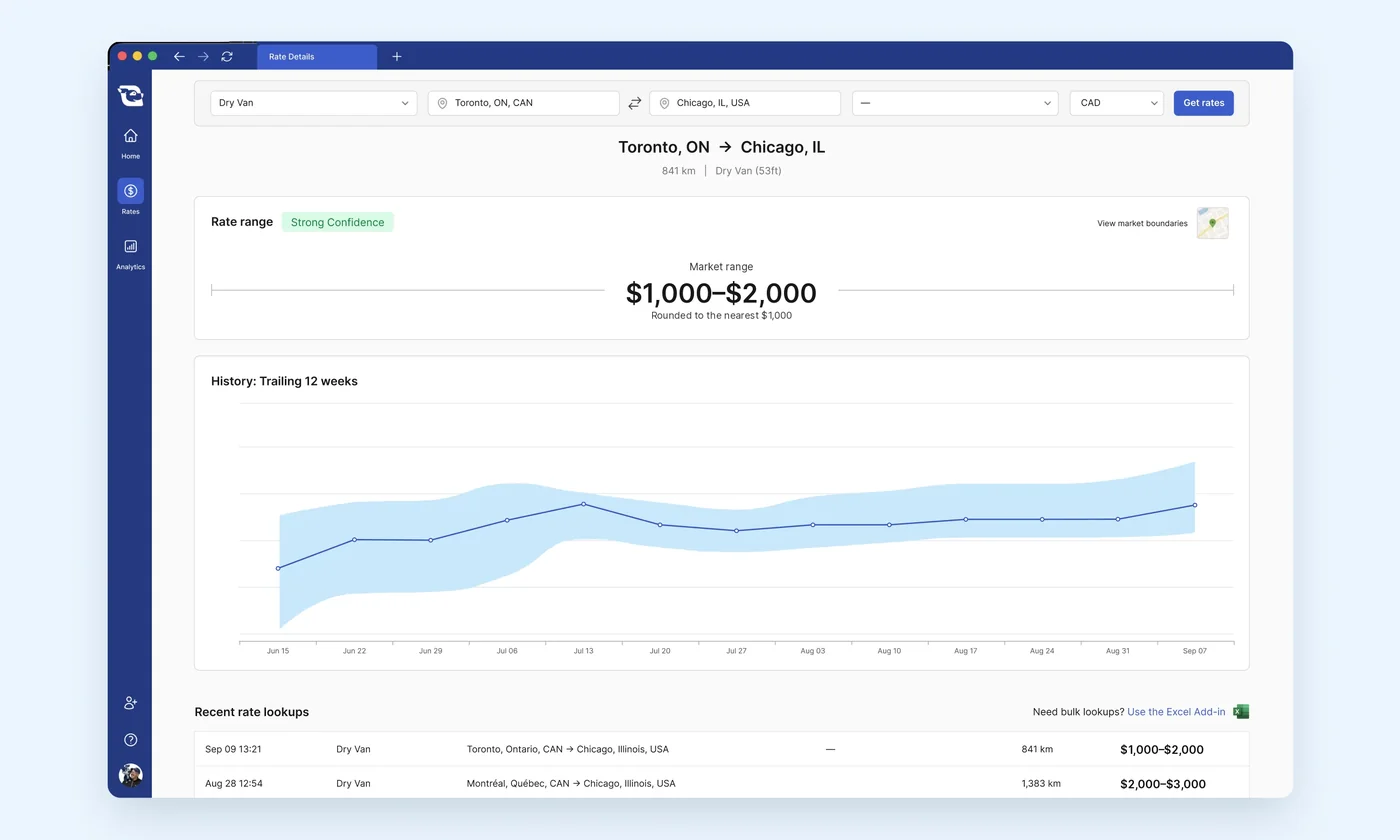
What Cargado looks like on real Canada lanes
Toronto to Chicago. Montreal into the Northeast. Winnipeg to Chicago reefer, where protect-from-freezing means you need reefer and heated capacity through the winter and not just a temperature-controlled trailer on paper. Brampton to Calgary domestic. Southern Ontario into western New York. British Columbia south into Washington.
On every one of those, the structured detail rides with the posting: equipment, drop or live, temperature range, PIP-certified facilities, minimum cargo insurance and CTPAT. Carriers can see those requirements in the posting before they bid.
Who gets the most out of Cargado
Consider Cargado if your customers keep asking about the other side of the map: Mexico volume you have to quote blind, Canada lanes where emails to carriers go unanswered, or a growing team that keeps running into seat limits.
See it on your own lanes
Bring three lanes you are struggling to cover and we will walk them with you. Carrier access is at no cost.
Common questions
Is Cargado a Loadlink alternative or a load board?
Cargado is a marketplace for Mexico and Canada freight, not an open board. We vet every carrier before it can bid and meet with every broker before onboarding. Brokers post loads for spot coverage and post lanes to run procurement events for dedicated capacity, and every plan includes unlimited users.
How much does Loadlink cost?
Loadlink does not publish prices. Its carrier and broker plan pages list tier names and included features, and each tier opens a sign-up form instead of showing a price, so the only accurate number is the one they give you directly. (Sources: Loadlink's carrier plans page, loadlink.ca/carrier-plans; Loadlink's broker plans page, loadlink.ca/broker-plans. Verified September 2026.)
Do carriers pay to use Cargado?
No. Carrier access is at no cost, including market visibility. Brokers, 3PLs and forwarders pay a value-based subscription that includes unlimited users.
Does Cargado cover domestic Canada freight or only cross-border?
Both. Cargado covers freight moving between the United States, Mexico and Canada as well as freight moving within Mexico and within Canada, so a Brampton–Calgary move and a Toronto–Chicago move live in the same network.
How are carriers vetted?
Every carrier is verified against the applicable authority records before they can bid, with FAST, PIP and CTPAT status tracked on the carrier profile alongside insurance and safety data. You can see which carriers hold trusted-trader status before awarding a load that needs it.
Can we keep our current load board and add Cargado?
Yes. Keep the incumbent for domestic freight where it is strong, and route Mexico and Canada freight through Cargado where the vetted carrier network and the bilingual workflow do more work.