
Looking for a 123Loadboard alternative?
123Loadboard publishes its carrier pricing. If you are weighing what a load board subscription actually returns, and your freight touches Mexico or Canada, here is the honest comparison. (Source: 123Loadboard's pricing page, 123loadboard.com/pricing, verified September 2026.)
- 123Loadboard offers load searching, truck posting and lane rate insights. (Source: 123Loadboard's pricing page, 123loadboard.com/pricing, verified September 2026.) On Cargado, rate visibility is included and carriers join at no cost.
- 123Loadboard is a load board for freight across North America. (Source: 123Loadboard's about page, 123loadboard.com/about, verified September 2026.) Cargado is built for Mexico and Canada freight and the U.S. legs that feed the border.
- We vet every carrier before it can bid and meet with every broker before onboarding.
- You can run both.
Side by side
| 123Loadboard | Cargado | |
|---|---|---|
| Built for | U.S. domestic trucking | Mexico and Canada freight, cross-border and domestic |
| Network | Open subscriber board | Vetted: every carrier checked, every broker met before onboarding |
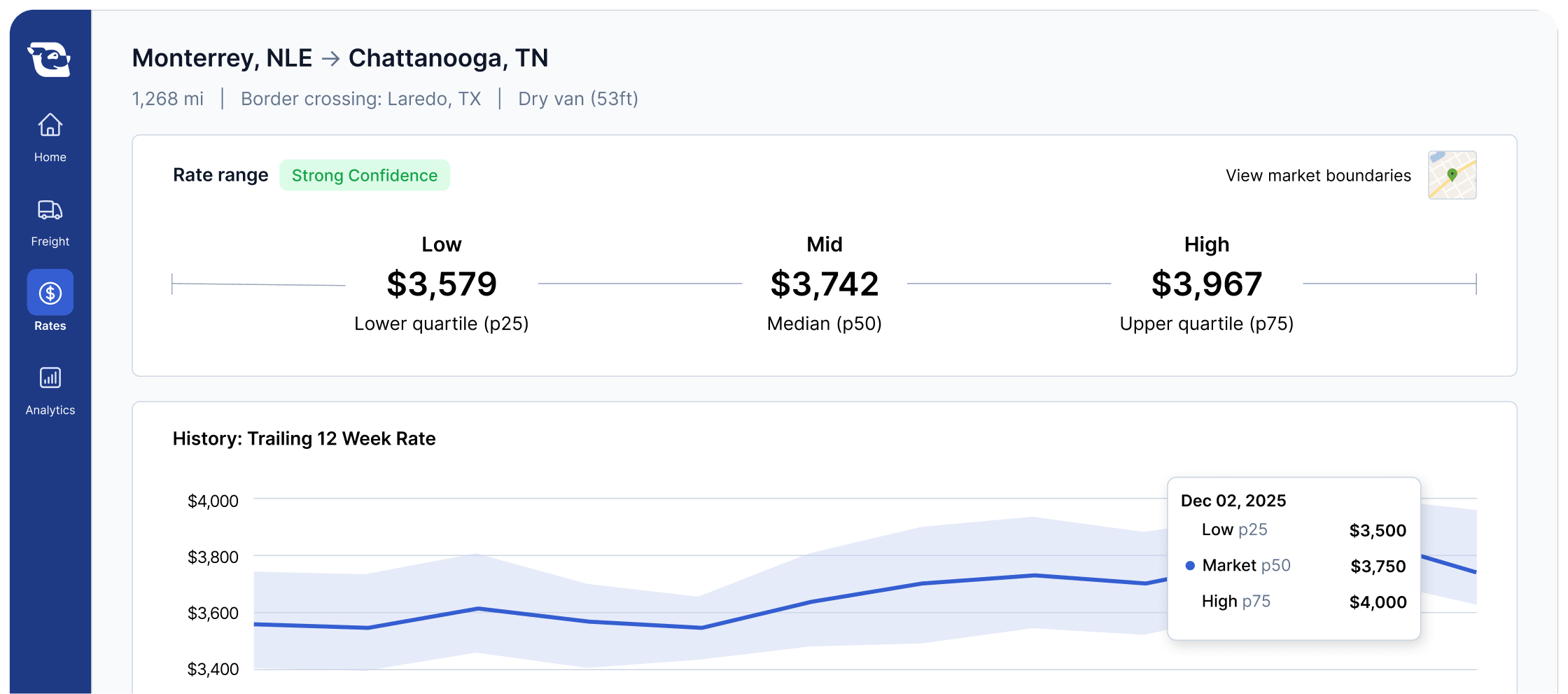
| Rate data | Rate Check, in the top tier | Rate benchmarks for Mexico and Canada freight, based on real carrier bid data |
| Carrier cost | Three published carrier tiers | Join and bid at no cost |
| Carrier vetting | Subscribers verify authority themselves | Applicable authority records verified, CTPAT, OEA and FAST tracked |
What carriers and brokers have done on Cargado
Two published customer stories, in their own numbers.
This broker grew Mexico revenue 1,400% in just 4 months.
This carrier grew from 1 to 6 trucks and 50 customers using only Cargado.
Price the value, not the sticker
123Loadboard publishes three carrier tiers on its own pricing page, and lane rate insights come only with the top tier. Cargado does not tier carrier access: vetted carriers join at no cost and rate visibility is included. (Source: 123Loadboard's pricing page, 123loadboard.com/pricing, verified September 2026.)
That last detail is the one worth sitting with. Load visibility is table stakes. The thing that changes what you accept and what you turn down is knowing what a lane is actually paying, and on 123Loadboard, lane rate insights come only with the top tier. You pay the entry price to see freight, then pay more to understand it. (Source: 123Loadboard's pricing page, 123loadboard.com/pricing, verified September 2026.)
Cargado prices carriers at zero. Not a trial, not an entry tier. Carrier access is at no cost and market rate visibility is included in it, because a carrier who can see the market can bid with the full picture, and that is the point of the network. Brokers, 3PLs and forwarders pay the subscription, and every broker plan includes unlimited users rather than per-seat licenses.
Where 123Loadboard focuses
123Loadboard publishes its carrier tiers, features and prices on its site, no call required. (Source: 123Loadboard's pricing page, 123loadboard.com/pricing, verified September 2026.)
It is also built around a clear customer. The tooling is aimed at owner-operators and small fleets, with mileage and routing, credit checks, and a mobile app that works on the road. (Sources: 123Loadboard's about page, 123loadboard.com/about; 123Loadboard's pricing page, 123loadboard.com/pricing. Verified September 2026.)
What vetting changes
Cargado is not an open board. Cargado meets with every broker, 3PL and forwarder before onboarding them, and every carrier is vetted before it can bid. Carrier verification runs through the applicable authority records (FMCSA in the U.S., SICT in Mexico), with trusted-trader status tracked on the profile: FAST (Free and Secure Trade), PIP (Partners in Protection, the CBSA program), and CTPAT.
For a carrier, that means the freight in front of you comes from brokers Cargado met before onboarding them. For a broker, it means the bids coming back are from carriers who can legally and physically run the move, including the ones with the FAST approval you need for the dedicated lanes at the border.
The network today is hundreds of brokers, 3PLs and forwarders and 2,350+ vetted carriers, with rate benchmarks based on real carrier bid data.
Mexico and Canada in one network
123Loadboard is built around North American trucking, and its product shows it: search loads by state or province, IFTA mileage tools and credit data. (Sources: 123Loadboard's about page, 123loadboard.com/about; 123Loadboard's pricing page, 123loadboard.com/pricing; 123Loadboard's load search page, 123loadboard.com/find-loads/all-states. Verified September 2026.)
Cargado is a modern marketplace for Mexico and Canada freight, built to span both. That covers freight crossing between the United States, Mexico and Canada, and freight moving domestically inside Mexico and inside Canada.
What that looks like in practice: Toronto to Chicago. Montreal into the Northeast. Winnipeg to Chicago reefer, where protect-from-freezing in January means reefer and heated capacity rather than a temperature-controlled trailer on paper. Brampton to Calgary domestic. British Columbia south into Washington. Southern Ontario into western New York.
Each posting carries the structure the move actually needs: equipment, drop or live, temperature range, PIP-certified facilities, minimum cargo insurance, CTPAT, and on a Mexico lane, the crossing. Chat translates messages between English, French and Spanish, so a dispatcher in Monterrey and a dispatcher in Mississauga work the same thread. Carrier chat is in beta. Canada freight quotes in Canadian dollars and U.S. freight quotes in U.S. dollars.
Who gets the most out of Cargado
Cargado is built for carriers with authority to cross, with domestic Mexico or domestic Canada capacity, or running U.S. loads to and from border cities like Laredo and El Paso, who are tired of paying to see rates on lanes they do not run. For brokers, it fits when customers ask for more Mexico and Canada coverage than you can source today.
Put it on your own freight
Brokers see live lane rates and vetted carriers on their own lanes in a demo. Carrier access is at no cost.
Common questions
How much does 123Loadboard cost?
123Loadboard publishes its carrier pricing on its own site; see that page for current numbers. On Cargado, carrier access is at no cost and broker plans are value-based with unlimited users. (Source: 123Loadboard's pricing page, 123loadboard.com/pricing, verified September 2026.)
Do carriers pay anything for Cargado?
No. Carrier access is at no cost and includes market rate visibility, so there is no upgrade tier standing between a carrier and the numbers. Brokers, 3PLs and forwarders pay a value-based subscription with unlimited users included.
Is Cargado a load board?
Cargado is a marketplace, not an open board. We vet every carrier before it can bid and meet with every broker before onboarding. Brokers post loads for spot coverage and post lanes as procurement events with date ranges, loads per day, commodity and equipment requirements, to source dedicated capacity.
Does Cargado cover U.S. domestic freight?
Yes, where it connects to the border: U.S. loads to and from border cities, like Dallas to Laredo or El Paso to Charlotte, run on Cargado alongside cross-border moves and freight moving within Mexico and within Canada. Deep-interior U.S. freight that never touches the border corridor is the one thing it is not built for.
Can I use Cargado and 123Loadboard at the same time?
Yes. Keep 123Loadboard for the freight it already covers and use Cargado for Mexico and Canada lanes and the U.S. legs that feed the border, where carrier access costs nothing and the vetting is done before you bid.