
Vous cherchez une solution de rechange à 123Loadboard ?
123Loadboard publie ses prix pour les transporteurs. Si vous évaluez ce qu'un abonnement à un tableau de chargement vous rapporte vraiment et que votre fret touche le Mexique ou le Canada, voici la comparaison honnête. (Source : page de tarification de 123Loadboard, 123loadboard.com/pricing, vérifiée en septembre 2026.)
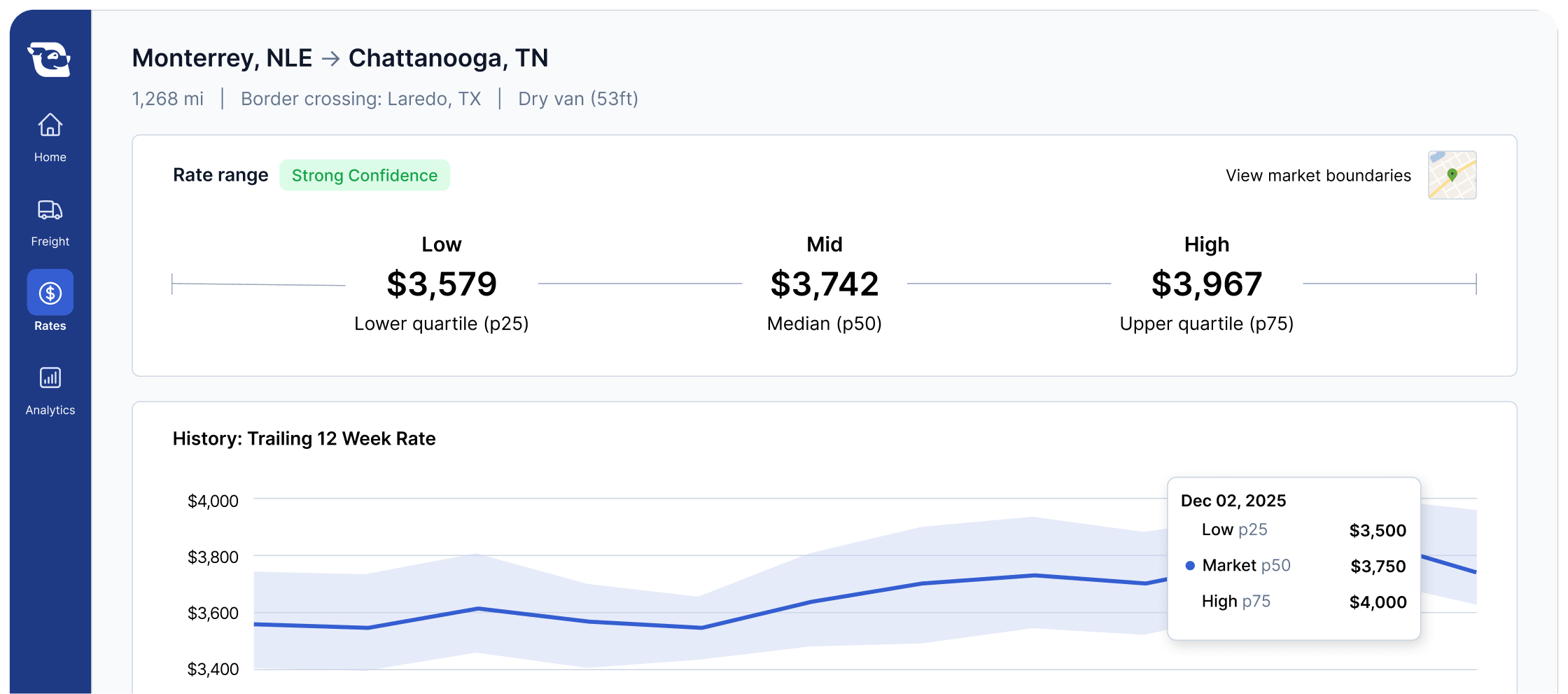
- 123Loadboard offre la recherche de chargements, la publication de camions et des indications sur les tarifs par voie. (Source : page de tarification de 123Loadboard, 123loadboard.com/pricing, vérifiée en septembre 2026.) Sur Cargado, la visibilité des tarifs est incluse et l'adhésion des transporteurs est gratuite.
- 123Loadboard est un tableau de chargement pour le fret partout en Amérique du Nord. (Source : page de présentation de 123Loadboard, 123loadboard.com/about, vérifiée en septembre 2026.) Cargado est conçu pour le fret du Mexique et du Canada, et pour les segments américains qui alimentent la frontière.
- Nous vérifions chaque transporteur avant qu'il puisse soumettre une offre et nous rencontrons chaque courtier avant son inscription.
- Vous pouvez utiliser les deux.
Côte à côte
| 123Loadboard | Cargado | |
|---|---|---|
| Built for | U.S. domestic trucking | Mexico and Canada freight, cross-border and domestic |
| Network | Open subscriber board | Vetted: every carrier checked, every broker met before onboarding |
| Rate data | Rate Check, in the top tier | Rate benchmarks for Mexico and Canada freight, based on real carrier bid data |
| Carrier cost | Three published carrier tiers | Join and bid at no cost |
| Carrier vetting | Subscribers verify authority themselves | Applicable authority records verified, CTPAT, OEA and FAST tracked |
Ce que des transporteurs et des courtiers ont accompli sur Cargado
Deux histoires de clients publiées, avec leurs propres chiffres.
Ce courtier a augmenté ses revenus au Mexique de 1 400 % en seulement 4 mois.
Ce transporteur est passé de 1 à 6 camions et 50 clients en n'utilisant que Cargado.
Évaluez la valeur, pas le prix affiché
123Loadboard publie trois paliers pour les transporteurs sur sa propre page de tarification, et les indications sur les tarifs par voie ne sont offertes qu'avec le palier supérieur. Cargado ne découpe pas l'accès des transporteurs en paliers : les transporteurs vérifiés adhèrent gratuitement et la visibilité des tarifs est incluse. (Source : page de tarification de 123Loadboard, 123loadboard.com/pricing, vérifiée en septembre 2026.)
C'est ce dernier détail qui mérite réflexion. Voir les chargements est la base. Ce qui change ce que vous acceptez et ce que vous refusez, c'est de connaître les tarifs proposés par les transporteurs sur une voie, et sur 123Loadboard, les indications sur les tarifs par voie ne sont offertes qu'avec le palier supérieur. Vous payez le prix d'entrée pour voir le fret, puis vous payez davantage pour le comprendre. (Source : page de tarification de 123Loadboard, 123loadboard.com/pricing, vérifiée en septembre 2026.)
Cargado ne facture rien aux transporteurs. Ni essai, ni palier d'entrée. L'accès est gratuit et la visibilité des tarifs du marché y est comprise, parce qu'un transporteur qui voit le marché peut faire son offre en ayant le portrait complet, et c'est l'objet du réseau. Les courtiers, 3PL et transitaires paient l'abonnement, et chaque forfait courtier comprend un nombre illimité d'utilisateurs plutôt que des licences par poste.
Où 123Loadboard se concentre
123Loadboard publie ses paliers transporteurs, ses fonctions et ses prix sur son site, sans appel à faire. (Source : page de tarification de 123Loadboard, 123loadboard.com/pricing, vérifiée en septembre 2026.)
Il est aussi conçu autour d'une clientèle claire. Les outils visent les propriétaires-exploitants et les petites flottes : kilométrage et itinéraires, vérifications de crédit, et une application mobile qui fonctionne sur la route. (Sources : page de présentation de 123Loadboard, 123loadboard.com/about ; page de tarification de 123Loadboard, 123loadboard.com/pricing. Vérifiées en septembre 2026.)
Ce que change la vérification
Cargado est une bourse de fret, pas un tableau de chargement ouvert. Cargado rencontre chaque courtier, 3PL et transitaire avant son inscription, et chaque transporteur est vérifié avant de pouvoir soumettre une offre. Cargado vérifie les registres de permis d'exploitation applicables aux activités du transporteur, auprès de la FMCSA (l'organisme fédéral américain de sécurité du camionnage) ou de la SICT (l'autorité fédérale mexicaine des transports), et inscrit au profil le statut de négociant fiable : EXPRES (FAST), PEP (Partenaires en protection, le programme de l'ASFC) et CTPAT.
Pour un transporteur, cela signifie que les chargements que vous consultez sont publiés par des courtiers que Cargado a rencontrés avant leur inscription. Pour un courtier, cela signifie que les offres reçues viennent de transporteurs vérifiés. Avant d'attribuer le chargement, confirmez les permis, l'équipement, la disponibilité et les exigences propres à l'envoi.
Le réseau compte aujourd'hui des centaines de courtiers, 3PL et transitaires et 2 350+ transporteurs vérifiés, avec des tarifs de référence fondés sur les offres réelles des transporteurs.
Le Mexique et le Canada dans un seul réseau
123Loadboard est conçu autour du camionnage nord-américain, et son produit le montre : recherche de chargements par État ou par province, outils de kilométrage IFTA et données de crédit. (Sources : page de présentation de 123Loadboard, 123loadboard.com/about ; page de tarification de 123Loadboard, 123loadboard.com/pricing ; page de recherche de chargements de 123Loadboard, 123loadboard.com/find-loads/all-states. Vérifiées en septembre 2026.)
Cargado est la bourse de fret moderne pour le fret du Mexique et du Canada, conçue pour couvrir les deux. Cela comprend le fret qui traverse entre les États-Unis, le Mexique et le Canada, ainsi que le fret qui circule à l'intérieur du Mexique et à l'intérieur du Canada.
Concrètement : Toronto à Chicago. Montréal vers le Nord-Est américain. Winnipeg à Chicago en réfrigéré, où la protection contre le gel en janvier exige une capacité réfrigérée et chauffée plutôt qu'une remorque à température contrôlée sur papier. Brampton à Calgary. La Colombie-Britannique vers le sud jusqu'à l'État de Washington. Le sud de l'Ontario vers l'ouest de l'État de New York.
Chaque publication précise l'équipement, les modalités de livraison (dépose ou en direct), la plage de température au besoin, les installations certifiées PEP, l'assurance cargo minimale et l'exigence CTPAT, ainsi que le passage frontalier sur une voie du Mexique. Le Chat est multilingue et traduit les messages : un répartiteur à Monterrey et un répartiteur à Mississauga travaillent dans le même fil. Les offres peuvent être exprimées en dollars canadiens ou américains ; vérifiez la devise avant de comparer.
À qui s'adresse Cargado
Cargado est conçu pour les transporteurs qui ont le droit de traverser, ceux qui ont de la capacité à l'intérieur du Mexique ou du Canada, ou ceux qui font des chargements américains vers et depuis les villes frontalières comme Laredo et El Paso, et qui en ont assez de payer pour voir des tarifs sur des voies qu'ils ne font pas. Pour les courtiers, il convient quand les clients demandent plus de couverture au Mexique et au Canada que vous ne pouvez en trouver aujourd'hui.
Mettez-le à l'épreuve sur votre propre fret
En démonstration, les courtiers voient les tarifs en direct et les transporteurs vérifiés sur leurs propres voies. L'accès est gratuit pour les transporteurs.
Questions fréquentes
Combien coûte 123Loadboard ?
123Loadboard publie sa tarification pour les transporteurs sur son propre site ; consultez cette page pour les chiffres à jour. Sur Cargado, l'accès est gratuit pour les transporteurs et les forfaits courtiers sont basés sur la valeur, avec utilisateurs illimités. (Source : page de tarification de 123Loadboard, 123loadboard.com/pricing, vérifiée en septembre 2026.)
Les transporteurs paient-ils quelque chose pour Cargado ?
Non. L'accès est gratuit pour les transporteurs et comprend la visibilité des tarifs du marché : aucun palier payant ne s'interpose entre un transporteur et les chiffres. Les courtiers, 3PL et transitaires paient un abonnement basé sur la valeur, avec un nombre illimité d'utilisateurs.
Cargado est-il un tableau de chargement ?
Cargado est une bourse de fret, pas un tableau de chargement ouvert. Nous vérifions chaque transporteur avant qu'il puisse soumettre une offre et nous rencontrons chaque courtier avant son inscription. Les courtiers publient des chargements pour trouver un transporteur sur un envoi ponctuel, et des voies pour lancer un appel d'offres sur des envois récurrents, avec périodes, nombre de chargements par jour, marchandise et exigences d'équipement, afin d'obtenir de la capacité dédiée.
Cargado couvre-t-il le fret national américain ?
Oui, là où il touche la frontière : les chargements américains vers et depuis les villes frontalières, comme Dallas à Laredo ou El Paso à Charlotte, circulent sur Cargado aux côtés des mouvements transfrontaliers et du fret qui circule à l'intérieur du Mexique et du Canada. Le fret entre deux points aux États-Unis, sans lien avec un envoi transfrontalier, est la seule chose pour laquelle il n'est pas conçu.
Puis-je utiliser Cargado et 123Loadboard en même temps ?
Oui. Gardez 123Loadboard pour le fret qu'il couvre déjà et utilisez Cargado pour les voies vers le Mexique et le Canada et les segments américains qui alimentent la frontière, où l'accès ne coûte rien aux transporteurs et où la vérification est faite avant que vous fassiez une offre.