The modern marketplace for Canada domestic and cross-border freight
Run all your Canada freight on one modern marketplace and leave legacy load boards behind: intra-Canada plus Canada–U.S. (northbound and southbound) with vetted recurring capacity, market rates from real carrier bids, in CAD or USD. Mexico is upside on the same login.






















Domestic Canada and Canada–U.S. cross-border, on one login
Cargado runs your intra-Canada and Canada–U.S. (northbound and southbound) freight on a verified carrier network across Canada's busiest provinces, with vetted recurring capacity and Toronto support. It’s the modern alternative to legacy load boards. Mexico is upside on the same login.
Equipment that matches Canada freight
Canadian freight runs through real winter and real customs. Post heated trailers as their own equipment type, set the temperature range, and spell out any protect-from-freeze need in the posting so carriers see it before they bid on intra-Canada and Canada–U.S. lanes.
Winter equipment and long combination vehicles
From November through March, freight that moves dry van in July needs a reefer running heat. Protect-from-freezing service on paint, adhesives, beverages, pharmaceuticals, and canned goods is a hard requirement, so post those loads with a heated trailer type and a temperature range instead of leaving it to a note. Prairie and northern lanes also run long combination vehicles where provincial permits allow them.
Standard cross-border equipment

Specialized for domestic Canada 🇨🇦
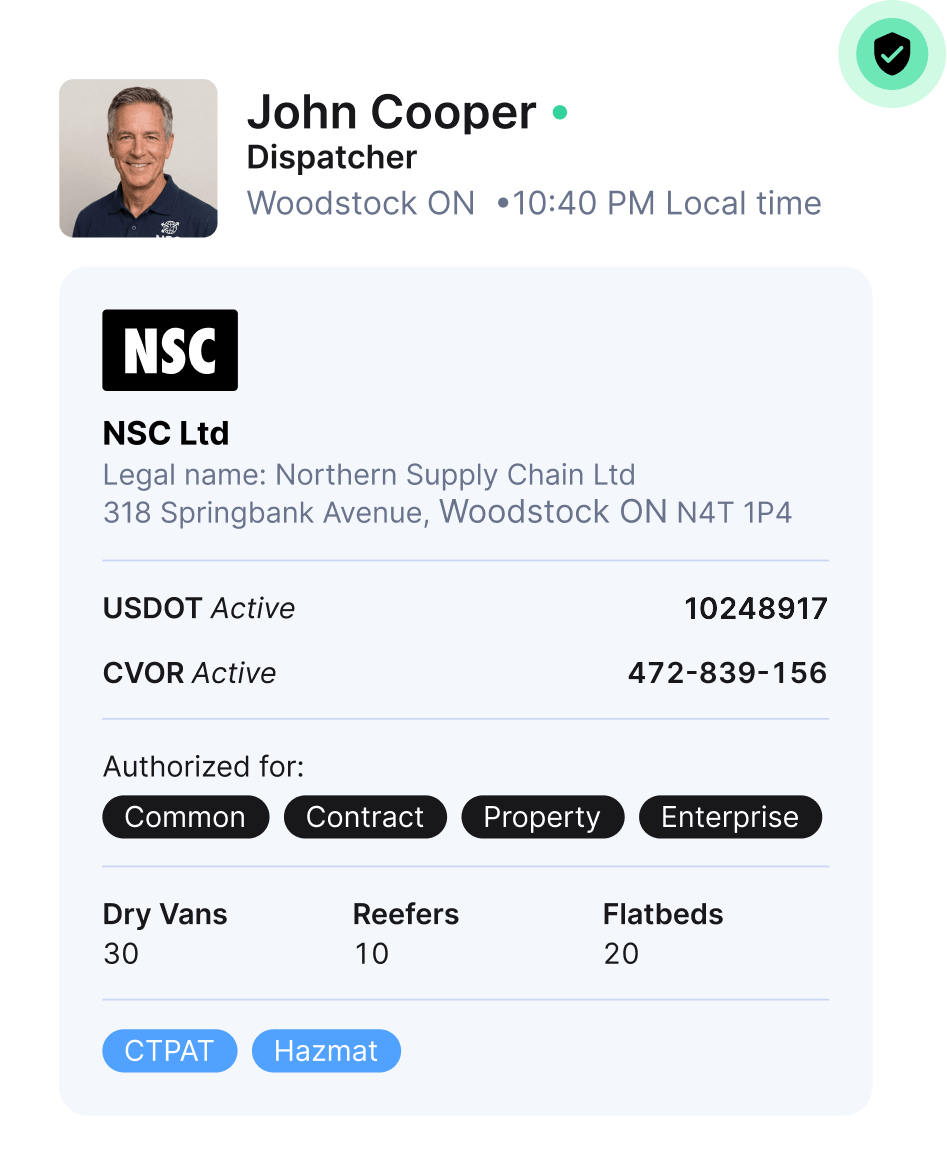
Vetted carriers for Canada freight
Source reliable spot and recurring capacity for domestic Canada and Canada–U.S. lanes, matched to your lane, equipment, and requirements, at no cost to carriers, so your pool keeps growing.
- Vetted capacity for intra-Canada and Canada–U.S. (northbound and southbound) lanes
- Carriers who list FAST, CTPAT/PIP and bonded status on their profile
- Carriers fluent in Canadian customs: PARS and ACI into Canada, PAPS and ACE into the U.S.
Booking a carrier you haven't used before? Read how to find and vet Canadian carriers.
Where Canada freight actually moves
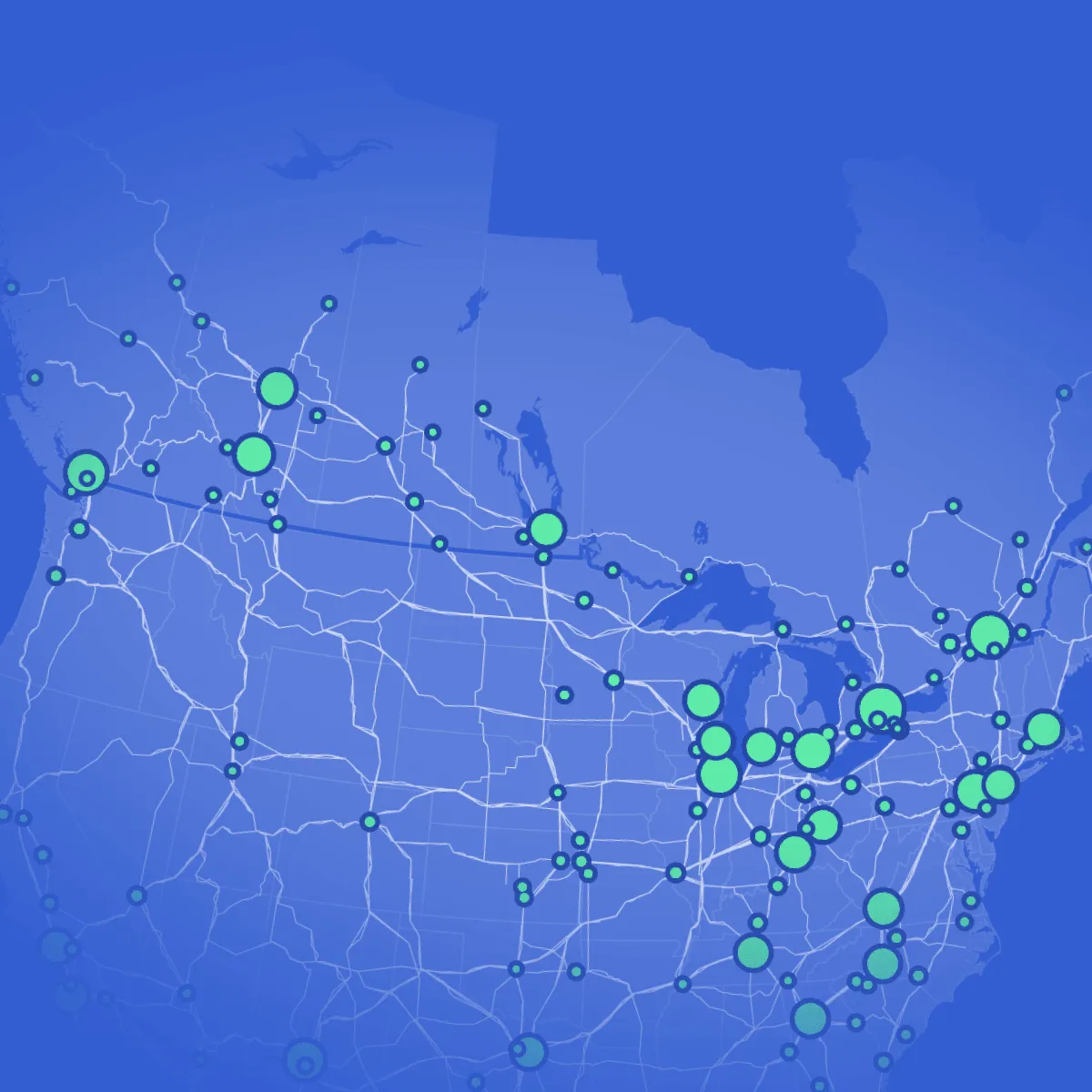
Coverage follows the corridors. These are the markets and lanes where Cargado carriers run every day. Post the lane once and it reaches carriers already running that corridor, which is the part a load board search leaves you to work out on your own.
Freight markets
The Toronto–Montreal corridor along Highway 401 is Canada's freight spine: manufacturing, food and beverage, and the distribution centers serving both metros. Alberta runs energy and agriculture out of Calgary and Edmonton, and Vancouver is the Pacific gateway for import distribution.
Ontario: the GTA and the Great Lakes region
Ontario carries the largest share of Canada's manufacturing freight, and most of it originates in the Greater Toronto Area. Automotive parts out of Oakville and Windsor, food and consumer goods out of Mississauga and Brampton, and industrial freight out of Hamilton and Kitchener all head south to Michigan and the U.S. Midwest.
Quebec: Montreal into the Northeast
Montreal anchors the eastern half of the network, moving aluminum, paper, food, and pharmaceuticals into the Northeast through New York and Vermont. Quebec's carrier base is largely francophone and much of the dispatch conversation happens in French, so Cargado serves the market in French as well as English. Quebec City, Trois-Rivières, and the Eastern Townships add industrial and forest-product freight moving on the same corridor.
Western Canada: Alberta, British Columbia, and Manitoba
Alberta's energy and agriculture freight moves heavy out of Calgary and Edmonton on flatbed, step deck, and heavy haul, with project and oversize work on top. British Columbia moves import distribution off the Port of Vancouver and produce south into Washington. Manitoba links the prairies to the U.S. Midwest, and Winnipeg reefer freight runs south year-round.
Carrier markets
Cargado tracks which markets and lanes each carrier runs.
Lanes and rates
From Ontario–Midwest automotive lanes to Quebec–Northeast runs, Cargado Market Rates covers U.S.–Canada corridors with bands built from real carrier bids, so you can price the lane before you chase the freight.
Browse lane guidesCommon questions
Which provinces does Cargado cover for Canada freight?
Cargado's Canada network runs across Ontario, Quebec, Alberta, British Columbia and Manitoba. Cargado tracks which markets and lanes each carrier runs, so a posting reaches the carriers who already run that lane.
Can I post winter freight that needs heat or protection from freezing?
Yes. Post heated trailers as their own equipment type, set the temperature range, and spell out any protect-from-freezing need in the posting. From November through March, freight that moves in a dry van in July needs a reefer running heat. Protect-from-freezing service is a hard requirement for paint, adhesives, beverages, pharmaceuticals and canned goods, so carriers need to see it before they bid.
Which carrier certifications are available for cross-border Canada moves?
Carriers list FAST, PIP and bonded status on their own profile, so confirm them before you tender. Cargado's carriers work with cross-border customs every day, including PARS, PAPS and broker handoffs.
Who can see the Canada loads I post?
Logistics companies are vetted before they can post freight, and our team reviews every carrier before it can see a posting. When you post a lane, it goes to carriers who already run that corridor. In Quebec, Cargado serves carriers in French as well as English.