The story
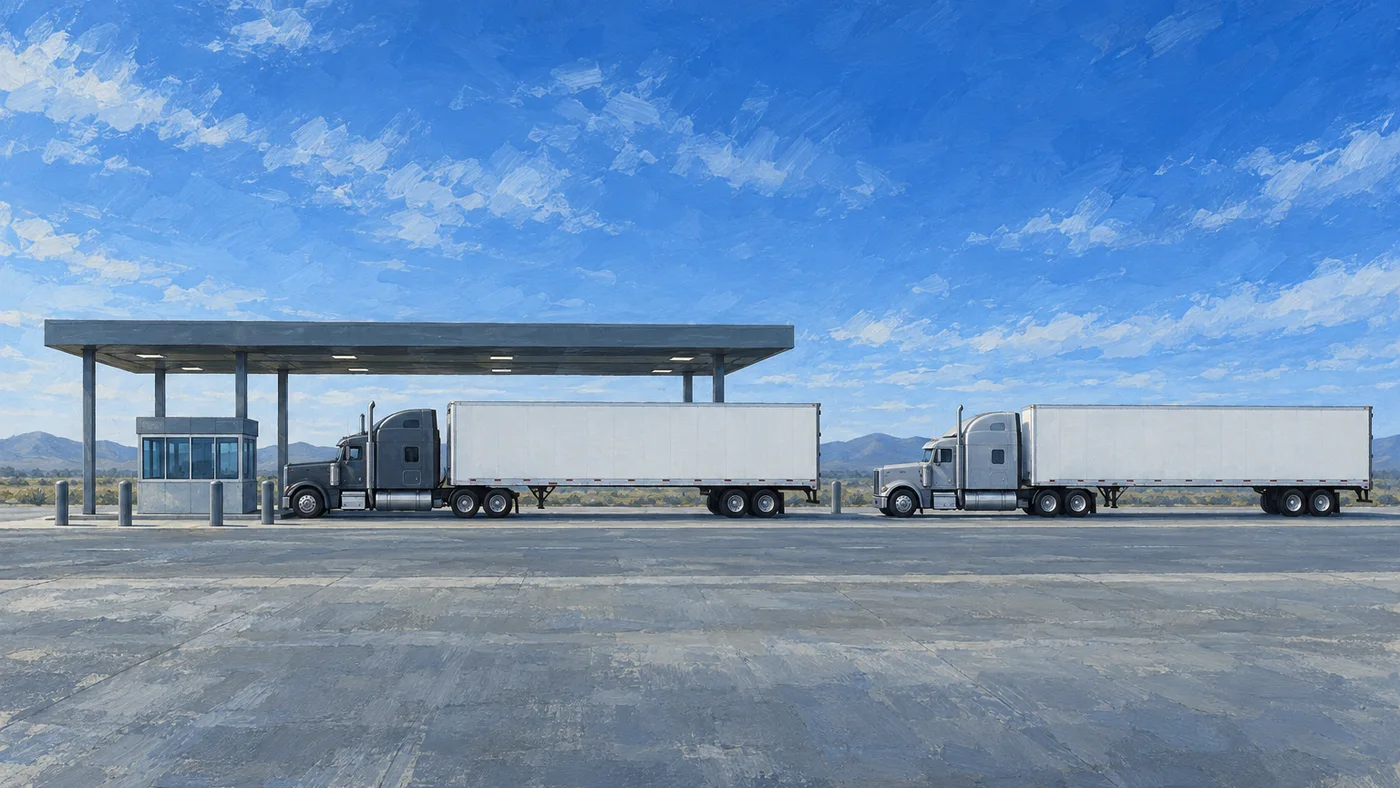
Servers leave Ciudad Juárez and Guadalajara in dry vans; transformers and switchgear leave Monterrey and central Mexico on open deck. Mexico's default carrier liability covers a small fraction of the cargo's value, heavy units need permits at the border, and duty depends on the tariff line. Northbound dry van bids out of Monterrey are up 29% on a year ago.
Where servers and switchgear ship from
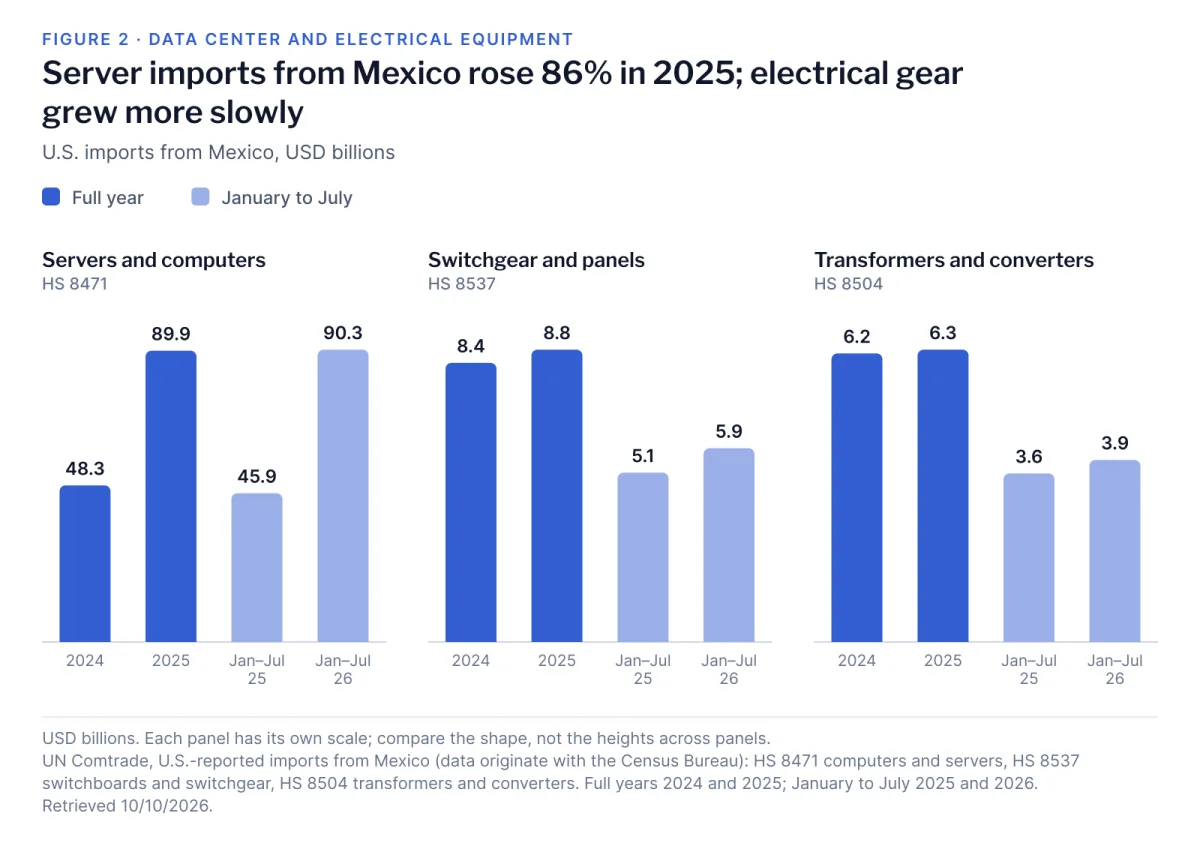
U.S. imports of computers and data processing machines from Mexico (HS 8471, the heading servers classify under) were $48.3 billion in 2024 and $89.9 billion in 2025, up 86%. January to July 2026 came to $90.3 billion, more than all of 2025 and up 97% on a year earlier.
Processing units, where servers classify, are most of that total. In 2025 Mexico supplied 48.9% of U.S. imports of HS 8471.50 processing units, the subheading rack servers usually fall under. A Chihuahua deputy economy minister described one truck of servers as worth "one thousand cars," as reported by the Financial Times and cited by the International Economic Law and Policy Blog.
Servers and racks come from Mexico's electronics plants. In the first quarter of 2026, Chihuahua produced 52% of Mexico's exports of computing, communications and electronic equipment and Jalisco 27.4%, per INEGI figures reported by Expansión. In freight terms that points to Ciudad Juárez and Guadalajara, both shipping in dry vans.
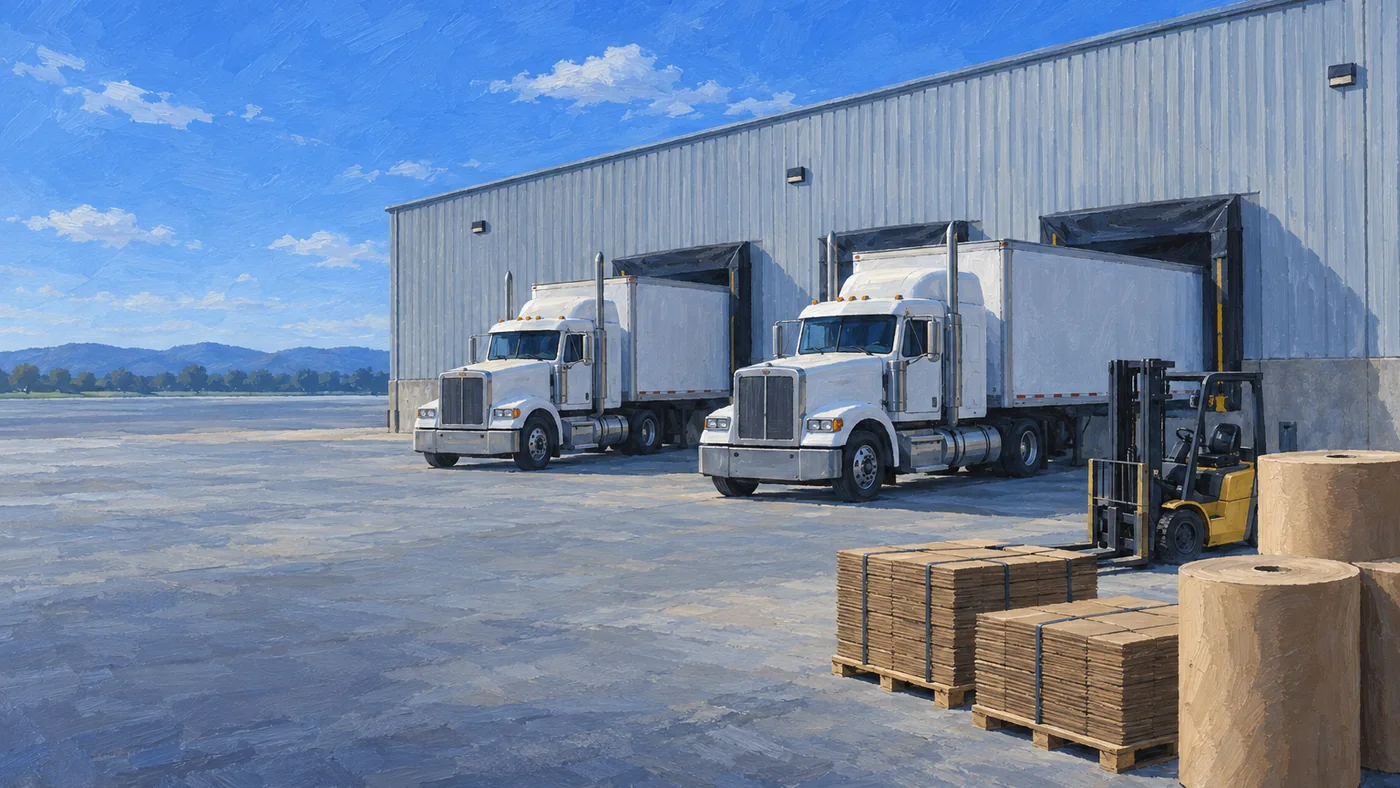
Electrical gear follows a different map. Plants announced in the trade press put transformer and power-distribution capacity in Monterrey, the northeast and central Mexico. In Cargado, transformers move mostly on open deck out of the Monterrey and Mexico City areas. Destinations are construction sites, so this freight moves with the build cycle.
Switchgear is growing too. Imports of HS 8537 switchboards and panels from Mexico were up 15% in January to July 2026. In 2025 Mexico supplied 42.4% of U.S. low-voltage panel imports and 42% of mid-size transformers (HS 8504.22, 650 kVA to 10 MVA).
Not every line with a data center label is rising. Imports from Mexico of static converters, the line that includes UPS units, fell 22% in 2025 and another 12% year to date, and air conditioning machines were down 12% year to date. Plan capacity around servers and switchgear.

Source: UN Comtrade, U.S.-reported imports from Mexico, HS 8471, 8471.50, 8537, 8537.10, 8504.22, 8504.40, 8502, 8415 and 8418.69, monthly data summed, 2024 to July 2026; U.S. data originate with the Census Bureau. International Economic Law and Policy Blog (D. Gantz, 8/19/2026) citing the Financial Times. INEGI state export data as reported by Expansión (8/5/2026), Q1 2026. Plant locations from announcements reported by Mexico News Daily, Utility Dive and Transformers Magazine. Cargado postings, data center and electrical equipment family, trailing 12 months to 10/9/2026 (equipment and origin pattern only). Retrieved 10/10/2026.
What moves the cost of a server or transformer shipment
Freight is a small share of what this equipment costs. Liability, permits and tariffs carry more of the landed cost than the line haul does.
Value against the liability cap. Under Mexico's federal roads and trucking law, a carrier is liable for loss and damage from pickup to delivery. Where the value was not declared, Mexican law caps that liability at 15 UMA per metric ton, about 1,760 pesos in 2026.
The UMA is the indexed unit Mexican law uses in place of the minimum wage. Against a truckload worth "one thousand cars," that default recovers almost nothing.
Article 67 is the fix. Declare the value in writing before the goods move, pay an additional charge agreed with the carrier, and the carrier answers for the full declared price, including loss from fortuitous events. Declared value is a priced service that belongs in the rate.
On a U.S. leg moving under its own bill of lading, the Carmack Amendment makes the carrier liable for the actual loss, subject to limits set in writing. Ask for each carrier's cargo policy limit rather than assume it nears the trailer's value.
Security on the Mexican leg. Server shipments out of Guadalajara start in Mexico's West region, which carried 31% of the country's 2025 cargo theft incidents; a third of incidents nationally hit parked trucks (Overhaul 2025 report, via FreightWaves). The carrier's plan for stops, tracking and team drivers belongs in the tender and adds to transit time and the bid.
Weight and size on each side of the bridge. Mexico's NOM-012 allows a T3-S2 tractor-semitrailer up to 46.5 metric tons gross, about 102,500 pounds, on its top road classes.
The U.S. Interstate limit is 80,000 pounds, about 36.3 metric tons (less under the bridge formula), so a shipment legal in Mexico can be roughly 22,500 pounds over at the bridge. Plan the split or the U.S. permit first.
In Texas, a non-divisible load over 254,300 pounds gross needs a superheavy single-trip permit with route approval and bridge analysis, and TxDMV asks for three to four weeks of lead time.
One alternative exists in the Rio Grande Valley. Hidalgo County's regional mobility authority issues overweight permits up to 125,000 pounds, and oversize permits up to 12 feet wide, 16 feet high or 110 feet long, for $206 per 24 hours, on designated routes from the Pharr-Reynosa, Anzalduas and Progreso bridges. Both ends of the trip have to sit inside the corridor.
Export controls. Whether advanced chips moving into Mexico for assembly and back need a U.S. export license depends on the item and the end user. Check with trade counsel.
Source, in order of the items above: Ley de Caminos, Puentes y Autotransporte Federal (DOF 12/22/1993), Arts. 66 and 67 (Cámara de Diputados, last reform DOF 11/14/2025); SICT Carta de Porte acuerdo (DOF 12/16/2021), clause DÉCIMA; DOF 1/27/2016, transitorio Tercero (UMA desindexation); INEGI UMA 2026; 49 U.S.C. 14706; Overhaul 2025 Mexico cargo theft report as reported by FreightWaves (2/22/2026); NOM-012-SCT-2-2017; 23 CFR 658.17; TxDMV Superheavy Single Trip; Hidalgo County RMA overweight corridor. Retrieved 10/10/2026.
As of October 2026
The duties and fees in this box change. Refresh it monthly, along with the dated lines elsewhere on the page. A licensed customs broker should confirm the classification of each product before anyone relies on a rate below.
- Servers. A 10% Section 301 tariff on goods of Mexico has applied since 7/24/2026. USMCA zero-duty entries are exempt, and the HTSUS text (chapter 99, U.S. note 52(b), heading 9903.05.86) lists 8471.50.01 processing units among the provisions the tariff does not apply to, so servers classified there avoid the 10% with or without a USMCA claim. Servers that contain certain advanced AI chips can still owe the separate 25% chip tariff below. A customs broker should confirm the classification. The 10% is under challenge at the U.S. Court of International Trade, which heard arguments on 9/30/2026 and had not ruled as of 10/11/2026. It is still collected.
- Transformers up to 10 MVA, dry types up to 500 kVA. Since 4/6/2026, Section 232 steel, aluminum and copper duties apply to the full customs value of covered derivative products, not just their metal, when the metal named for the line's list is at least 15% of the article's weight (the listed metals' combined weight where a line sits on more than one list). Liquid-filled transformers up to 10 MVA (8504.21 and 8504.22) and dry types up to 500 kVA (8504.32 and 8504.33) sit on Annex I-B at 25% (HTSUS heading 9903.82.09), or 10% where at least 85% of the listed metal is U.S. melted and poured or smelted and cast (note 16(e), heading 9903.82.06). Mexico gets no USMCA reduction on these lines. A transformer under the 15% metal weight floor skips Section 232 but owes the 10% Section 301 unless it enters duty-free under USMCA.
- Transformers over 10 MVA, dry types over 500 kVA. Annex III sets a combined rate of 15% through 12/31/2027 for liquid-filled units over 10 MVA (8504.23) and dry types over 500 kVA (8504.34), HTSUS heading 9903.82.10; 10% in total with at least 85% U.S. melted and poured steel or smelted and cast aluminum, and the normal duty alone where it is 15% or more (note 16(e) and (f)). The reduction can be revoked for a trading partner whose imports of these products increase in a way that undermines the tariff's aims.
- Switchgear. HTS 8537 switchboards and panels are not on the Section 232 steel, aluminum or copper lists; the only 232 list that names 8537 is the automobile-parts list, which reaches parts of passenger vehicles and light trucks. From Mexico that means 0% with a valid USMCA claim at entry and, without one, the 2.7% normal duty on most 8537 lines (for example 8537.10.91) plus the 10% Section 301 tariff. On those lines the broker's paperwork is worth 12.7% of customs value.
- Chips. A Section 232 tariff of 25% has applied since 1/15/2026 to certain advanced computing chips and to servers and other products of 8471.50, 8471.80 and 8473.30 that contain them, but not when imported for use in a U.S. data center (a facility adding more than 100 MW of power demand for AI work), among other exceptions. A USMCA claim does not remove it. Broader semiconductor tariffs were floated in the same proclamation; treat that as a live risk, not a current cost.
- Pending, not in force. Commerce proposed on 8/6/2026 adding electric conductor cables (8544.49.2000, 8544.49.3040, 8544.49.3080, 8544.60.4000) to the metals derivative lists at a proposed 25%; no final list had been published as of 10/11/2026.
- Texas superheavy permits. Three to four weeks of lead time; a $60 permit fee plus a $375 highway maintenance fee and the applicable vehicle supervision fee.
Source: USTR Section 301 notice, 91 FR 47318 (7/28/2026); In re Section 301 Forced Labor Cases, Consol. Ct. No. 26-03555 (CIT; docket checked 10/11/2026); HTSUS Revision 21 (2026), chapter 99 subchapter III, U.S. note 52(b) and heading 9903.05.86, read in text at hts.usitc.gov; HTSUS 8537.10.91 (2.7%); BIS proposed derivative inclusions, 91 FR 50756 (8/6/2026); Proclamation 11021 (91 FR 18201, 4/9/2026) and Proclamation 11032 of 6/1/2026 (91 FR 34085, 6/4/2026), Annexes I-B and III; Proclamation 11002 (91 FR 2443, 1/20/2026); TxDMV. The Section 232 HTS lists were confirmed against HTSUS Revision 21 (2026), chapter 99 U.S. note 16 and headings 9903.82.03, 9903.82.09 and 9903.82.10; the semiconductor definitions against U.S. note 39; the 15% weight rule against U.S. note 16(c), read 10/11/2026. Retrieved 10/10/2026 and 10/11/2026.
General information as of 10/11/2026, not legal, tax or customs advice. Confirm classification and duty with a licensed customs broker.
How northbound rates moved out of the server and transformer markets
Northbound dry van bids out of Monterrey were up 29% in September 2026 against September 2025, and out of Guadalajara 21%. Open deck out of all Mexican origins was up 20% over the same year.
| Market and equipment | Change in median northbound bid per mile |
|---|---|
| Monterrey, dry van | +29% (Sep 2026 vs Sep 2025) |
| Guadalajara, dry van | +21% (Sep 2026 vs Sep 2025) |
| All Mexico origins, dry van | +26% (Sep 2026 vs Sep 2025) |
| All Mexico origins, open deck | +20% (Sep 2026 vs Sep 2025) |
| Monterrey, open deck | about +16% (Jul to Sep 2026 vs Apr to Jun 2026) |
| Querétaro, open deck | about +7% (Jul to Sep 2026 vs Apr to Jun 2026) |
| All U.S. origins, southbound dry van | +21% (Sep 2026 vs Sep 2025) |
| All U.S. origins, southbound open deck | +15% (Sep 2026 vs Sep 2025) |
These are market-level figures: the median of carrier bids on all freight out of each origin market, not only data center or electrical freight. They read as the cost of a truck leaving that market. Open deck is thinner than dry van, so Monterrey and Querétaro open deck are shown on a rolling three-month window rather than a single month.
Ciudad Juárez dry van rose 41% over the year, but that market is thin and its monthly median swung 17% in September alone; read it as a direction, not a benchmark.
Per-mile rates out of Monterrey and Ciudad Juárez also include many short runs to the bridge, so compare origins on trips of similar length (the haul-length effect is worked through in /insights/automotive-parts-mexico-us, draft).
Source: Median carrier bid per mile, trips over 500 miles, U.S. dollars. Monthly rows: September 2026 against September 2025. Rolling rows: July to September 2026 against April to June 2026. Northbound by origin market; southbound pooled from all U.S. origins into Mexico. Haul-length pattern: Cargado carrier bid data, northbound dry van, October 2025 to October 2026. Cargado carrier bid data.
Direction. Northbound and southbound are separate markets: on nine city pairs priced both ways on October 10, 2026, dry van through Laredo, northbound ran a median 43% above southbound, and northbound is the direction this freight buys (the full comparison is in /insights/automotive-parts-mexico-us, draft).
Source: Median carrier bid from Cargado Market Rates, dry van, via Laredo, both directions, October 10, 2026, nine city pairs from Puebla, Silao and Monterrey-area origins with a confidence score of 60 or higher in both directions.
Seasonality. Over the past year, northbound long-haul dry van bids ran flat from October through February, stepped up in March and April and peaked in July. A build schedule that landed server deliveries in summer 2026 paid the peak of that curve.
Source: Median carrier bid per mile, northbound dry van into the U.S., trips of 1,000 to 2,200 miles, by month, October 2025 to September 2026. Cargado carrier bid data.
Seven checks before you tender servers or switchgear
- Declared value, in writing, on every Mexican-leg transport document, with the Article 67 charge agreed before tender. Make it a standing field in the tender, not a decision made shipment by shipment.
- Each carrier's cargo policy limit on both legs, in writing, against the value of one loaded trailer.
- The equipment maker's transport spec for populated racks (shock, tilt, humidity) before you pick equipment. The spec decides whether a standard dry van is enough.
- Each carrier's security plan on the Guadalajara and central Mexico corridors, and what it adds to transit time.
- For transformers and switchgear, gross weight against 80,000 pounds at the bridge, whether the shipment splits, and which crossing and permit path applies. In Texas, start the superheavy permit three to four weeks out.
- The tariff line of each product with your customs broker, and whether a USMCA claim is in place at entry. As of October 2026, on most switchgear lines the claim is worth 12.7% of customs value (the 2.7% normal duty plus the 10% Section 301 tariff); on the smaller transformers listed in the box it does not remove the 25%.
- Price each direction on its own and read when a lane moved; the step-up came in March and April, and carrier rate-change requests tend to arrive weeks later (more in /insights/automotive-parts-mexico-us, draft).
Monthly lane watch
Median carrier bids, September 2026. We update this block each month.
| Market | Direction and equipment | vs September 2025 | vs August 2026 |
|---|---|---|---|
| Monterrey | Northbound dry van | +29% | +3.1% |
| Guadalajara | Northbound dry van | +21% | +0.8% |
| Ciudad Juárez | Northbound dry van | +41% | +17.0% (volatile; thin months) |
| Monterrey open deck | Northbound open deck | +16% vs the prior 3 months | |
| Querétaro open deck | Northbound open deck | +7% vs the prior 3 months | |
| Pooled northbound dry van (all Mexico origins) | Northbound dry van | +26% | +1.7% |
| Pooled northbound open deck (all Mexico origins) | Northbound open deck | +20% | -1.6% |
Source: Cargado carrier bid data.
See where carrier bids sit on your data center lanes
Send us the Mexico lanes you are pricing for servers, racks, switchgear or transformers, dry van or open deck, and we will show you where carrier bids sit and where our data is thin or absent.
Talk to us → /contact?ref=industry-data-center-equipment-mexico-us
Related links
- Market Rates for your Mexico and Canada freight
- How rate confidence scores work
- How to read a Mexico fuel surcharge
- Automotive parts between Mexico and the U.S. (full direction and haul-length comparisons)
- What is a Mexican carrier liable for when my freight is lost or damaged