The story
Part of our guide to fresh produce freight between Mexico and the U.S.
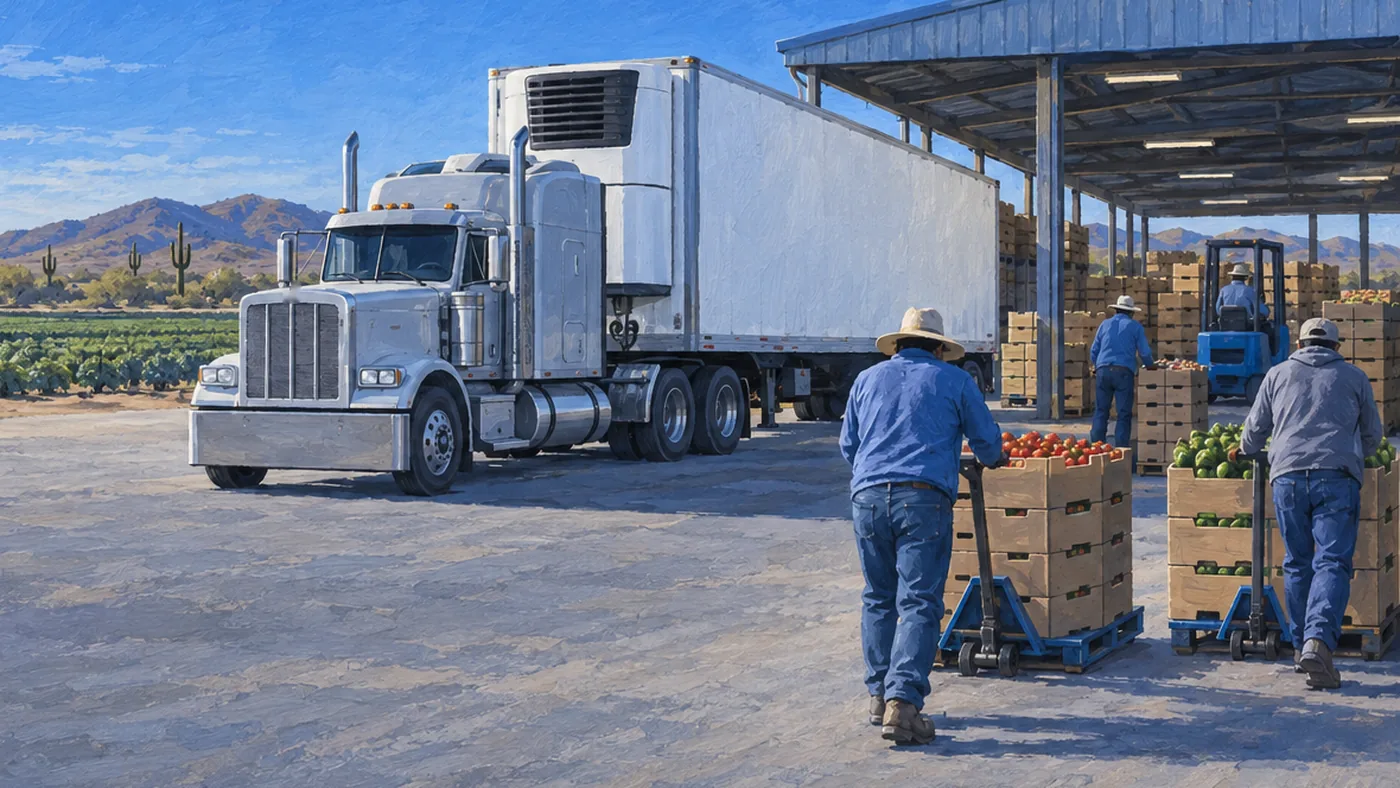
Yes, it is typical. Produce packhouses in Mexico, and many in the U.S., keep the driver in the cab while their own crew loads, and the produce industry's best-practice guide treats a driver who is not allowed on the dock as a normal case with its own procedure. The reasons are the food safety audits the packhouse holds, the security programs its U.S. customers require, and its own safety rules. A driver off the dock still leaves you with a record; it comes from the shipper instead of the cab. The shipper's pulp temperatures (the temperature inside the fruit), lot numbers and seal number go on the shipping papers with photographs of the loaded trailer, the carta porte notes that the shipper loaded and counted, the U.S. carrier's bill at the border says shipper's load and count, and the reefer download carries the temperature from the dock to delivery.
At a glance
- Expect it. The industry guide has a procedure for it.
- The packhouse will not waive its reasons for one carrier: GFSI-type (Global Food Safety Initiative) food safety audits, visitor controls under CTPAT (U.S. Customs' supply chain security program) and its own safety rules.
- If the driver cannot count or pulp the load, the carta porte should say so, and the bill of lading should say shipper's load and count: the through bill on a single-carrier move, or the U.S. carrier's bill at the border on a two-contract move.
- Ask the shipper for what the driver would have gathered: pulps by lot, pallet count and pattern, photos of the loaded trailer and the applied seal.
- Put set point, run mode, pre-cool and the recorder on the rate confirmation, and collect the reefer download at delivery.
- The carrier holds air temperature; cooling the fruit was the shipper's job. Origin pulps on paper are what make destination pulps mean anything.

Why packhouses keep drivers off the dock
Food safety audits. Packhouses exporting to U.S. retailers hold GFSI-recognized certifications such as PrimusGFS, whose facility audit asks for food defense controls over visitors, shipping areas and trucks, and for every visitor to sign the hygiene rules before entering a food handling area. U.S. food warehouse guidance says it plainly: truck drivers stay in non-product areas unless an employee is with them.
Security programs. CTPAT's criteria for foreign manufacturers require positive identification at every entry point, photo ID and a logged visit for every visitor, who should be escorted, and trailers stored where nobody can get at them. A packhouse supplying a CTPAT importer usually runs its dock that way whether or not it is certified.
Their own safety rules. Forklifts, wet floors and a crew on piece rate make a poor place for someone who does not work there. That one is house practice; no audit scheme writes it down.
Source: PrimusGFS v4.0 Module 5, 5.01.04 and 5.15.06 (2025); USDA FSIS Food Warehouse Guidance (2020); CBP CTPAT Minimum Security Criteria, Foreign Manufacturers (November 2019), 5.1, 10.2 and 10.3. Retrieved 10/27/2026.
What shipper's load and count means for a claim
On a U.S. bill of lading, a clean signature is an admission. A carrier that signs for 20 pallets of berries in apparent good order has handed the claimant its first piece of evidence: in a Carmack claim, good condition at pickup plus damage at delivery puts the burden on the carrier to prove both that it was not negligent and that an excepted cause, such as the fruit's own condition, did the damage.
The words "shipper's load and count" change the starting point on the U.S. leg. Under the Bills of Lading Act, a U.S. carrier whose bill, issued at the border for a sealed trailer, carries "shipper's load and count" or "seal intact, shipper's load and count" is not liable for a count that was wrong at origin or for damage from improper loading, where the shipper loaded and the carrier could not check; the claimant has to prove those some other way. They do not excuse the carrier's own negligence, such as a reefer that failed to hold the set point.
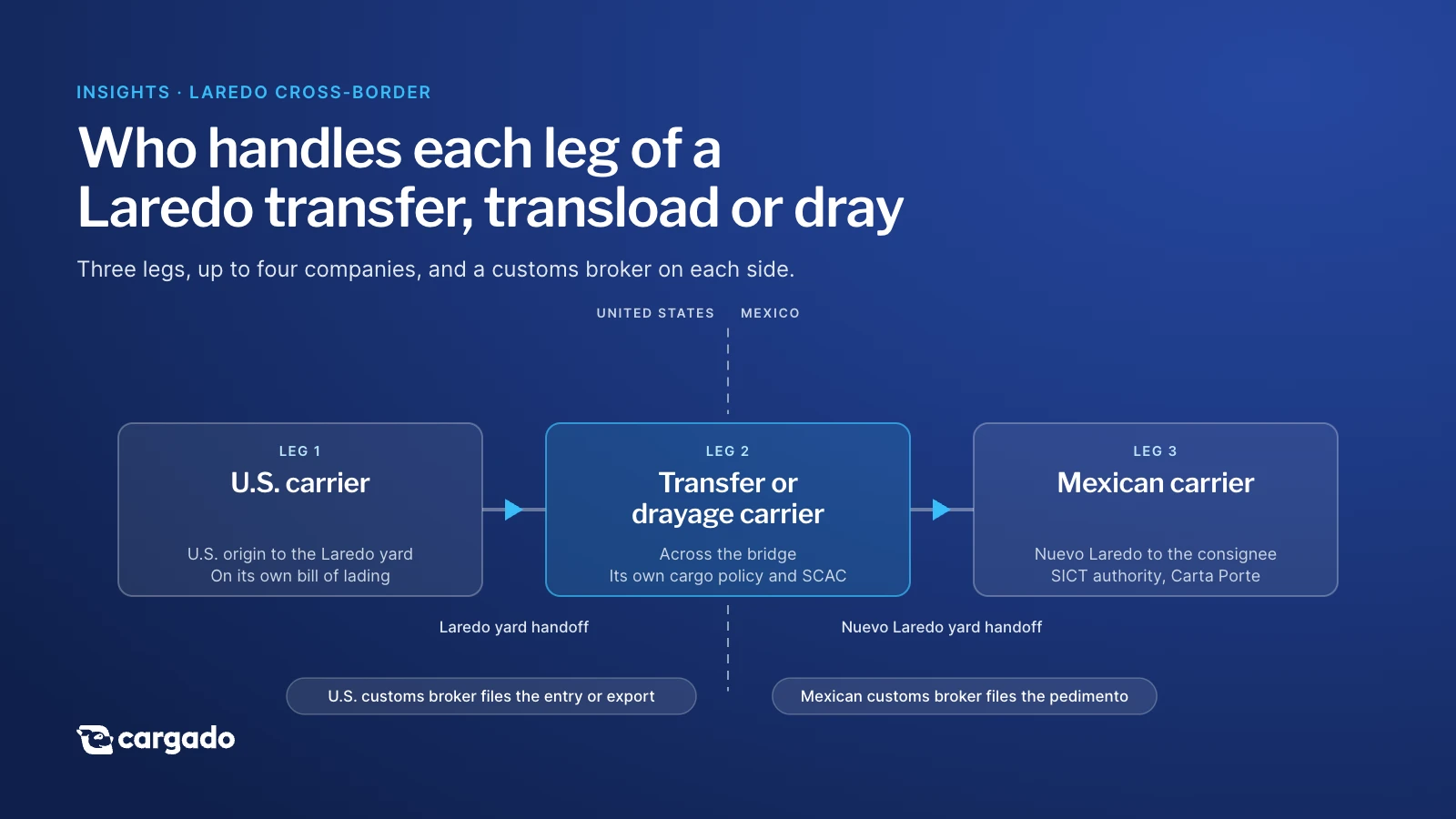
At the packhouse the Mexican driver signs for the load on a carta porte, and any bill the packhouse issues was issued in Mexico, so the Bills of Lading Act does not reach it. Mexico's federal transport law gives the Mexican carrier the matching defenses instead: Article 66 excuses damage from inadequate packaging and from the shipper's false declarations. A note on the carta porte that the shipper loaded and sealed and the driver could not count is the record the carrier will point to for those defenses. On one through bill from a carrier of record, put the words on that bill and in the rate confirmation; the Bills of Lading Act may not reach a bill issued in Mexico, so the contract carries it.
The industry guide says the shipping papers should carry the words when the operator is not allowed to count. Shippers rarely accept them when a driver adds them at the dock, so agree them with the packhouse before the first load, for the carta porte and for the bill the U.S. carrier signs at the border, and expect them to come up when you talk rate.
The Mexican leg also runs under Mexico's own liability cap; see how to find and vet Mexican carriers, and for who you claim against at the border handoff, cargo claims on Mexico freight.
Source: 49 U.S.C. 80102 and 80113(b) and (c); 49 U.S.C. 14706; Missouri Pacific R. Co. v. Elmore & Stahl, 377 U.S. 134 (1964); Ley de Caminos, Puentes y Autotransporte Federal, Article 66, fractions I and IV; Johnson & Johnson v. Chief Freight Lines, 679 F.2d 421 (5th Cir. 1982); Brinke v. Ritter Carrier, 450 F.2d 1223 (1971); Blue Book Services, 1/12/2021; IFPA Fresh Produce Transportation Best Practices (October 2022). Retrieved 10/27/2026.
What to collect instead
The industry guide spells out the substitute when the operator is not allowed on the dock: the loading temperature recorded on the bill of lading with photographic evidence, and the lot number made available to the receiver. On a Mexico load, that means the shipper's papers beside the carta porte.
Before the truck arrives. The rate confirmation carries the set point, continuous or cycle run, pre-cool, and who supplies and returns the recorder. Where food needs temperature control for safety, the FSMA sanitary transportation rule puts that written spec on the party arranging the transportation, which can be a broker. Most whole produce is cooled for quality, not safety, so the rule may not reach your berries; the receiver asks for the same documents either way.
While the shipper loads. Ask for the pulp log by lot, taken at loading, and the pallet count and loading pattern, both on the shipping papers. Ask for photographs of the open trailer before the doors close: pallets, airflow gap at the nose, recorder in place.
At sealing. The seal number goes on the shipping papers beside the carta porte, and on the through bill or, on a two-contract move, the U.S. bill at the border, with a photo of the applied seal. CTPAT's criteria for Mexican long-haul carriers already require the driver to verify the number against the shipping documents and record any replacement seal applied in transit, and the carrier to notify the shipper, the broker and the importer. Get your contact onto that list.
At departure. The driver confirms the set point on the reefer display and that the unit is running, notes the recorder's location and serial number on the shipping papers, and signs. Pulps above the set point go to dispatch, and to you, before the truck leaves.
At delivery. Pull the reefer download or recorder file before unloading and keep it with the delivery receipt; a cargo claim and your cargo insurer both start from it. Where the FSMA sanitary transportation rule applies, a carrier that agreed in writing to hold the temperature must be able to show it did; ambient readings at loading and unloading or trip temperature data count as proof. The industry rule of thumb is air within four or five degrees Fahrenheit of the agreed transit temperature.
Source: IFPA Fresh Produce Transportation Best Practices (October 2022); 21 CFR 1.908(b)(2), (c)(2) and (e)(2); CBP CTPAT Minimum Security Criteria, Mexican Long Haul Highway Carriers (November 2019), 5.23 and 6.1; Blue Book Services, 3/28/2025 and 4/7/2025. Retrieved 10/27/2026.
What to ask the shipper before the first load
- Is the driver allowed on the dock? If not, who takes the pulps and photos?
- Will the carta porte and the U.S. bill at the border carry shipper's load and count when the driver cannot count?
- Is the transit temperature a set point or a range? Continuous or cycle run?
- Who supplies the recorder, where does it ride, and who returns it?
- Who applies the seal, and will its number and photo be on the shipping papers?
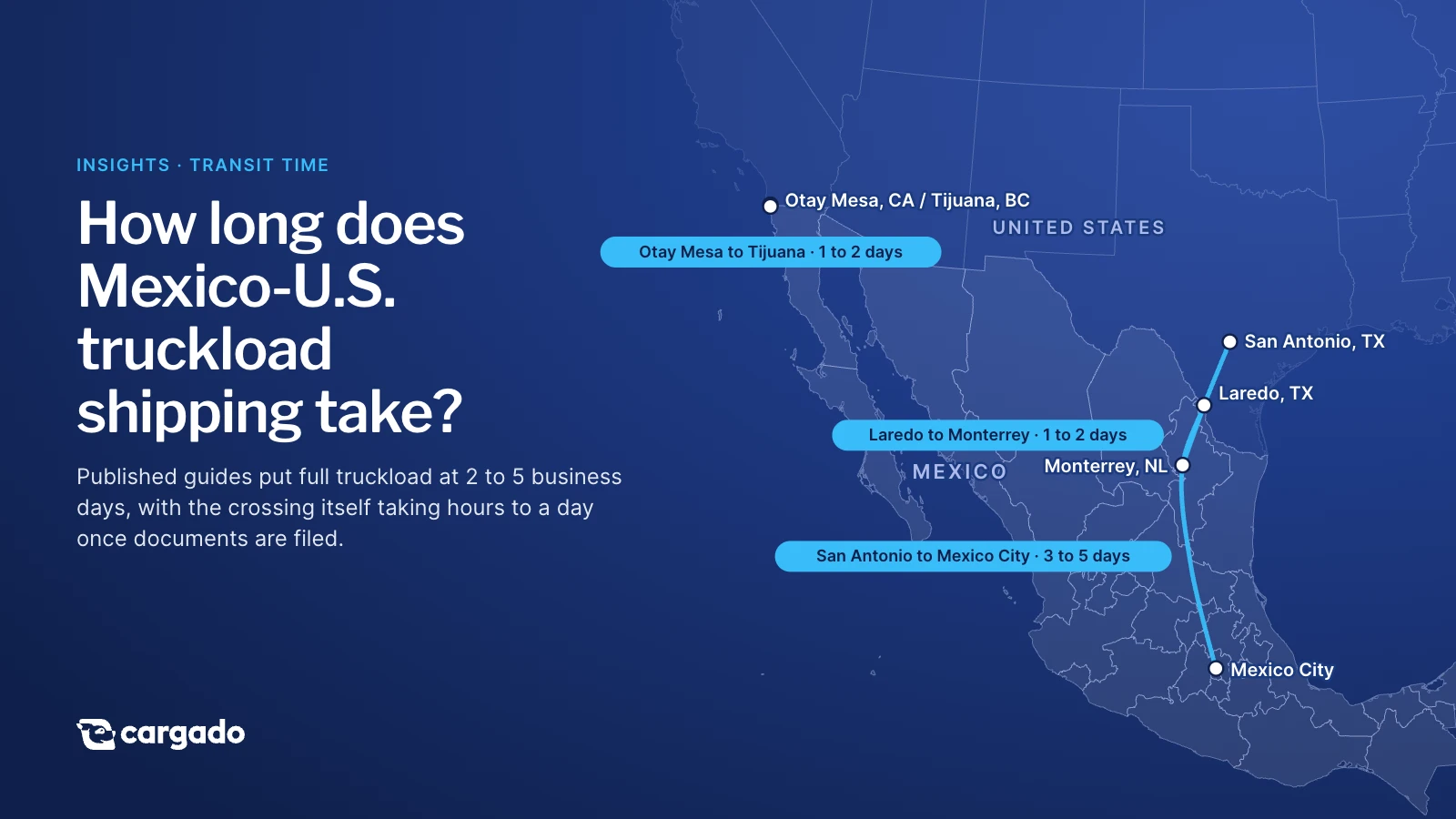
- Does the unit run while a loaded trailer waits at the packhouse? (It may wait again at the border; see border dwell and transit time.)
- When does detention start?
Write the answers into the carrier program and onto the posting when you post the lane, so the carriers who already run that way can see it.
Related links
- Fresh produce freight (hub)
- Shipping fresh produce from Mexico to the U.S. by reefer
- Mexico produce season and what it does to freight
- How to find and vet Mexican carriers
- Cargo claims on Mexico freight
- Cargo insurance on Mexico produce freight
- Border dwell and transit time for Mexico produce
General information as of 10/27/2026, not legal advice. Confirm claim terms with your counsel and your cargo insurer.