Get the Cargado Market Update

Where carriers are bidding on Mexico freight, what rates did, and how to price your lanes.

About one email a month, more when the market moves. Unsubscribe anytime. Privacy Policy.

You're on the list. The next market update goes to your inbox.
That didn't go through. Check the email address and try again.

The latest

Thank you! Your submission has been received!
Oops! Something went wrong while submitting the form.
Card titled How to structure a freight RFP with Mexico and Canada lanes, with a five-item panel called The cross-border section: the crossing or port of entry, the customs broker on each side, the Incoterms rule, fuel and accessorials by leg, and the documents each party provides.
Insights

How to structure a freight RFP with Mexico and Canada lanes

Price every cross-border lane by leg and all-in, and add a cross-border section that settles the crossing, the customs broker on each side, the Incoterms rule, fuel and accessorials by leg, and the documents each party provides. Built from CBP, CBSA, FMCSA, SAT and ICC sources, with a lane template to download.
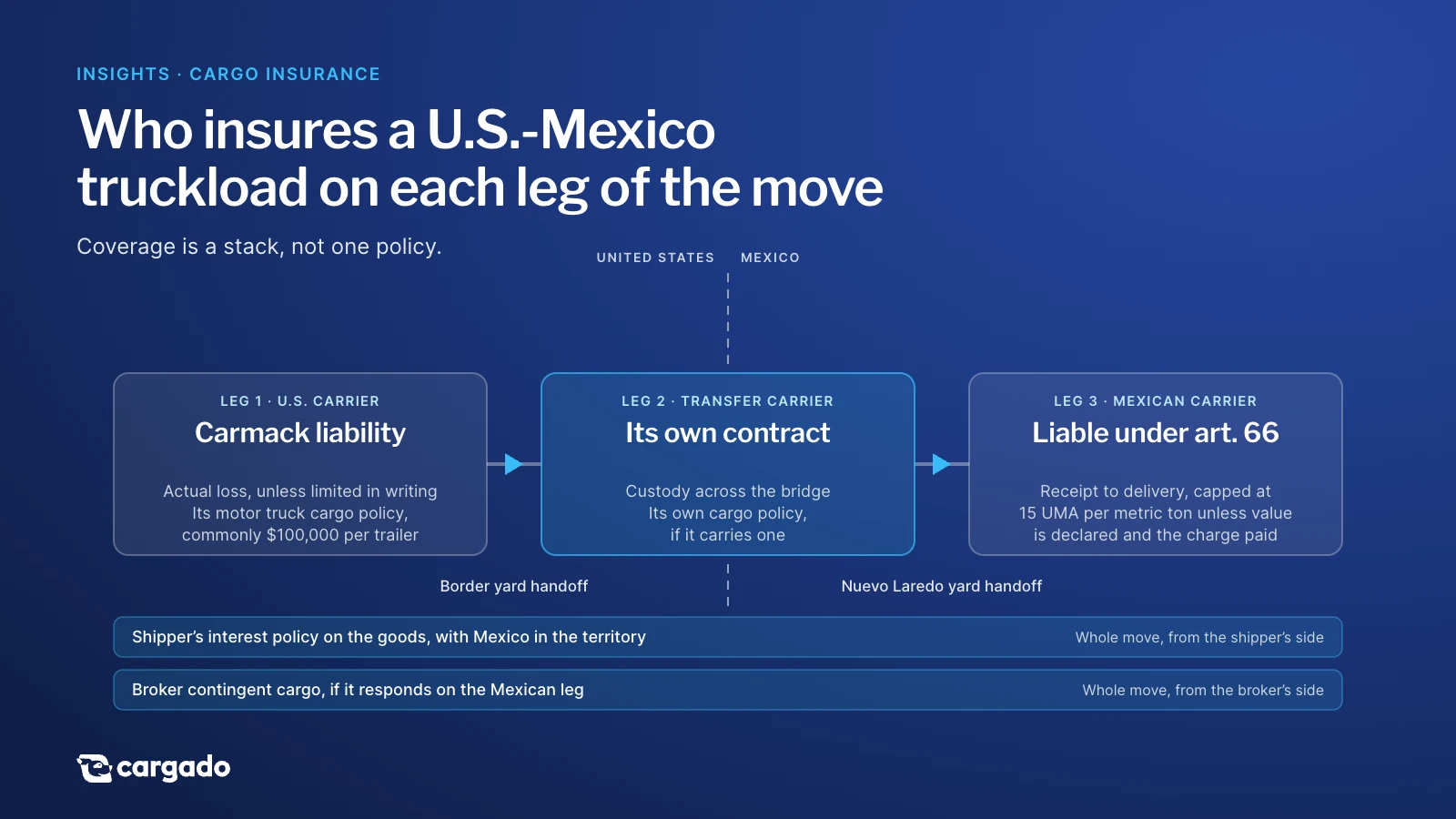
Diagram titled Who insures a U.S.-Mexico truckload on each leg of the move: U.S. carrier under Carmack, cargo policy commonly $100,000 per trailer; transfer carrier under its own contract; Mexican carrier under the article 66 cap; shipper's interest and broker contingent cargo across the move.
Insights

Who insures a U.S.-Mexico truckload on each leg of the move

A U.S.-Mexico truckload changes hands at the border, and so does the coverage. This page maps who carries what on each leg, why Carmack ends at the border on most moves, how declared value works on both sides, and how to document and file a claim.
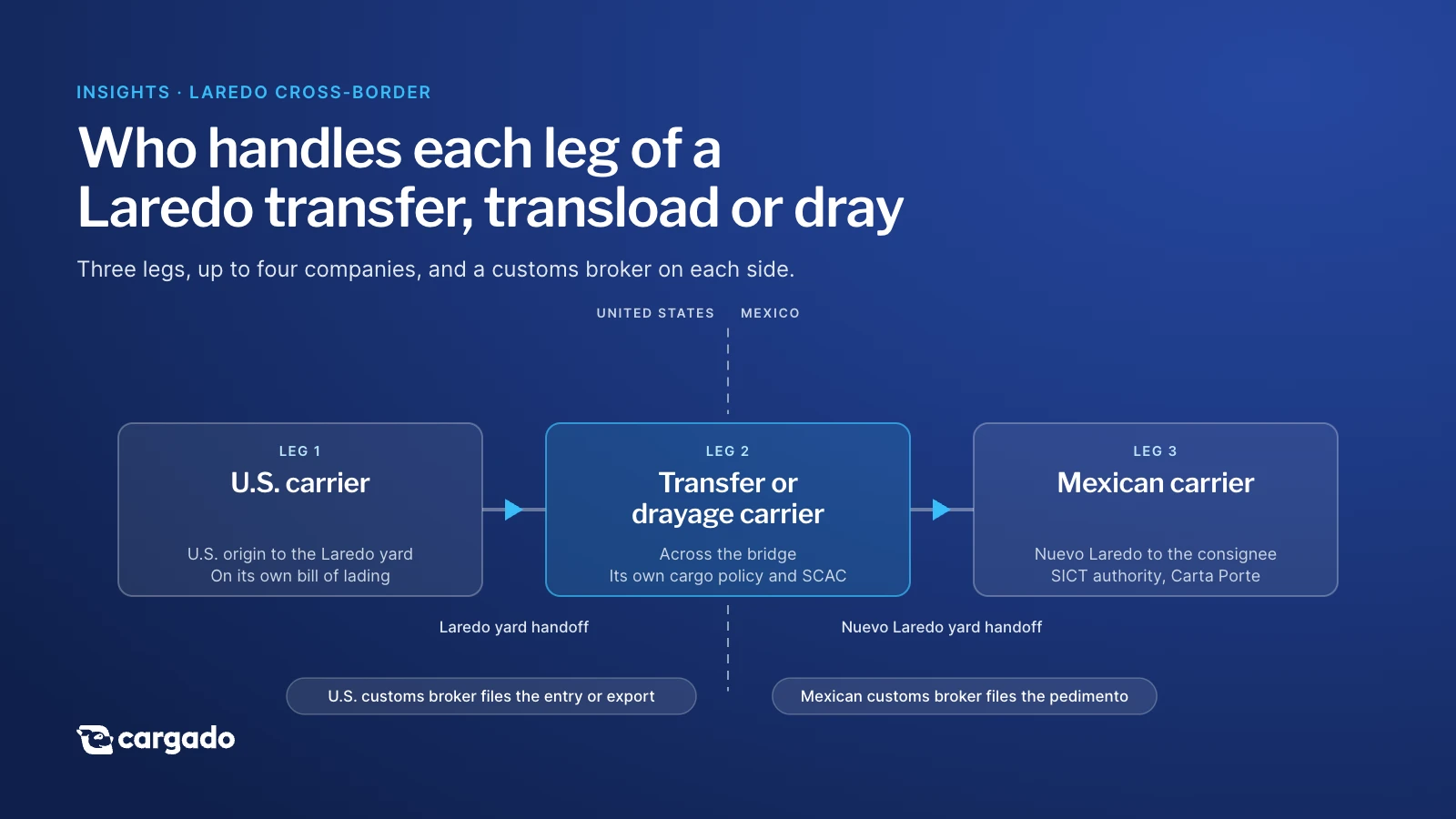
Diagram of a Laredo truckload in three legs: a U.S. carrier from the origin to the Laredo yard handoff, a transfer or drayage carrier across the bridge to the Nuevo Laredo yard handoff, and a Mexican carrier to the consignee, with a customs broker filing on each side.
Insights

Who handles each leg of a Laredo transfer, transload or dray

A Laredo truckload is three legs with up to four companies: a U.S. carrier, a transfer or drayage carrier across the bridge, and a Mexican carrier, with a customs broker on each side. Who is responsible on each leg, why the law splits it, and what to confirm before tender.
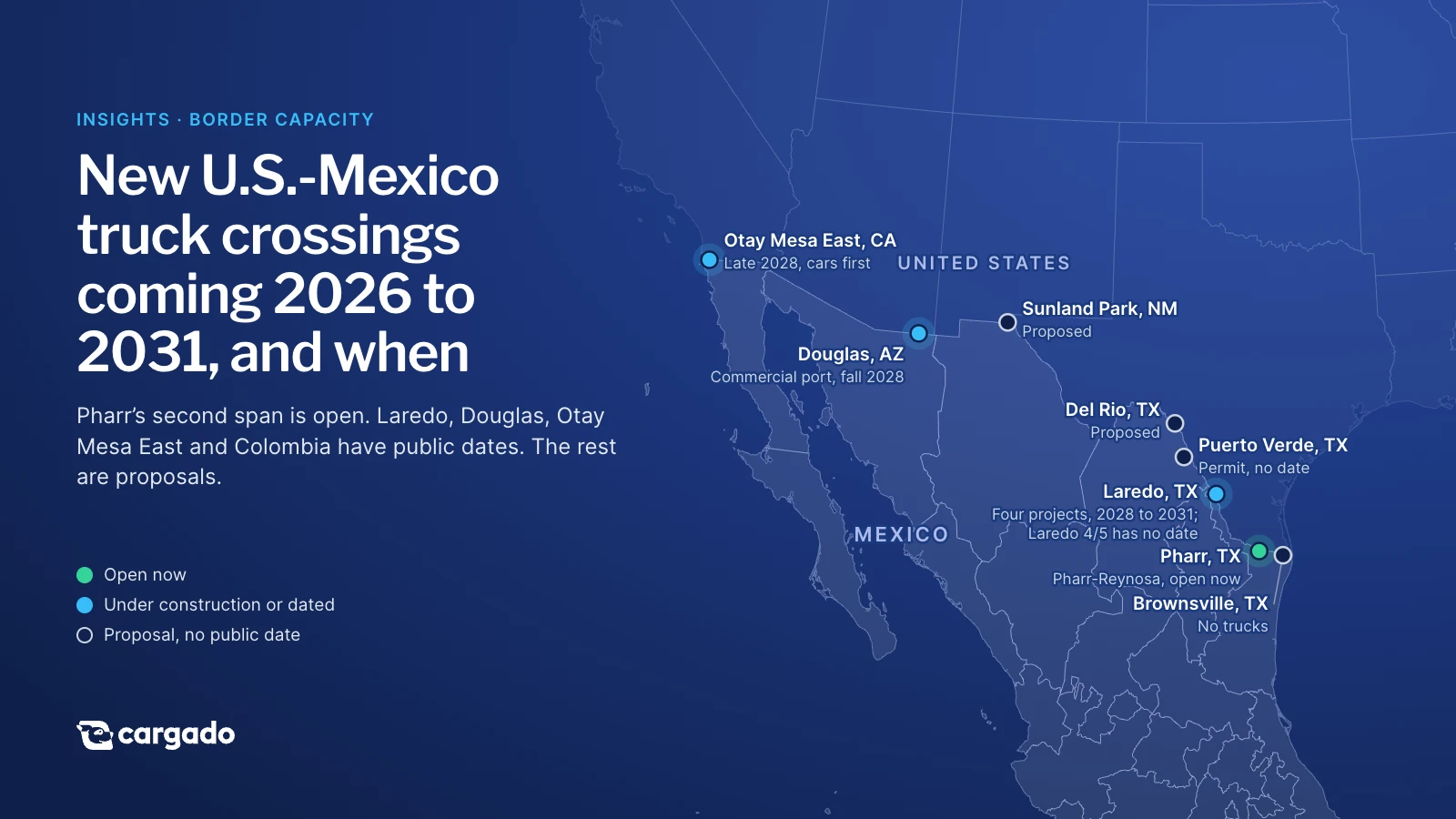
Map of the U.S.-Mexico border marking new truck crossing projects: Otay Mesa East, CA late 2028; Douglas, AZ fall 2028; Sunland Park, NM and Del Rio, TX proposed; Puerto Verde, TX permitted, no date; four Laredo, TX projects 2028 to 2031; Pharr, TX open now; Brownsville, TX no trucks.
Insights

New U.S.-Mexico truck crossings coming 2026 to 2031, and when

Pharr-Reynosa's second span is open now. The World Trade Bridge expansion (2027 to mid-2028), Douglas commercial port (fall 2028), Otay Mesa East (late 2028, cars first) and Colombia's freight-only bridges (2028 to 2030, depending on the source) are next; Green Corridors is 2031; the rest are proposals without dates.
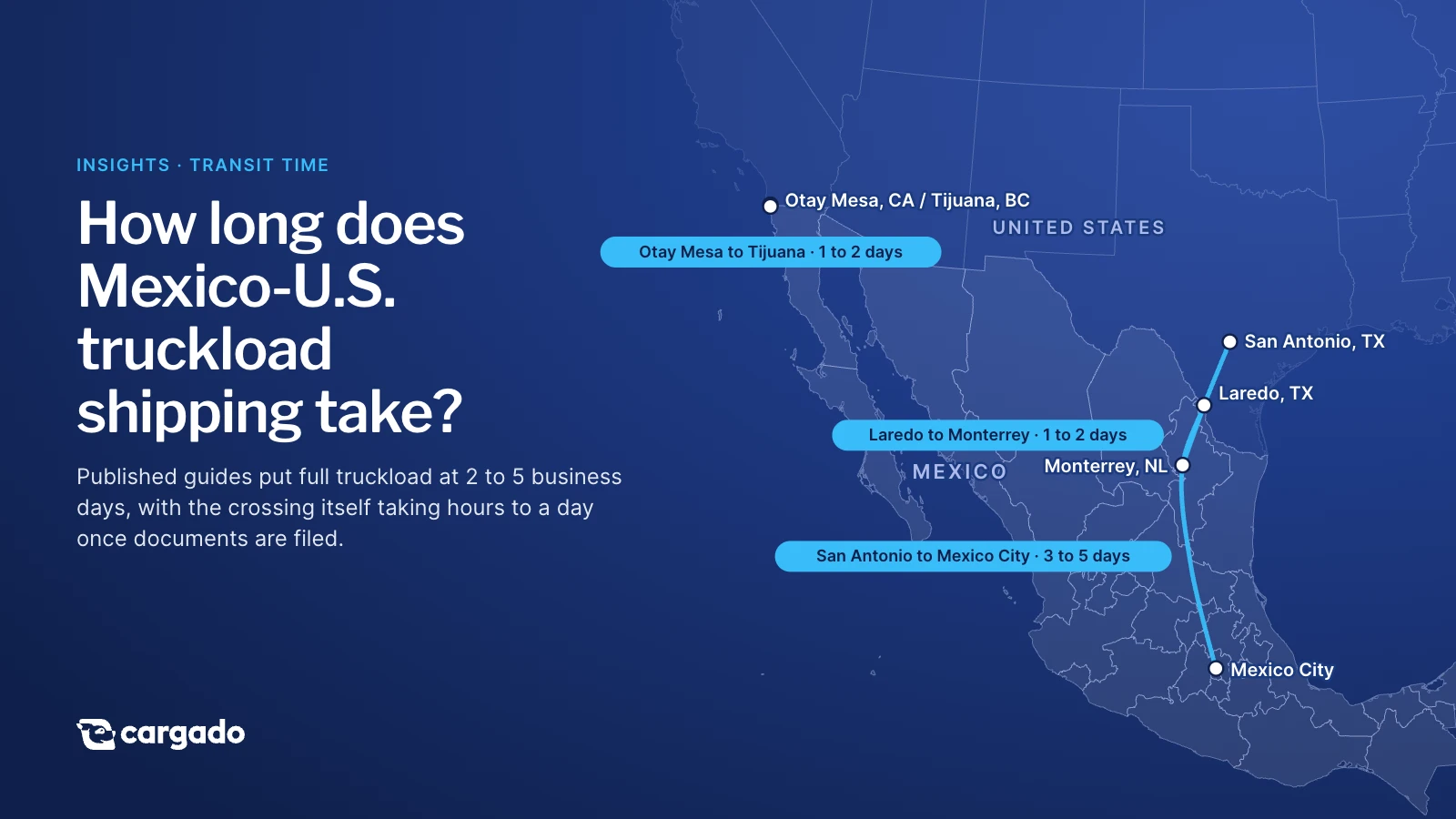
Map of Mexico and the southern United States with three truckload lanes and their published transit ranges: Otay Mesa, CA to Tijuana 1 to 2 days, Laredo, TX to Monterrey, NL 1 to 2 days, San Antonio, TX to Mexico City 3 to 5 days.
Insights

How long does Mexico-U.S. truckload shipping take?

Published guides put U.S.-Mexico full truckload at 2 to 5 business days, with the crossing taking hours to a day once documents are filed. Lane ranges, where the time goes, what the guides say about direction, and how to quote it.
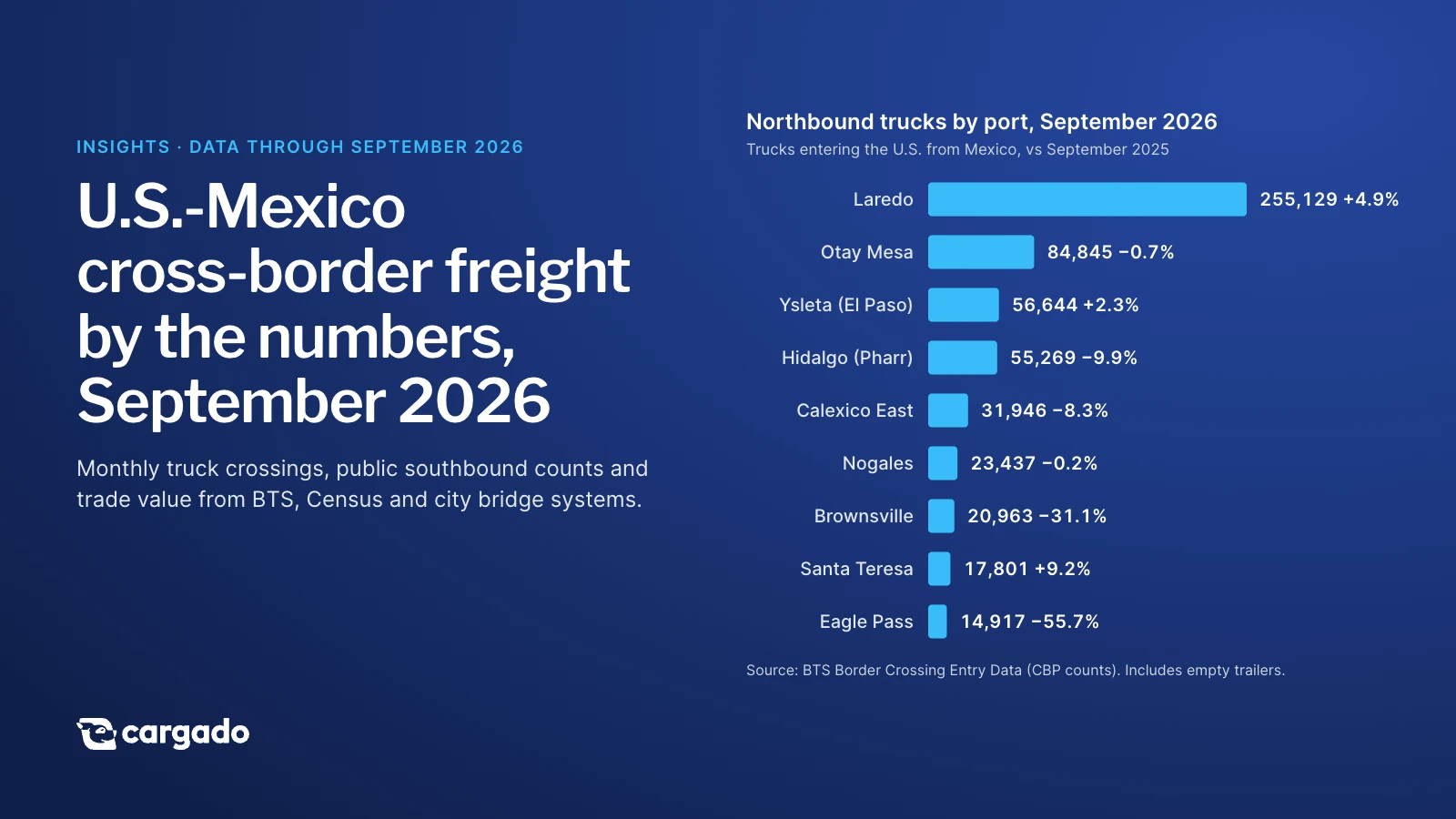
Card titled U.S.-Mexico cross-border freight by the numbers, September 2026, with a bar chart of northbound trucks by port led by Laredo at 255,129, then Otay Mesa, Ysleta, Hidalgo, Calexico East, Nogales, Brownsville, Santa Teresa and Eagle Pass. Source: BTS.
Insights

U.S.-Mexico cross-border freight by the numbers, September 2026

Northbound truck crossings from Mexico fell 4.0% in September 2026 and are flat for the year, while August trade value is up more than 25%. Public southbound truck counts show Laredo and El Paso up about 3.5% for the quarter and most smaller Texas bridges down.
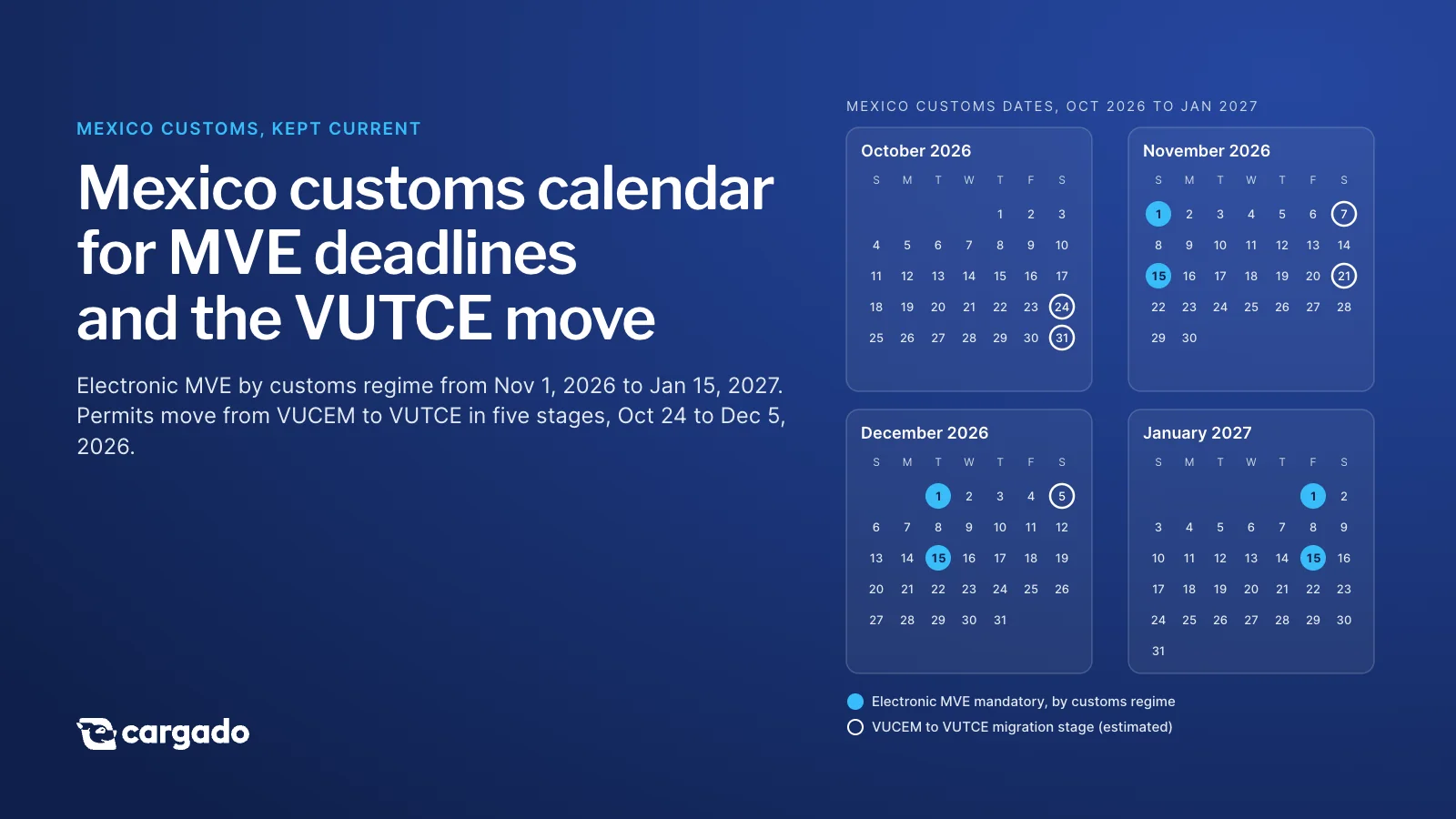
Four month calendars, October 2026 to January 2027, marking the electronic MVE dates (Nov 1, Nov 15, Dec 1, Dec 15, Jan 1, Jan 15) and the five VUCEM to VUTCE stages (Oct 24 to Dec 5). Mexico customs calendar for MVE deadlines and the VUTCE move.
Insights

Mexico customs calendar for MVE deadlines and the VUTCE move

One page, kept current, with the dates U.S. brokers and shippers need for Mexico customs paperwork: the electronic Manifestación de Valor (MVE) by customs regime, the rule for foreign importers without an e.firma, and the five-stage VUCEM-to-VUTCE permit migration.
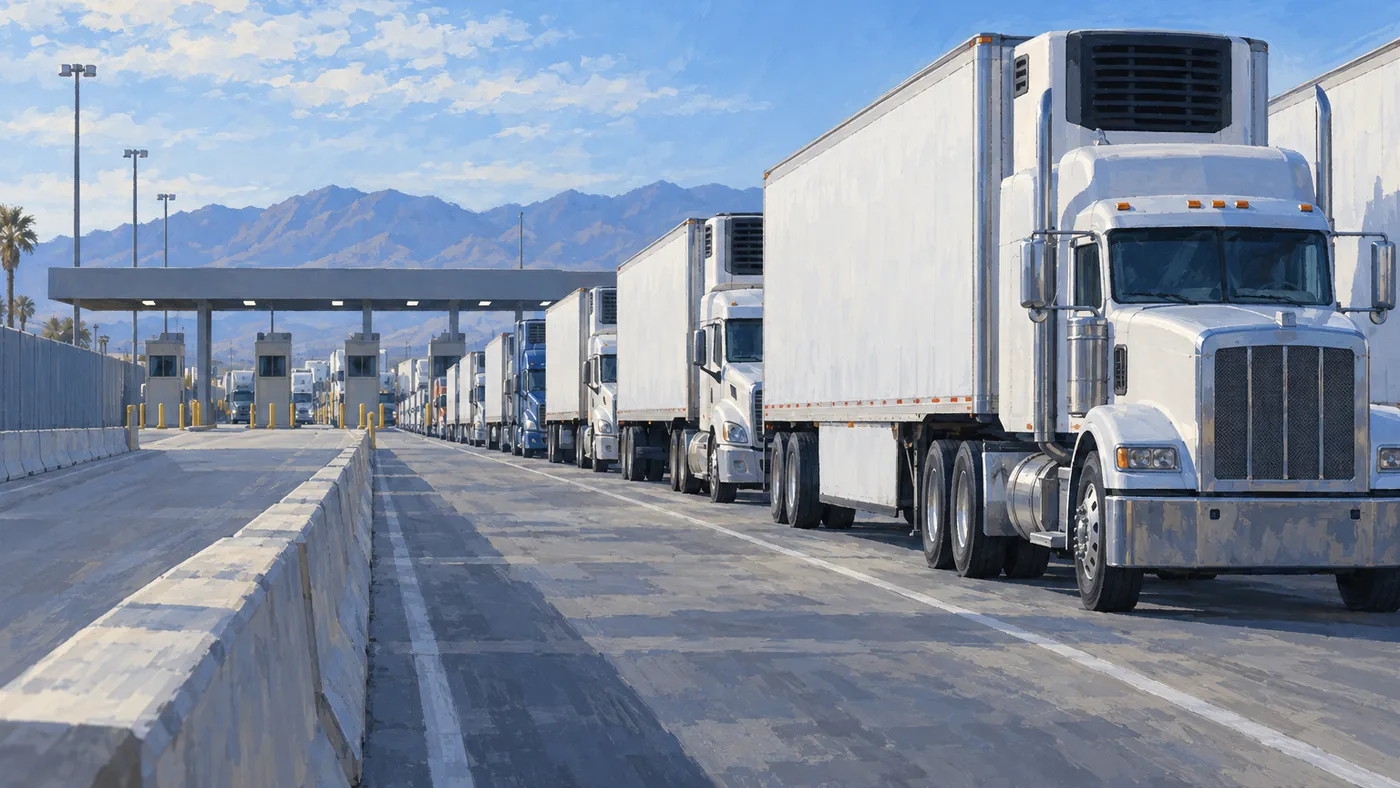
Painted illustration of refrigerated tractor-trailers queued nose to tail toward the inspection booths and canopy of a commercial border crossing.
Insights

How long does Mexico produce sit at the border, and how do you quote total transit?

What border time is made of on a northbound produce load, dated CBP waits at Pharr, Nogales and Laredo, and how to quote door-to-door transit.
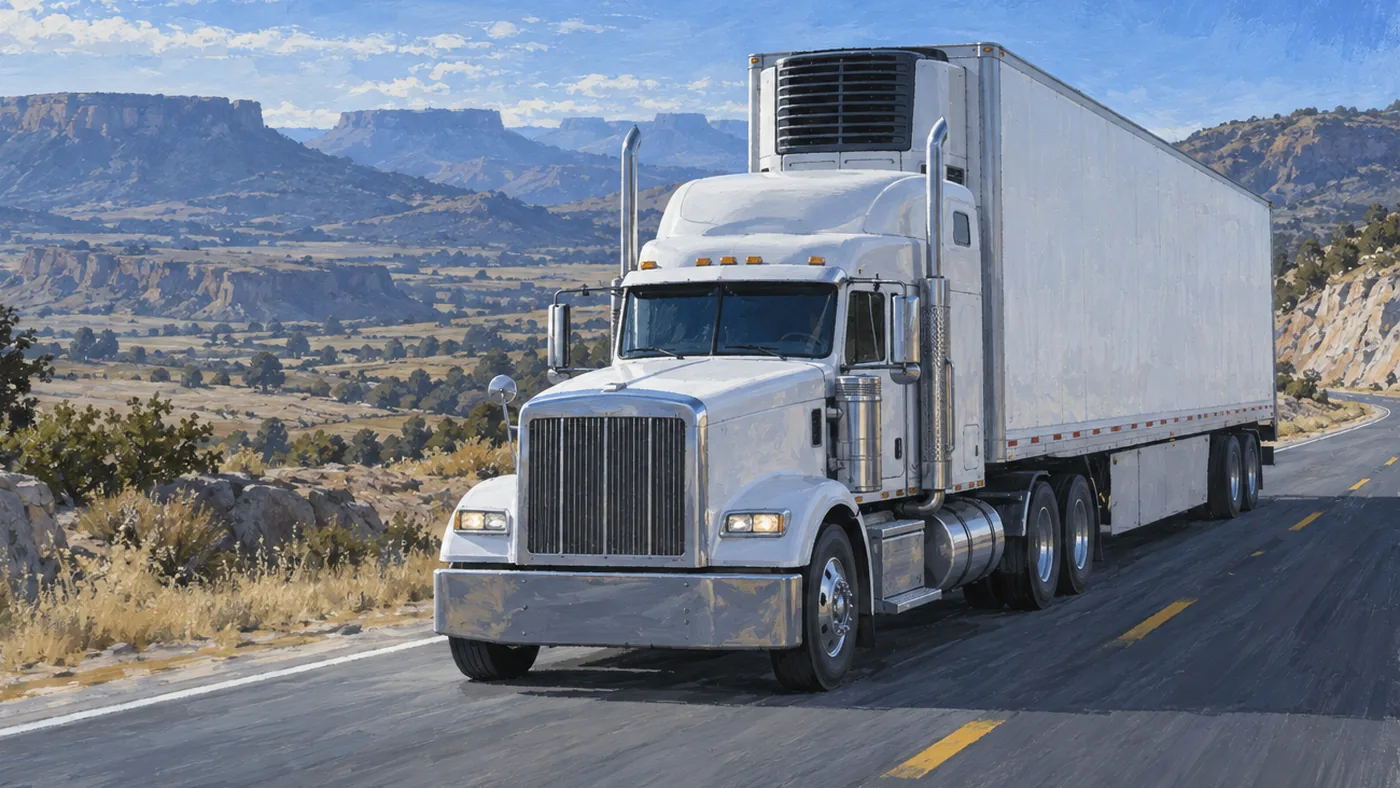
Painted illustration of a white refrigerated tractor-trailer, reefer unit on the trailer front, on a two-lane highway through dry highlands and mesas.
Insights

Cargo insurance on Mexico produce freight and what the carrier does not cover

Mexican carriers usually insure the truck, not the load. What their liability is worth on a reefer of produce, whether a U.S. cargo policy reaches Mexico, and how brokers and shippers cover the gap.
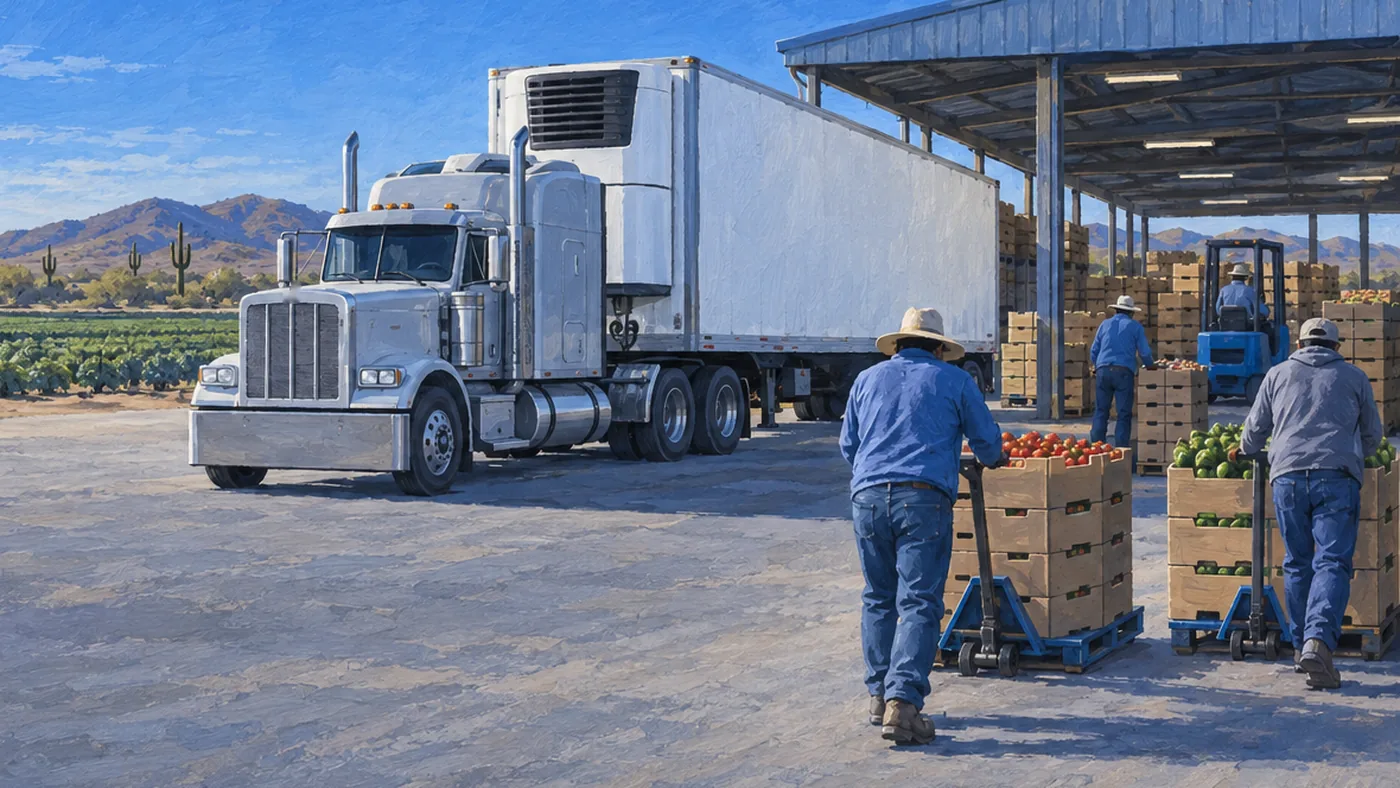
Painted illustration of packing-shed workers moving pallets of tomatoes and peppers toward a white reefer truck.
Insights

Loading produce in Mexico when the driver stays off the dock

Mexican packhouses often keep drivers off the dock. Why they do it, what shipper load and count means for a claim, and the records a broker collects instead.
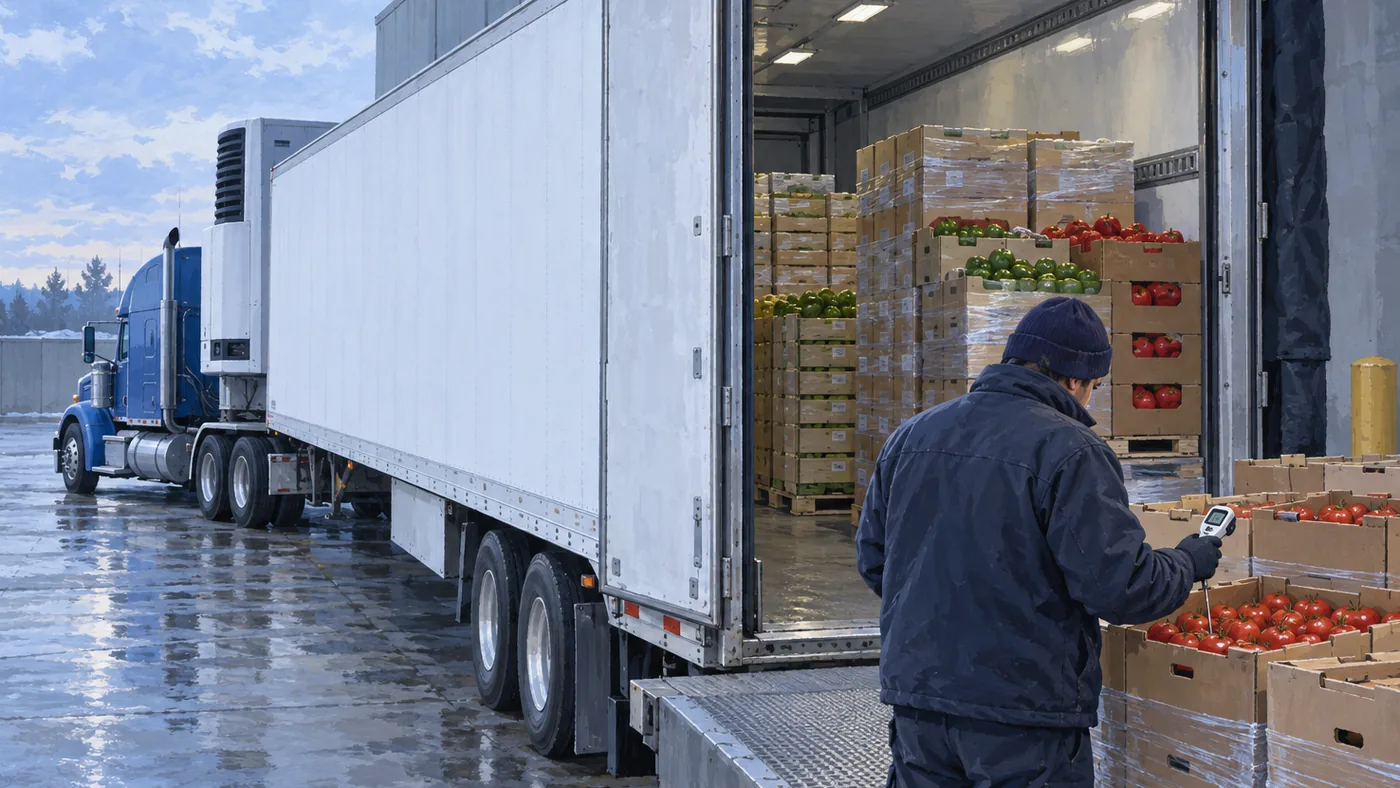
Painted illustration of an inspector taking the pulp temperature of tomatoes at the open doors of a refrigerated trailer backed to a receiving dock.
Insights

Cargo claims on Mexico freight and what to set up before the first load

A Mexican-leg claim does not run on Carmack. The liability cap, who you claim against at the border, the produce evidence that holds, and what to set up first.
Painted header illustration for the Mexico-U.S. tariffs and trade rules guide
Insights

Mexico-U.S. tariffs and trade rules for cross-border freight

Section 232 by product, the 10% Section 301 tariff, USMCA review dates, antidumping cases and Mexico's tariff decrees, dated and sourced.
Painted header illustration for the furniture and building materials freight guide
Insights

Furniture and building materials from Mexico, beyond the carrier's rate

Where Mexico's furniture and building materials freight ships from, what tariffs, ISPM-15 and the liability cap add, and how dry van rates moved.
Painted header illustration for the data center equipment freight guide
Insights

Shipping data center and electrical equipment from Mexico to the U.S.

Servers, switchgear and transformers moving north from Mexico. Where they ship from, carrier liability, oversize permits, tariffs and how rates moved.
Painted header illustration for the paper and packaging freight guide
Insights

Packaging is the freight that moves with everyone else's freight

Where Mexico's paper and packaging freight ships from, what ISPM-15, Lacey Act, Section 301 and Carta Porte add, and how dry van rates moved this year.

There are no items in this category

Reset